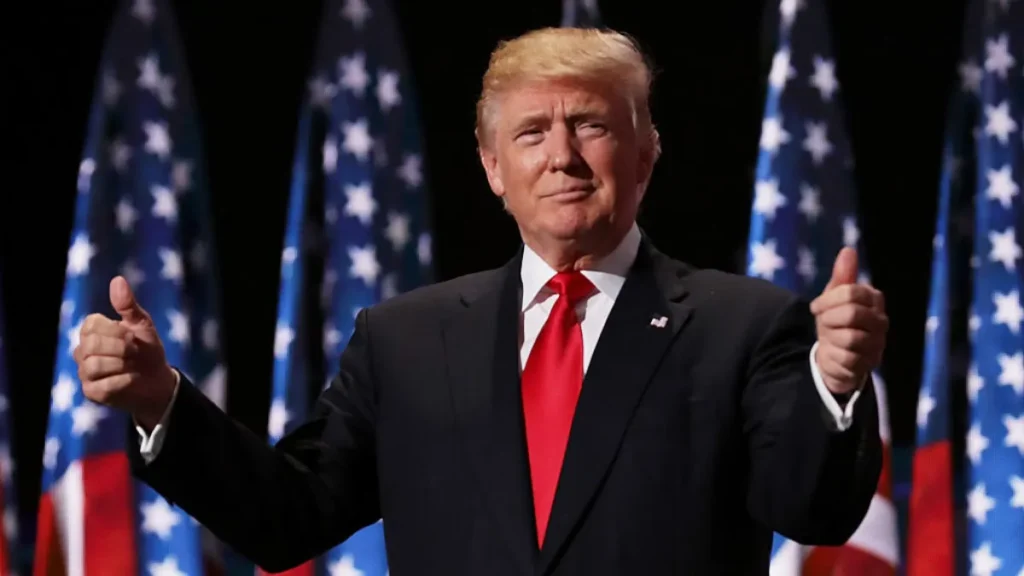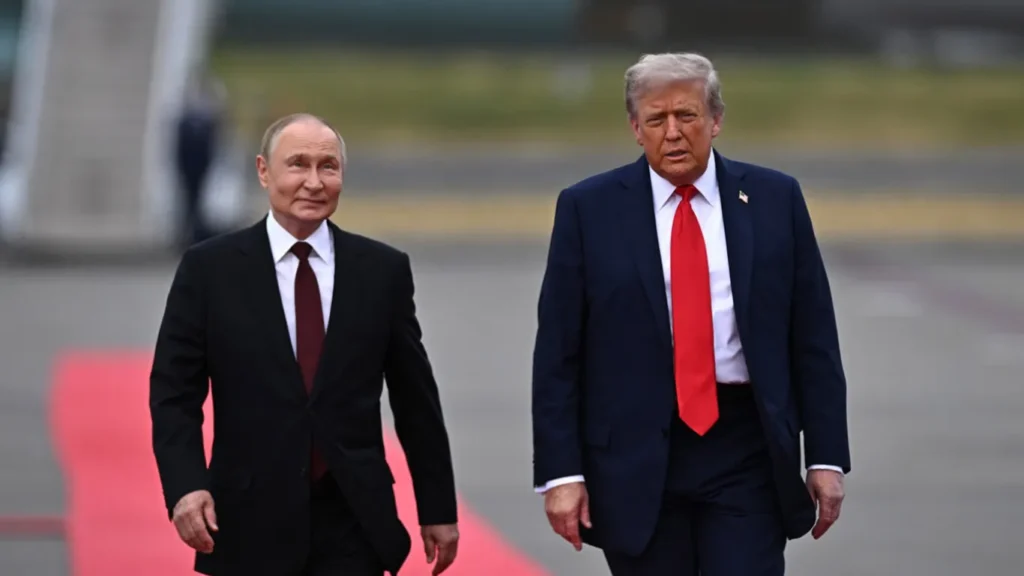
In a diplomatic development that has surprised political observers across the world, United States President Donald Trump has extended a special invitation to Russian President Vladimir Putin to join a newly proposed international Gaza Peace Board. The move, which has triggered strong reactions from Israel and raised questions among global policymakers, signals a potential shift in Washington’s approach to managing one of the most volatile conflicts in the Middle East.
The announcement that Trump invited Putin to board of peace comes at a time when global tensions remain high, not only due to the ongoing Gaza crisis but also because of strained relations between Washington and Moscow over the Russia–Ukraine war. Despite President Trump’s repeated public criticism of President Putin in recent months, the US administration has now opened the door to Russian participation in a multilateral body designed to oversee the next phase of the Gaza peace initiative.
Alongside Russia, the United States has also sent invitations to the European Union’s executive leadership and to Thailand, signalling Washington’s intention to build a broad, international coalition to supervise and guide future steps in Gaza.
What Is the Gaza Peace Board?
According to officials familiar with the matter, the proposed Gaza Peace Board is intended to monitor and oversee the implementation of the next stage of a US-backed Gaza peace plan. The board would operate as a high-level oversight body, supervising an executive committee tasked with managing key elements of post-conflict governance in Gaza.
These responsibilities are expected to include:
- Monitoring the deployment of an international security force
- Overseeing the disarmament of Hamas
- Supervising reconstruction efforts in the war-torn territory
- Ensuring coordination among international stakeholders
The initiative reflects Washington’s view that the Gaza conflict cannot be resolved by military means alone and that long-term stability will require sustained international involvement.
Trump’s Surprise Outreach to Russia
The decision to invite Russia has caught many analysts off guard. President Trump has frequently criticised Moscow’s actions in Ukraine, and relations between the two countries have remained tense. Yet, the White House appears to believe that Russia’s involvement could add diplomatic weight and legitimacy to the peace process.
By inviting President Putin, the US administration may be aiming to:
- Broaden international ownership of the Gaza peace process
- Reduce the perception that the plan is exclusively US- or Western-driven
- Leverage Russia’s longstanding ties with various Middle Eastern actors
While the White House has not publicly detailed its strategic reasoning, insiders suggest that the administration views Russia as an unavoidable player in global conflict resolution, particularly in regions where Moscow maintains influence.
Kremlin Confirms Invitation, Considers Response
The Kremlin has confirmed that President Putin has received the invitation. Speaking to reporters, Kremlin spokesperson Dmitry Peskov stated that Russia is carefully reviewing the proposal.
According to Peskov, Moscow is currently examining the details of the invitation and intends to seek further clarification through diplomatic channels with Washington. He emphasised that Russia wants to fully understand the structure, mandate, and decision-making powers of the proposed board before committing to participation.
Russia’s cautious approach reflects the complexity of the situation. While Moscow has consistently called for diplomatic solutions to the Gaza conflict, it has also been critical of US policy in the Middle East. Participation in a US-initiated board would mark a significant step and could reshape Russia’s role in the region.
EU and Thailand Also Invited
The United States has confirmed that invitations were also sent to the European Union’s executive branch and to Thailand, highlighting the global scope of the proposed board.
Thailand’s Foreign Ministry acknowledged receiving the invitation and said it is currently under review. Officials noted that Bangkok is evaluating how its participation could contribute to peace efforts while aligning with Thailand’s foreign policy principles.
Meanwhile, EU spokesperson Olof Gill confirmed that European Commission President Ursula von der Leyen has received the invitation. He stated that the EU leadership would consult with member states and other European leaders before deciding on the next steps.
Although the EU has not yet confirmed whether it will formally join the board, Gill stressed that the bloc remains committed to supporting a comprehensive plan to end the Gaza conflict and alleviate humanitarian suffering.
India’s Earlier Invitation and Growing Board Controversy
Before extending invitations to Russia, the EU, and Thailand, the Trump administration had already invited India to join the Gaza Peace Board. India’s potential involvement was seen as an attempt to include influential Global South nations in the peace process.
However, the board has faced criticism from its earliest stages. Israel reacted sharply to the proposal, expressing concerns that the initiative could undermine its national security and decision-making autonomy.
Israeli officials argued that any international body overseeing Gaza’s future must operate in close coordination with Israel. The fact that the board was announced without what Israel describes as sufficient consultation has fuelled tensions between Jerusalem and Washington.
Israel’s Strong Rejection
Israel’s opposition to the Gaza Peace Board has been vocal and uncompromising. Israeli Finance Minister Bezalel Smotrich has emerged as one of the strongest critics of the initiative.
Speaking at the inauguration of a new settlement in the occupied West Bank, Smotrich dismissed the board as unfair and harmful to Israel’s interests. He called on President Trump to abandon the plan entirely.
“This is the time to make it clear to the president that his proposal damages Israel and must be withdrawn,” Smotrich said, according to local media reports.
He further argued that Gaza’s future directly affects Israel more than any external actor and insisted that Israel must retain full control over decisions related to the territory.
Calls for Military Control and Escalation
Smotrich went even further, suggesting that Israel should impose military administration over Gaza if Hamas does not comply with demands for disarmament and exile.
He indicated that Israel should be prepared to launch a full-scale military operation aimed at destroying Hamas if the group refuses to surrender its weapons.
These remarks underscore the deep divide between Israel’s current leadership and the US administration’s push for a multilateral, internationally supervised approach to Gaza.
Netanyahu’s Office Pushes Back
Israel’s opposition was reinforced by a statement from Prime Minister Benjamin Netanyahu’s office, which said that the committee overseeing the peace plan was established without coordination with the Israeli government.
The statement emphasised that the board runs counter to Israel’s official policy and security strategy. Israeli leaders have repeatedly stressed that any arrangement concerning Gaza must prioritise Israel’s right to defend itself and maintain control over security matters.
This public disagreement highlights a rare and significant rift between Washington and Jerusalem, traditionally close allies.
What the Board Is Expected to Do
Despite the controversy, the US administration is expected to formally announce the list of board members in the coming days. The announcement may take place during the World Economic Forum in Davos, Switzerland, where global leaders are set to gather.
Once established, the board will oversee an executive committee responsible for implementing the second phase of the Gaza peace plan. This phase is expected to focus on:
- Deploying an international security presence
- Enforcing Hamas disarmament
- Facilitating humanitarian aid delivery
- Launching large-scale reconstruction projects
The board’s role will be to ensure transparency, coordination, and accountability among all participating actors.
Why Trump Took This Risk
The fact that Trump invited Putin to board of peace despite ongoing geopolitical tensions suggests a calculated risk by the US president. Analysts believe Trump may be seeking to position himself as a global deal-maker capable of bringing rival powers together for conflict resolution.
By involving Russia, the EU, India, and other international players, Trump could argue that the peace process reflects a truly global effort rather than a unilateral US initiative.
Supporters of the move say it could increase pressure on all parties, including Hamas and Israel, to engage constructively. Critics, however, warn that involving too many actors with competing interests could complicate decision-making and delay progress.
Global Reactions Mixed
International reactions to the proposal have been mixed. Some diplomats have welcomed the initiative as a bold attempt to break the cycle of violence in Gaza. Others remain sceptical, questioning whether a board with such diverse members can function effectively.
Humanitarian organisations have cautiously welcomed the idea, noting that any mechanism capable of stabilising Gaza and enabling reconstruction deserves serious consideration.
At the same time, concerns remain about enforcement, legitimacy, and whether local actors will accept decisions made by an international body.
What Happens Next?
The coming weeks will be crucial. Russia’s decision on whether to accept the invitation will be closely watched, as will the EU’s internal deliberations.
If major global powers agree to participate, the Gaza Peace Board could become one of the most ambitious international governance experiments in recent Middle Eastern history.
If key players refuse, however, the initiative could struggle to gain credibility and momentum.
A High-Stakes Diplomatic Gamble
The move by President Trump represents a high-stakes gamble. By inviting both allies and rivals to the table, the US administration is testing whether inclusive diplomacy can succeed where years of conflict have failed.
Whether the Gaza Peace Board becomes a turning point or another unrealised proposal will depend on political will, cooperation, and events on the ground.
One thing is certain: the moment Trump invited Putin to board of peace has already reshaped the global conversation around Gaza, signalling that the future of the conflict may be decided not only on the battlefield, but also in international negotiating rooms.