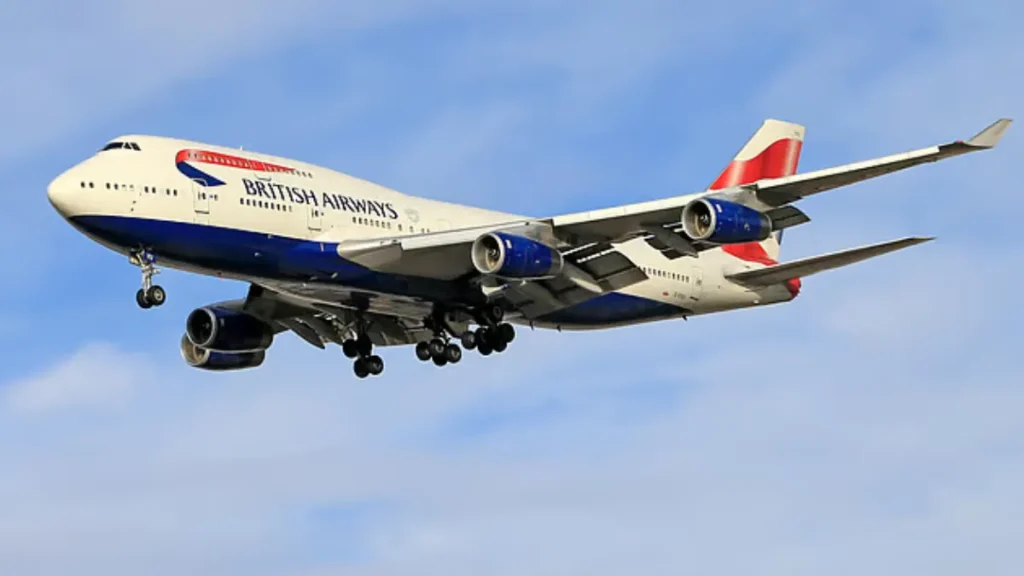
In a deeply distressing incident that has raised questions about in-flight emergency protocols, a female passenger in her 60s tragically died shortly after takeoff on a long-haul journey from Hong Kong to London. The case, now widely referred to under the keyword “British Airways Woman Death On Flight,” unfolded aboard a British Airways aircraft and left passengers and crew dealing with an emotionally challenging situation for more than 13 hours.
Tragedy Strikes Shortly After Takeoff
The incident occurred on Sunday on British Airways Flight BA32, which had departed from Hong Kong en route to London Heathrow Airport. According to reports, the aircraft involved was an Airbus A350-1000, one of the airline’s modern long-haul planes.
Roughly one hour into the flight, the woman suffered a medical emergency and passed away despite any assistance that may have been provided onboard. The sudden loss left her family members devastated, while also placing the airline crew in a difficult position regarding how to manage the situation mid-flight.
Deaths during flights are rare occurrences, but when they do happen, airline staff must follow established procedures while also considering the emotional well-being of passengers and relatives traveling with the deceased.
Decision Made to Continue the Flight
One of the most debated aspects of the British Airways Woman Death On Flight case is the decision by the flight crew to continue the journey to London rather than diverting or returning to Hong Kong.
Aviation protocols generally do not classify a confirmed death as an ongoing medical emergency. As a result, pilots often proceed to the destination unless there are additional safety concerns. In this case, despite the emotional distress among passengers and crew, the flight continued its scheduled route, lasting approximately 13.5 hours.
Sources familiar with the situation indicated that some crew members and passengers initially believed the aircraft should turn back. However, the established guidelines influenced the final decision.
One source explained that while the circumstances were heartbreaking, aviation standards consider a death onboard differently from a medical emergency that can still be treated.
Handling of the Deceased Onboard
Following the woman’s passing, the crew had to determine where to place the body for the remainder of the long-haul journey. Initially, there was discussion about moving the deceased passenger to a lavatory, but this option was ultimately ruled out.
Instead, the crew wrapped the body and transferred it to a rear galley area of the aircraft. This section is typically used for food preparation and storage but can serve as a temporary space in such rare and challenging situations.
However, complications arose due to an overlooked detail. The galley floor was reportedly heated, a feature designed for operational comfort and efficiency during flights. Unfortunately, this led to an unintended consequence.
Passengers Report Unpleasant Odor
As the flight progressed, the heat from the galley floor is believed to have contributed to a strong and unpleasant odor. Passengers seated toward the rear of the aircraft began noticing the smell, which gradually spread through that section of the cabin.
By the time the aircraft was approaching London, several of the 300-plus passengers and crew members had reported discomfort due to the odor. The situation added another layer of distress to an already sensitive and emotional journey.
Despite these challenges, the crew continued to manage the cabin as professionally as possible under difficult circumstances.
Arrival in London and Police Response
Upon landing at Heathrow Airport, authorities were alerted to the situation onboard. Police officers boarded the aircraft shortly after arrival to assess the circumstances and carry out necessary procedures.
Passengers were asked to remain seated for approximately 45 minutes while officials conducted their initial investigation. This delay allowed authorities to handle the situation with care and ensure that all protocols were properly followed.
Once the process was completed, passengers were eventually allowed to disembark.
Airline Issues Official Statement
British Airways later addressed the incident in an official statement, expressing condolences to the family of the deceased passenger.
The airline confirmed that a customer had sadly passed away during the flight and stated that its thoughts were with the family and loved ones during this difficult time. The company also emphasized that its crew followed all required procedures in handling the situation.
Additionally, British Airways noted that support was being provided to both the cabin crew and others affected by the incident.
What Aviation Guidelines Say
The British Airways Woman Death On Flight case has brought renewed attention to how airlines handle deaths mid-air. The International Air Transport Association (IATA) provides guidance for such rare events.
According to these guidelines, the body of a deceased passenger is typically placed in a body bag if one is available or respectfully covered with a blanket. Whenever possible, the body is moved to a less visible area of the aircraft, such as an empty seat or a quieter section of the cabin.
In situations where flights are fully booked and space is limited, the body may remain in the original seat with minimal disturbance to other passengers.
Rare But Challenging Incidents
While the incident has captured global attention, medical emergencies resulting in death during flights are extremely uncommon. A study published in the New England Journal of Medicine in 2013 found that only about 0.3 percent of in-flight medical emergencies lead to death.
Even so, such situations present unique challenges for airline crews, who must balance operational protocols with compassion and sensitivity.
Also Read: Some Migrants to Face 20 Year Wait for Settled Status Under New UK Immigration Plans
A Difficult Experience for All Involved
The British Airways Woman Death On Flight incident highlights the emotional and logistical complexities that can arise during long-haul travel. For the family of the deceased, the experience was undoubtedly devastating. For fellow passengers and crew members, it was a journey marked by discomfort and emotional strain.
As airlines continue to refine their procedures, incidents like this underscore the importance of preparedness, empathy, and clear communication when dealing with rare but serious events at 35,000 feet.
The case remains a somber reminder that even in the highly controlled environment of modern air travel, unexpected tragedies can occur—and handling them with dignity remains paramount.