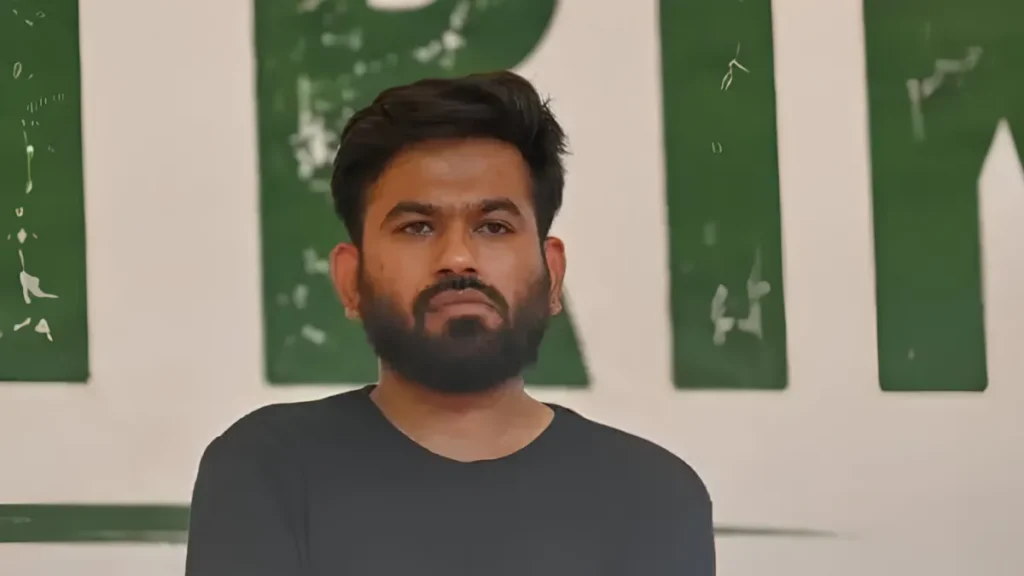
Who Is Abhijit Dipke? The question has gained attention across social media after the rapid rise of the Cockroach Janta Party, an unconventional political initiative that blends internet humour with discussions about unemployment, governance, and political accountability. What started as an online satire has evolved into one of the most talked-about youth-driven movements in India, attracting tens of thousands of supporters in a short period.
Unlike traditional political organisations that spend years building grassroots networks, the Cockroach Janta Party found its audience through memes, social media conversations, and growing frustration among young Indians. Although its branding is humorous, many of the issues it raises are serious and reflect concerns shared by a large section of the country’s youth.
At the centre of this movement is Abhijit Dipke, a political communication strategist whose background in journalism, public relations, and digital campaigning helped shape the project. While the movement remains outside mainstream electoral politics, it has opened discussions about how younger generations engage with political ideas in the digital era.
Who Is Abhijit Dipke?
Abhijit Dipke is a 30-year-old political communication professional from Maharashtra who specialises in digital messaging, public narratives, and political strategy. Rather than beginning his career as an elected representative or party leader, he built his experience in communication and online political engagement.
Dipke first studied journalism in Pune, where he developed an interest in media, storytelling, and public affairs. His academic journey later took him to the United States, where he earned a master’s degree in Public Relations from Boston University. During his studies, he explored how digital platforms influence public opinion, shape political conversations, and transform the relationship between citizens and governments.
This educational background gave him practical insight into modern political communication at a time when social media was becoming an increasingly influential force in elections worldwide.
Experience in Political Communication
Before launching the Cockroach Janta Party, Dipke gained experience working with political campaigns through digital media.
Between 2020 and 2022, he volunteered with the Aam Aadmi Party (AAP) social media team. During the 2020 Delhi Assembly election campaign, he contributed to digital communication strategies that relied heavily on memes, online engagement, and social media storytelling.
The campaign demonstrated how humour, relatable content, and viral communication could influence political discussions, especially among younger audiences.
Although Dipke was involved in digital campaigning rather than electoral politics, the experience provided valuable lessons about audience behaviour, online mobilisation, and political branding.
Returning to India and Developing a New Idea
After spending time in the United States, Dipke returned to Aurangabad, Maharashtra, in 2023 while preparing for further academic opportunities abroad.
During this period, he began experimenting with alternative ways of discussing politics online. Instead of creating another political commentary page or opinion platform, he explored whether satire itself could become a vehicle for civic participation.
The result was the creation of the Cockroach Janta Party, an initiative that deliberately blurred the line between internet culture and political activism.
Initially launched as a humorous concept, the project quickly gained unexpected attention across social media platforms. Reports indicate that the movement attracted more than 80,000 sign-ups, highlighting significant public curiosity and engagement.
Why Is It Called the Cockroach Janta Party?
One of the biggest reasons behind the movement’s popularity is its unusual name.
According to the movement’s explanation, the title was inspired by a widely discussed courtroom remark attributed to Chief Justice of India Surya Kant during legal proceedings concerning unemployed youth.
The reported comment compared unemployed young people struggling to find opportunities with “cockroaches” searching for space in society and professional life.
Whether interpreted literally or symbolically, the remark generated extensive debate online.
Rather than rejecting the label, Dipke and his supporters transformed it into the central identity of the movement.
Their message was straightforward: if unemployed youth are viewed as invisible or unwanted, they would reclaim that label and use it as a symbol of resilience and political expression.
By embracing the term through satire, the movement turned what many considered an insult into a conversation about employment, dignity, and public policy.
Satire With a Serious Message
Although the Cockroach Janta Party presents itself with humour, memes, and unconventional branding, its creators argue that the movement is intended to encourage discussions about genuine public issues.
Many young Indians today use humour to cope with challenges including:
- Unemployment
- Competitive examinations
- Career uncertainty
- Rising living costs
- Political dissatisfaction
- Social pressure
Internet memes have increasingly become a language through which younger generations discuss these concerns.
The Cockroach Janta Party attempts to channel that online culture into political commentary, making complex governance issues more accessible to digital audiences.
The Party’s Unusual Membership Rules
Perhaps the most widely shared aspect of the movement is its deliberately humorous eligibility criteria.
According to the party’s public messaging, applicants should:
- Be unemployed
- Be “lazy”
- Be capable of “ranting professionally”
These conditions are intentionally ironic rather than genuine membership requirements.
Instead of serving as formal qualifications, they parody common stereotypes often directed at unemployed young people.
Supporters argue that the rules reflect the frustrations many graduates experience after years of education, competitive exams, and unsuccessful job searches.
The exaggerated language also mirrors the self-deprecating humour commonly found across Indian social media communities.
Beyond Memes: The Party’s Manifesto
Despite its comedic presentation, the Cockroach Janta Party has released a manifesto containing several policy proposals focused on democratic reforms.
Judicial Independence
One of its key proposals advocates stronger independence for the judiciary.
The movement argues that senior judges, particularly Chief Justices, should not receive post-retirement political appointments or nominations to the Rajya Sabha, believing such practices could create perceptions of compromised judicial independence.
Transparent Voter Roll Management
The manifesto also calls for greater accountability in the process of voter list revisions.
According to the movement, systems governing voter deletions should become more transparent to protect citizens’ electoral rights and strengthen confidence in democratic institutions.
Greater Representation for Women
Another major proposal supports 50 percent reservation for women in both Parliament and the Union Cabinet.
Rather than delaying implementation through gradual seat expansion, the manifesto argues that stronger female representation should become an immediate political priority.
Stronger Anti-Defection Measures
The movement also supports stricter anti-defection laws.
It argues that elected representatives who switch political parties after winning elections undermine voter trust and weaken democratic accountability.
The proposal seeks stronger legal safeguards to discourage post-election political defections.
Why Has the Movement Attracted Attention?
Several factors have contributed to the movement’s rapid visibility.
First, its branding is instantly memorable.
In an era where political messaging often competes for attention online, the unusual name encourages curiosity and discussion.
Second, the movement speaks directly to concerns affecting millions of young Indians.
Youth unemployment has remained an important public issue for several years. Many graduates continue to face intense competition for government jobs, private-sector employment, and higher education opportunities.
By combining humour with these concerns, the movement has succeeded in engaging audiences that might otherwise avoid conventional political discussions.
Third, social media algorithms naturally amplify content that is humorous, surprising, or emotionally relatable.
The Cockroach Janta Party benefits from all three characteristics.
Can Satire Influence Politics?
Political satire has existed for centuries, but digital platforms have dramatically expanded its reach.
Across the world, comedians, meme creators, and satirical organisations increasingly influence public conversations by presenting political issues through humour.
While satire does not always translate into electoral success, it often shapes narratives by encouraging people to question institutions, policies, and leadership.
The Cockroach Janta Party follows this broader trend.
Rather than presenting itself as a traditional political organisation focused solely on elections, it functions as an online movement encouraging civic discussion among younger audiences.
Whether it eventually develops into a formal political party remains uncertain.
Supporters and Critics Offer Different Views
Public reaction has been mixed.
Supporters describe the movement as a creative outlet for widespread frustration among young people who feel disconnected from traditional political structures.
Many believe it gives voice to issues that are often discussed informally online but receive limited attention in mainstream political debates.
Critics, however, question whether internet popularity can translate into meaningful political influence.
Some argue that viral movements often struggle to maintain momentum once public attention shifts elsewhere.
Others believe satire alone cannot replace sustained political organisation, policy development, or grassroots engagement.
These differing opinions reflect broader debates about how social media is changing political participation worldwide.
The Future of the Cockroach Janta Party
Abhijit Dipke has described the initiative as a peaceful, democratic youth movement aimed at encouraging political participation rather than promoting confrontation.
Whether the Cockroach Janta Party eventually contests elections or remains a digital advocacy platform will likely depend on how its supporters engage beyond social media.
For now, the movement occupies a unique space where online culture intersects with public policy discussions.
Its popularity demonstrates that younger generations increasingly expect politics to communicate in formats they understand—whether through memes, satire, or digital storytelling.
Also read: PM Modi Australia Threat: Australian Police Probe Online Death Threat Ahead of Melbourne Visit
A Changing Political Landscape
The emergence of the Cockroach Janta Party also reflects broader changes in how political movements begin.
In previous decades, political organisations typically relied on physical meetings, local leadership, and extensive organisational networks before gaining national attention.
Today, social media enables ideas to spread rapidly, allowing relatively unknown individuals to build large communities around shared concerns within weeks.
This transformation does not guarantee long-term political success, but it does reshape how public conversations evolve.
Digital platforms have lowered the barriers to participation, making it easier for citizens—particularly younger generations—to express dissatisfaction, organise discussions, and challenge established narratives.
Conclusion
The question “Who Is Abhijit Dipke?” is about more than the biography of one political strategist. It also reflects growing interest in how politics, technology, and internet culture are becoming increasingly connected.
Through the Cockroach Janta Party, Dipke has demonstrated that satire can spark conversations about unemployment, governance, judicial independence, electoral reforms, and democratic participation.
Whether the movement ultimately becomes a lasting political force or remains a notable chapter in India’s digital political landscape is yet to be seen. However, its rapid rise illustrates a broader shift in modern political communication—one where memes, online communities, and civic engagement increasingly intersect, giving younger generations new ways to participate in public debate.