Nakhon Ratchasima, Thailand:
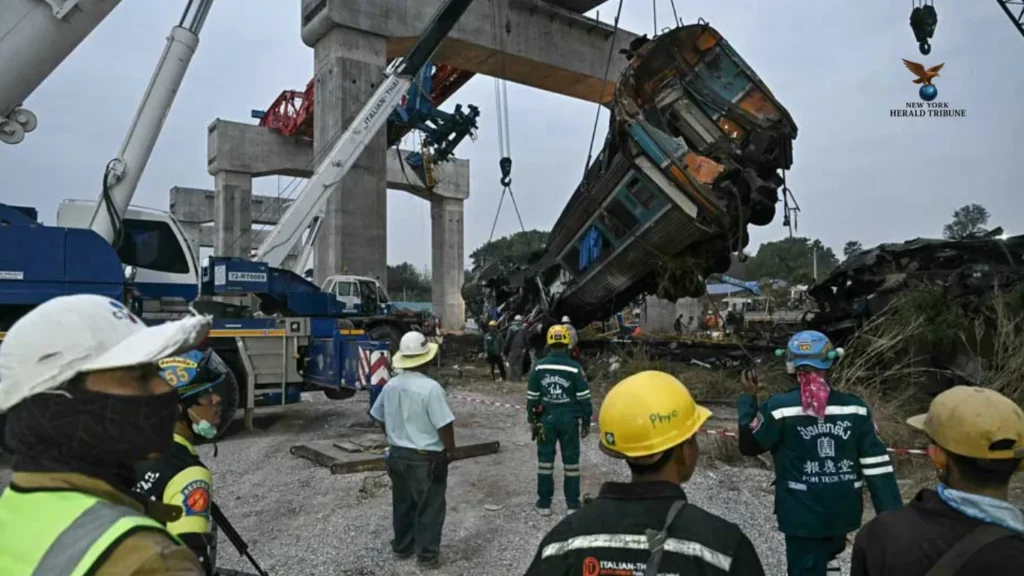
A devastating Thailand accident unfolded on Wednesday morning when a massive construction crane collapsed from a height of approximately 65 feet onto a high-speed passenger train, resulting in one of the deadliest rail tragedies the country has witnessed in recent years. At least 25 people have been confirmed dead, while more than 80 passengers were injured, many of them critically, after the crane crashed directly onto the moving train, causing several coaches to derail, split apart, and catch fire.
The horrific incident occurred at around 9:05 a.m. local time in Nakhon Ratchasima province, located roughly 230 kilometres (143 miles) northeast of Bangkok. The train was travelling at full speed when it struck debris from a crane that was being used for the construction of a railway bridge. The sudden collapse left the train driver with no time to react or apply emergency brakes, according to preliminary official assessments.
Train Carrying Nearly 200 Passengers, Mostly Schoolchildren
Authorities confirmed that 195 passengers were onboard the train at the time of the accident. Alarmingly, a majority of the passengers were school students, travelling as part of routine daily commutes. This detail has intensified public grief and outrage, as families across the province rushed to hospitals and emergency centres in search of their children.
Eyewitness accounts and early reports indicate that the crane, which was part of an ongoing railway infrastructure project, suddenly gave way and fell directly across the tracks. Within seconds, the crane’s heavy metal structure smashed into the oncoming train, tearing through multiple coaches and triggering a catastrophic chain of events.
Coaches Derailed, Split Apart, and Burst Into Flames
The impact was so violent that several train coaches were derailed, with at least one carriage reportedly splitting into two pieces. Large fragments of the crane landed on top of the coaches, crushing parts of the train and trapping dozens of passengers inside twisted metal wreckage.
Shortly after the derailment, fires broke out inside some of the coaches, adding to the chaos and danger. Emergency responders later confirmed that flammable materials ignited following the collision, forcing trapped passengers to fight smoke and flames while awaiting rescue.
Local residents described scenes of panic, screaming, and confusion as survivors attempted to escape the damaged carriages. Many passengers were left bleeding on the tracks, while others remained trapped beneath debris.
Eyewitnesses Describe Explosions and a “Deafening Blast”
Residents living near the accident site told AFP News Agency that they heard a loud explosion followed by two additional blasts moments before seeing smoke rising from the railway line.
“One moment everything was normal, and then there was a massive bang,” said one local witness. “When I went closer to see what had happened, I saw the crane lying across the passenger train. A large metal piece from the crane struck the middle of the train, and the carriage was torn into two.”
Another resident described seeing shattered glass, twisted metal, and burning debris scattered across the tracks. “It looked like a war zone,” the witness said.
Rescue Teams Rush to Scene, Passengers Pulled From Wreckage
Emergency services, including fire brigades, medical teams, and disaster response units, arrived at the scene within minutes of the accident. Rescue workers immediately began battling the fires while searching for survivors trapped inside the damaged coaches.
According to rescue officials, cutting and spreading equipment was used to free passengers who were pinned beneath metal debris. Firefighters worked to extinguish the blaze before it could spread further along the train.
“Many passengers were trapped and unable to move,” a rescue worker told local media. “We had to cut through the metal to reach them. Some were unconscious, others were crying for help.”
As of the latest update, 12 bodies had been recovered from the wreckage, while the remaining confirmed deaths occurred later in hospitals due to severe injuries. Authorities warned that the death toll could rise further as rescue operations continue and critically injured victims receive treatment.
Hospitals Overwhelmed as Injured Flood Emergency Rooms
Victims were rushed to nearby hospitals in Nakhon Ratchasima and surrounding districts. Medical officials reported that several of the injured remain in critical condition, suffering from severe burns, head injuries, fractures, and internal trauma.
Hospitals activated emergency protocols to handle the sudden influx of patients. Doctors and nurses worked tirelessly as families gathered outside emergency wards, desperately seeking updates about loved ones.
“We are doing everything we can,” said a senior hospital official. “Many of the injured are young students, which makes this tragedy even more heartbreaking.”
Thailand Accident Raises Questions Over Construction Safety
As the nation mourns, serious questions are being raised about construction safety standards, oversight, and whether proper protocols were followed during the bridge construction project.
Railway and government officials have launched a full-scale investigation into why the crane collapsed and whether safety regulations were violated. Engineers and inspectors are examining the crane’s structure, maintenance records, and installation process.
“We need to determine whether this was due to mechanical failure, human error, or negligence,” a railway official said. “If safety rules were ignored, those responsible will be held accountable.”
The construction site has been sealed off as forensic teams assess the wreckage and gather evidence.
Nation in Shock as Families Grieve Irreparable Loss
The Thailand accident has sent shockwaves across the country. Local communities in Nakhon Ratchasima are grieving deeply, with many families losing children, siblings, or relatives in the disaster.
Schools in the region observed moments of silence, while counsellors were deployed to help students cope with the trauma. Social media platforms were flooded with messages of condolence, anger, and calls for justice.
“This should never have happened,” said a grieving parent outside a hospital. “Our children trusted that the train was safe.”
Rail Services Disrupted, Routes Suspended
Following the accident, rail services on the affected route were immediately suspended, causing significant disruption to transportation in the region. Authorities advised passengers to seek alternative travel options while engineers inspect the tracks and infrastructure for further damage.
Railway officials confirmed that repairs would take time due to the extent of destruction caused by the fallen crane and derailed coaches.
A Tragedy That Could Have Been Prevented?
As investigations continue, experts suggest that stricter monitoring of construction projects near active rail lines is urgently needed. The incident has sparked renewed debate about safety enforcement in large-scale infrastructure development across Thailand.
Transportation analysts argue that construction cranes operating above live tracks should be subject to constant inspection and fail-safe systems to prevent catastrophic collapses.
“This Thailand accident highlights the deadly consequences of even a single lapse in safety,” said a rail safety expert. “Lives depend on these precautions.”
Rescue Operations Continue, Death Toll May Rise
As of Wednesday evening, rescue teams were still combing through the wreckage, searching for any remaining survivors or victims trapped beneath debris. Heavy machinery was deployed carefully to avoid further collapse while allowing rescuers access to crushed coaches.
Officials cautioned that the number of casualties could increase, as not all passengers have been fully accounted for and some remain in critical condition.
Conclusion: A Dark Day for Thailand’s Rail History
The tragic Thailand accident involving a crane collapse onto a passenger train has left an indelible mark on the nation. With 25 lives lost, dozens critically injured, and countless families shattered by grief, the disaster stands as a stark reminder of the importance of safety, accountability, and vigilance.
As Thailand mourns, the hope remains that a thorough investigation will bring answers, justice, and meaningful reforms-so that such a heartbreaking tragedy is never repeated.