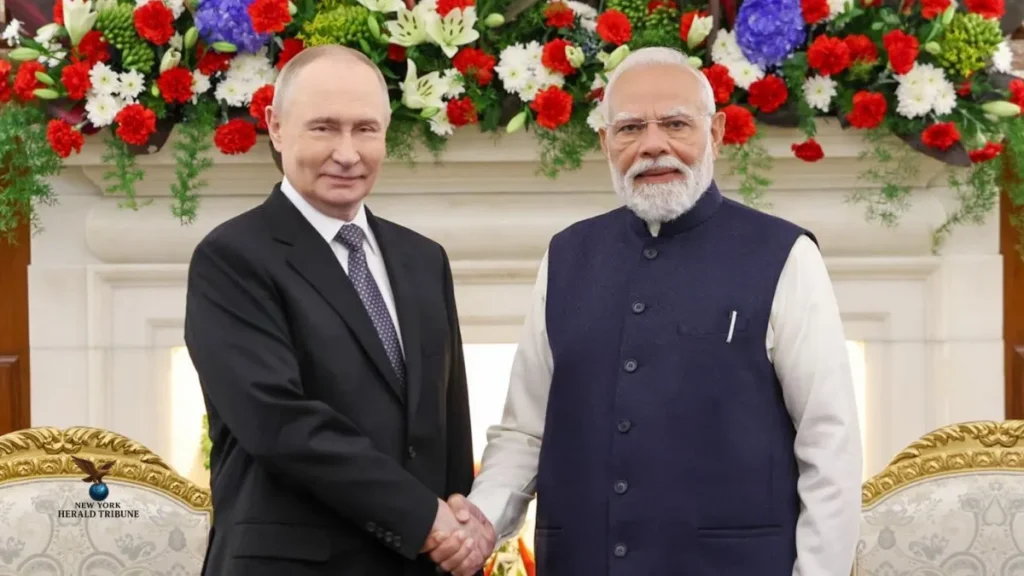
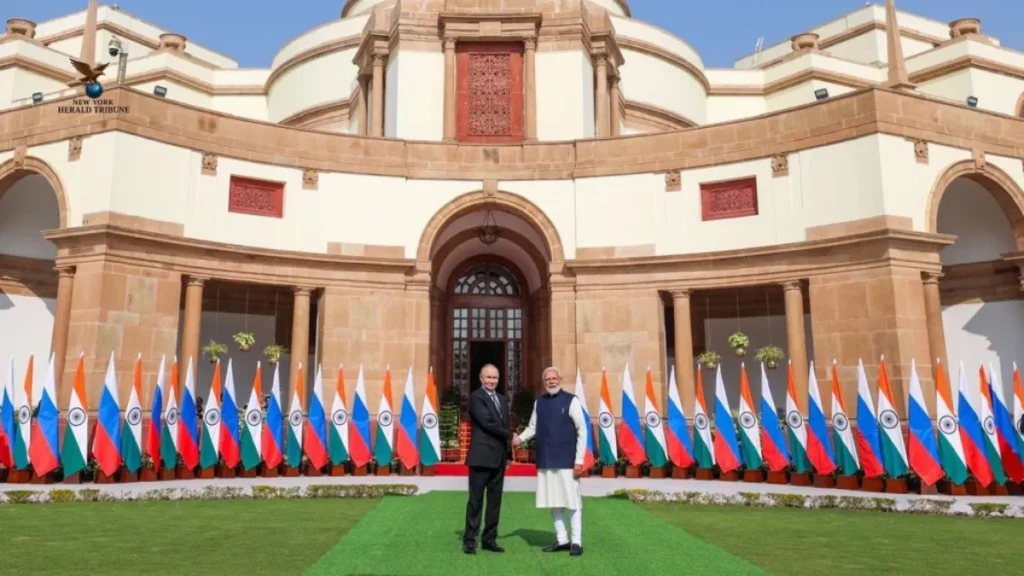
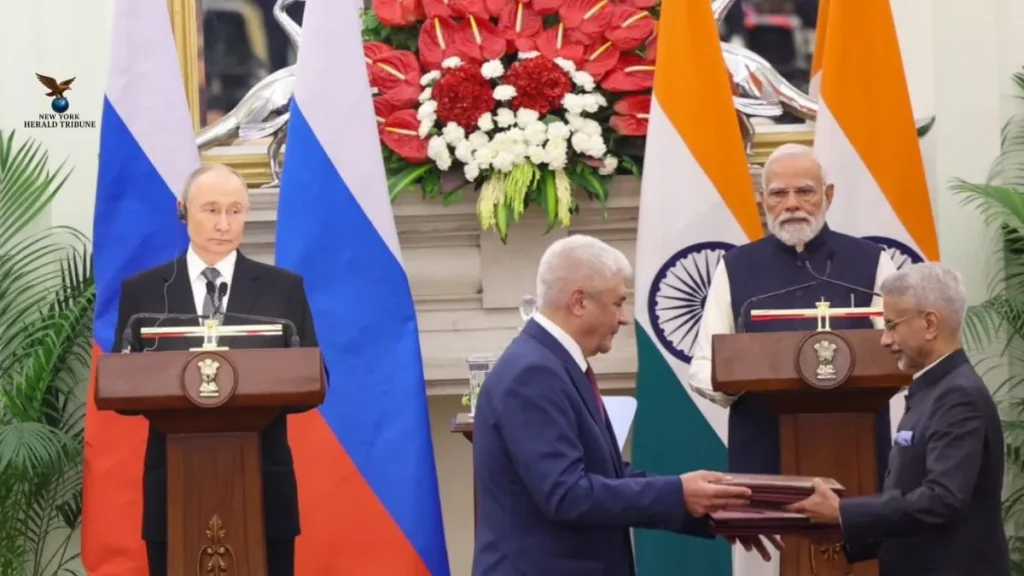
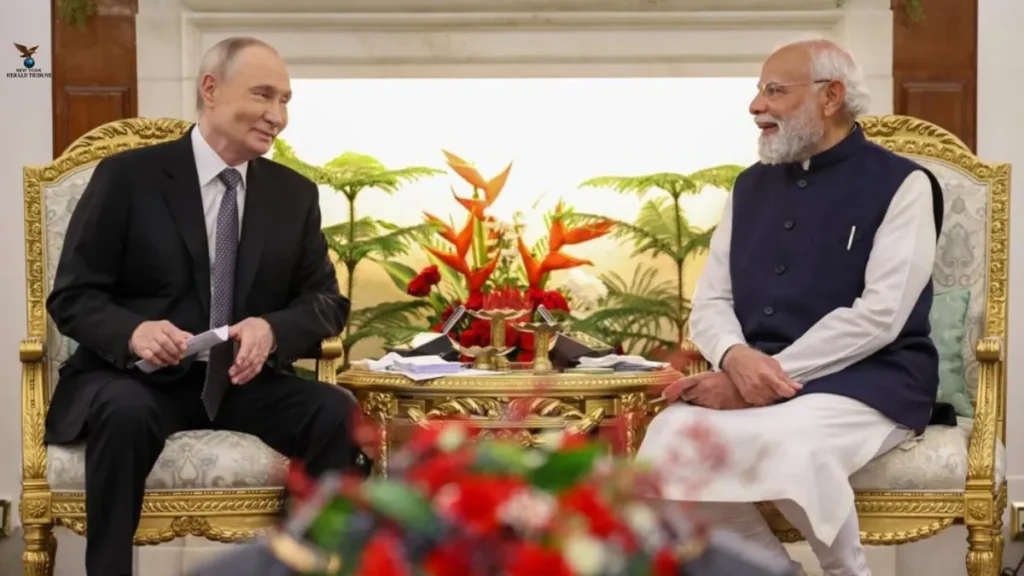
In a world reshaped by geopolitical tensions, economic uncertainties, and new power equations, india and russia relations continue to hold steady with remarkable resilience. Prime Minister Narendra Modi underscored this enduring partnership on Friday as he addressed the media alongside Russian President Vladimir Putin following the 23rd India-Russia Annual Summit held at Hyderabad House in New Delhi.
Standing next to President Putin, PM Modi described the bilateral relationship as a “pole star”-constant, unwavering, and reliable despite changing global winds. He emphasised that trust, mutual respect, and long-standing cooperation have helped both nations navigate some of the toughest international challenges of recent decades.
This year’s summit was significant not only for its timing but also for its symbolism. It comes as India and Russia mark 25 years of their Strategic Partnership and 15 years of their Special and Privileged Strategic Partnership, two milestones that underline the depth of their diplomatic, economic, and defence cooperation. The leaders reviewed the current state of relations and set ambitious goals for the next decade, reaffirming their vision for a multipolar, stable, and cooperative global order.
A Vision for the Next Decade: New Economic Cooperation Programme Until 2030
A major outcome of the summit was the agreement on a new Economic Cooperation Programme that will run until 2030, designed to expand, diversify, and modernise the economic engagement between the two countries.
PM Modi explained that the initiative goes beyond trade figures and is aimed at creating a balanced, sustainable, and future-ready economic partnership. The programme focuses on boosting bilateral investments, encouraging technological collaboration, and strengthening industries across sectors-from energy and manufacturing to agriculture, mining, and advanced research.
The leaders also announced that they would jointly participate in the upcoming India-Russia Business Forum, which will bring business leaders, industry representatives, and investors from both nations together. This engagement, PM Modi said, will be crucial for expanding private-sector participation and accelerating joint ventures, co-production models, and innovation-driven partnerships.
Within the broader conversation, PM Modi reaffirmed India’s commitment to concluding the long-pending Free Trade Agreement with the Eurasian Economic Union (EAEU) at the earliest opportunity. A successful FTA, he noted, would unlock extensive trade access, reduce tariff barriers, and strengthen India’s presence in the Eurasian region.
He also pointed out progress in the agriculture and fertiliser sector—a crucial area for India’s food security-highlighting joint planning for urea production, which is expected to benefit both nations and reduce dependency on third-country suppliers.
Strengthening Global Connectivity: Focus on New Transport Corridors
Connectivity formed one of the strongest pillars of discussion at the summit. PM Modi and President Putin reiterated their commitment to significantly advancing three major transport routes:
1. International North-South Transport Corridor (INSTC)
A priority for India, the INSTC is expected to reduce transportation time and costs for goods travelling between India, Russia, Europe, and Central Asia. PM Modi emphasised that accelerating its implementation will directly support trade volumes and boost regional economic integration.
2. Northern Sea Route (NSR)
With Arctic shipping routes gaining relevance due to climate change and new maritime possibilities, India has shown interest in joining hands with Russia to increase access to the NSR.
Russia’s decision to train Indian seafarers for navigation in polar waters was welcomed by PM Modi, who said this collaboration would not only enhance maritime ties but also create new employment opportunities for Indian sailors.
3. Chennai–Vladivostok Eastern Maritime Corridor
This proposed route, connecting India’s east coast to Russia’s Far East, has the potential to reshape the geography of Indo-Pacific trade. Both leaders promised to push forward with feasibility studies, infrastructure planning, and collaborative development of port facilities.
Together, these connectivity corridors reflect the broader vision of modernising india and russia relations and positioning both countries at the centre of emerging global supply chains.
Shipbuilding, Arctic Cooperation, and Make in India Boost
Highlighting the increasing synergy between India’s manufacturing ambitions and Russia’s shipbuilding expertise, PM Modi stressed the importance of expanding cooperation in shipbuilding. He noted that this collaboration would:
- support India’s Make in India initiative,
- create domestic manufacturing capacity,
- boost coastal and regional connectivity, and
- enhance India’s footprint in maritime industries.
Arctic cooperation was another important area flagged by PM Modi, who acknowledged Russia’s support for Indian involvement in Arctic research, energy exploration, and polar navigation. Enhanced collaboration in this region aligns with India’s long-term strategic interests as global powers compete for resources and influence in the High North.
Energy Security: A Cornerstone of India–Russia Strategic Ties
Energy remains one of the strongest anchors of india and russia relations, and the summit reaffirmed the sector’s central importance.
PM Modi described civil nuclear energy cooperation-particularly the long-term collaboration at Kudankulam Nuclear Power Plant—as a “pillar of trust.” Both nations reiterated their commitment to jointly develop nuclear technologies, expand existing units, and explore new clean-energy collaborations.
Russia remains a key player in India’s energy landscape, supplying key resources including crude oil, LNG, and nuclear fuel. The leaders discussed diversifying this cooperation to include:
- critical minerals for emerging industries,
- low-carbon technologies,
- renewable and alternative energy sources, and
- ensuring stable, long-term energy supply chains.
PM Modi highlighted the importance of critical minerals, calling them essential for “new-age industries” such as electric mobility, advanced electronics, robotics, aviation, and renewable energy systems. Joint development and exploration of these minerals could significantly enhance India’s industrial capabilities while strengthening its strategic autonomy.
Stronger People-to-People Ties: Tourism, Culture, Education, and Skilled Workforce Mobility
While political and strategic ties receive much of the global attention, PM Modi placed equal importance on the human dimension of india and russia relations. He noted that public goodwill between the two countries remains exceptionally high and that cultural linkages continue to thrive across generations.
To expand this engagement, India has opened two new consulates in Russia, and more steps are underway. PM Modi announced that India will soon offer:
- a free 30-day e-tourist visa for Russian citizens,
- new group tourist visas for travel agencies and tourism operators, and
- smoother application systems to boost travel in both directions.
Both nations signed agreements on:
- skilled manpower mobility,
- vocational education,
- youth training programmes, and
- academic collaboration.
These initiatives, PM Modi said, will help expand opportunities for Indian professionals in Russia and attract Russian students, tourists, researchers, and young innovators to India.
Addressing Global Issues: Ukraine Conflict and the Call for Peace
One of the key components of the leaders’ discussion was the ongoing conflict in Ukraine. PM Modi reiterated India’s long-standing and consistent position—calling for dialogue, diplomacy, and peaceful resolution.
He stressed that India has supported all international efforts aimed at restoring peace and remains ready to contribute in any constructive manner. “India has advocated for peace from the beginning. We welcome all efforts being made for a peaceful and permanent solution,” he said in his statement.
PM Modi’s remarks reflect India’s nuanced approach-maintaining strong relations with Russia while engaging actively with Western nations and international forums. This balanced diplomatic posture has allowed India to keep channels open on all sides and contribute to global stability discussions.
Joint Fight Against Terrorism: Shared Concerns and Unified Response
Security cooperation has historically been a central pillar of india and russia relations, and PM Modi made it clear that this remains unchanged. He referenced recent terror attacks in Pahalgam as well as the tragic Crocus City Hall attack in Moscow, expressing India’s solidarity with the victims.
He underlined that terrorism is “a threat to humanity” and that the global community must adopt a united stance to combat it. India and Russia have cooperated for decades on counter-terrorism measures, intelligence sharing, defence technologies, and regional security. PM Modi affirmed that this cooperation will only strengthen with time.
Both nations regularly coordinate positions at major international platforms such as the:
- United Nations (UN)
- G20
- BRICS
- Shanghai Cooperation Organisation (SCO)
- East Asia Summit (EAS)
This multilateral alignment reinforces their shared commitment to promoting global peace, inclusive development, and cooperative diplomacy.
Defence and Strategic Security Cooperation: A Long-Standing Backbone
Although the summit focused heavily on economic and developmental priorities, defence cooperation remains a backbone of india and russia relations. India has relied on Russian technology, equipment, and joint production for decades. While PM Modi did not delve deeply into specifics during the public address, senior officials confirmed that:
- joint defence manufacturing continues to expand,
- co-production models such as rifles, helicopters, and aerospace components are progressing,
- long-term maintenance and upgrade programmes are being enhanced, and
- discussions on advanced defence technologies remain ongoing.
The summit reaffirmed India’s strategic autonomy in global politics-strengthening partnerships across multiple major powers while preserving independent decision-making rooted in national interest.
A Relationship Built on Trust, Stability, and Shared Global Vision
Toward the end of his statement, PM Modi expressed confidence that the future of india and russia relations would remain strong, productive, and strategically significant. He noted that the world is entering an era marked by uncertainty-economic fragmentation, shifting alliances, new technology challenges, and unresolved conflicts.
Yet, he added, the India-Russia partnership has consistently shown its strength in such times. The two nations have weathered global crises together, adapted to new geopolitical realities, and continued to cooperate across sectors without interruption.
“It is a matter of satisfaction that our cooperation has not only remained steady but has also grown stronger,” PM Modi said.
Read also: Putin and Modi: PM Modi Hosts Private Dinner for Vladimir Putin Ahead of Crucial India–Russia Summit
Conclusion: India and Russia Step Into a New Era of Cooperation
The 23rd India-Russia Annual Summit marks another milestone in a relationship rooted in friendship, respect, and strategic alignment. The new agreements—ranging from economic cooperation and connectivity projects to people-to-people exchanges, Arctic collaboration, and energy security—signal a forward-looking vision for the next decade.
As global structures evolve, india and russia relations are poised to remain a stabilising force, offering both countries opportunities to grow, innovate, and shape the future together. The summit made it clear that both PM Modi and President Putin are committed to keeping the partnership resilient, relevant, and responsive to modern global challenges.
With stronger trade frameworks, enhanced mobility, new transport corridors, and deeper technological collaboration, the India-Russia relationship is stepping into a new chapter-one built on trust, experience, and a shared commitment to global peace and stability.