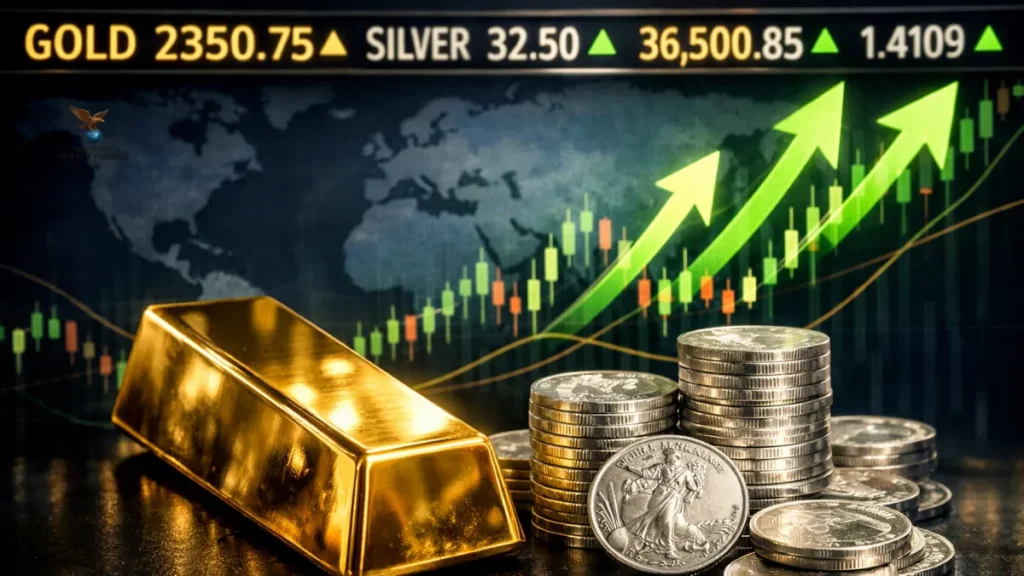
Gold and silver prices break all records, sending shockwaves through global bullion markets as investors rush toward precious metals amid economic uncertainty, geopolitical tensions, and shifting monetary policies. On December 23, gold surged past the historic ₹1.36 lakh mark for the first time ever, while silver climbed to an unprecedented ₹2.09 lakh per kilogram, setting new all-time highs for the second consecutive day.
According to data released by the India Bullion and Jewellers Association (IBJA), the rally reflects not just short-term speculation but a powerful combination of global and domestic factors that have fundamentally altered demand for precious metals.
Gold Crosses ₹1.36 Lakh for the First Time in History
Gold prices jumped sharply by ₹2,191 per 10 grams on December 23, reaching ₹1,36,133 per 10 grams. This marks the highest level gold has ever traded at in India. Just a day earlier, gold was priced at ₹1,33,970, highlighting the speed and intensity of the current rally.
The rapid appreciation in gold prices underscores growing investor anxiety about inflation, currency stability, and global political risks. Traditionally seen as a safe-haven asset, gold has once again proven its resilience during periods of heightened uncertainty.
Silver Touches ₹2.09 Lakh Per Kilogram, Shattering Previous Records
Silver prices have also witnessed a dramatic rise. The price of one kilogram of silver increased by ₹1,523 to reach ₹2,09,250 per kg, marking a fresh all-time high. On the previous trading day, silver was priced at ₹2,07,727 per kg.
What is particularly striking is the pace of silver’s rise. Over the past 10 days alone, silver prices have surged by a staggering ₹30,357 per kg. On December 9, silver was trading at ₹1,78,893 per kg, demonstrating how quickly market dynamics have shifted in favor of the white metal.
Why Gold and Silver Prices Differ Across Cities
Many consumers often wonder why bullion prices vary from city to city. The rates published by IBJA do not include 3% Goods and Services Tax (GST), making charges, or jeweller margins, which means retail prices differ depending on location and seller.
IBJA’s benchmark prices are primarily used by the Reserve Bank of India (RBI) to determine Sovereign Gold Bond rates. Several banks also rely on these figures when setting gold loan valuations. Local taxes, transportation costs, and demand levels further influence city-specific pricing.
Massive Price Surge in 2025: Gold and Silver Post Record Annual Gains
The rally in precious metals is not limited to recent days-it reflects a broader trend throughout the year.
- Gold prices have risen by ₹59,971 in 2025 so far.
On December 31, 2024, 24-carat gold was priced at ₹76,162 per 10 grams. Today, it stands at ₹1,36,133. - Silver prices have jumped by ₹1,23,233 during the same period.
At the end of 2024, silver was trading at ₹86,017 per kg. It has now soared to ₹2,09,250 per kg.
These extraordinary gains have positioned gold and silver as some of the best-performing assets of the year.
Three Key Reasons Behind the Gold Price Explosion
1. Weakening US Dollar
The US Federal Reserve’s decision to cut interest rates has weakened the dollar, reducing the opportunity cost of holding gold. As the dollar softens, gold becomes more attractive to global investors, driving demand higher.
2. Rising Geopolitical Tensions
Ongoing conflicts such as the Russia-Ukraine war, along with escalating global political instability, have pushed investors toward safe assets. Gold is widely regarded as the most reliable hedge during periods of international turmoil.
3. Central Bank Gold Buying
Central banks across the world-especially China-are aggressively increasing their gold reserves. Global central banks have collectively purchased over 900 tonnes of gold this year, tightening supply and pushing prices upward.
Three Major Factors Driving Silver’s Historic Rally
1. Strong Industrial Demand
Silver is no longer just a precious metal for jewellery. Its extensive use in solar panels, electric vehicles (EVs), electronics, and green energy technologies has transformed it into a critical industrial commodity.
2. Tariff Concerns and Stockpiling
Fears of potential trade tariffs-particularly under future US policy shifts-have prompted American companies to stockpile silver. This precautionary buying has reduced global supply, boosting prices.
3. Pre-emptive Buying by Manufacturers
Manufacturers worldwide are rushing to secure silver supplies amid fears of production disruptions. This aggressive forward buying has intensified demand and is expected to sustain the bullish trend in coming months.
Will Prices Rise Further? Expert Outlook for Gold and Silver
Market experts believe the rally may be far from over.
Ajay Kedia, Director of Kedia Advisory, says silver demand remains exceptionally strong and could push prices even higher. According to his projections:
- Silver could reach ₹2.10 lakh per kg by the end of this year
- Within the next year, silver may climb as high as ₹2.50 lakh per kg
Gold also appears poised for further gains:
- Gold prices could touch ₹1.35 lakh per 10 grams by year-end
- In the next year, gold may cross ₹1.50 lakh per 10 grams
Such forecasts reflect strong confidence in the long-term fundamentals supporting precious metals.
Important Tips to Remember When Buying Gold
1. Always Buy Hallmarked Gold
Consumers should only purchase gold certified by the Bureau of Indian Standards (BIS). Hallmarked gold comes with a unique alphanumeric code (for example: AZ4524), confirming purity and carat value.
2. Verify Prices from Reliable Sources
Before purchasing, buyers should cross-check gold prices from multiple trusted sources, such as IBJA. Prices vary depending on purity—24-carat, 22-carat, and 18-carat gold all have different rates.
Why Gold Prices Vary Across Cities: Four Key Reasons
1. Transportation Costs
Gold must be physically transported, often by air for imports and then via secure logistics to inland regions. Fuel costs, security expenses, staff salaries, and insurance all impact final pricing.
2. Regional Demand Differences
Gold demand varies significantly by region. Southern India alone accounts for nearly 40% of India’s total gold consumption. Higher bulk purchases in these areas often result in lower prices compared to tier-2 cities.
3. Local Jewellery Associations
In some states, jewellery associations play a role in setting daily prices. For example, in Tamil Nadu, rates are influenced by the Jewellers and Diamond Traders Association.
4. Stock Acquisition Costs
Jewellers who purchased gold at lower prices can afford to sell at more competitive rates. Those with higher-cost inventory may charge more, leading to price variation even within the same city.
Also read: Trump Tariff Checks: Will Americans Really Get $2,000 From Tariff Revenues?
Global Implications as Gold and Silver Prices Break All Records
As gold and silver prices break all records, the ripple effects are being felt across global markets. Investors are rebalancing portfolios, central banks are reassessing reserve strategies, and consumers are reconsidering purchase timing.
With inflation concerns lingering, currencies under pressure, and geopolitical risks unresolved, precious metals continue to shine as reliable stores of value. Whether for investment, industrial use, or wealth preservation, gold and silver remain firmly at the center of global financial attention.
If current trends persist, 2025 could go down as one of the most significant years in the history of the bullion market-one where gold and silver truly redefined their limits.