Mumbai | Special Political Analysis
Election Results: The latest election results from Mumbai’s civic polls have altered the political landscape of Maharashtra’s financial capital, marking a turning point in the long-standing dominance of the Shiv Sena over the Brihanmumbai Municipal Corporation (BMC), India’s richest civic body. For the first time in decades, Uddhav Thackeray no longer commands direct control over the BMC, an institution that has historically been the backbone of Shiv Sena’s political and financial influence.
Yet, despite this significant setback, the election results also underline a more nuanced reality. Uddhav Thackeray has not been politically diminished. On the contrary, the Shiv Sena (Uddhav Balasaheb Thackeray faction), or Shiv Sena (UBT), has emerged with a strong showing, winning 74 seats and reaffirming Thackeray’s relevance as a central political force in Mumbai.
While Eknath Shinde’s faction may have secured a numerical edge in corporators, the broader message from the election results is clear: Uddhav Thackeray continues to command loyalty among the Marathi Manoos and remains the custodian of the original Shiv Sena legacy founded by Bal Thackeray.
The BMC: Why Losing Control Matters
The Brihanmumbai Municipal Corporation is not just another civic body. With an annual budget that exceeds that of several Indian states, the BMC has long been the most powerful municipal institution in the country. For the Shiv Sena, control of the BMC has been synonymous with political strength, grassroots influence, and organisational stability.
Since its inception in the 1960s, the Shiv Sena maintained near-continuous control over the BMC, using it as a platform to shape Mumbai’s urban policies, employment networks, and cultural identity. For decades, Sena leaders openly stated that retaining the BMC was non-negotiable in any alliance arrangement.
The latest election results, therefore, represent a symbolic and strategic loss for Uddhav Thackeray. Losing the BMC weakens the Shiv Sena (UBT)’s institutional leverage and reduces its access to a critical power centre that historically sustained the party through electoral highs and lows.
However, political symbolism cuts both ways.
A Moral Victory Hidden in the Numbers
Despite losing control of the civic body, the Shiv Sena (UBT)’s performance has surprised both supporters and critics. Winning 74 seats in a fiercely contested election, especially amid an aggressive campaign by the Bharatiya Janata Party (BJP) and Eknath Shinde’s breakaway faction, signals resilience rather than decline.
The election results suggest that while Shinde succeeded in drawing away a section of Sena corporators, he could not fully erode the emotional and ideological bond between the Thackeray family and Mumbai’s core Marathi voter base.
In Sena strongholds across the city, particularly in central and suburban Mumbai, voters continued to identify Uddhav Thackeray as the authentic face of the Shiv Sena. This loyalty proved decisive in preventing a total collapse of the party’s urban presence.
Eknath Shinde’s Challenge and Its Limits
Eknath Shinde’s rebellion had fundamentally altered Maharashtra’s political equation. Backed by the BJP, Shinde positioned himself as the legitimate heir to the Shiv Sena’s organisational structure and legislative strength.
The election results confirm that Shinde made notable inroads in Mumbai, particularly in pockets where development narratives and administrative promises resonated with voters. However, these gains fell short of displacing the Thackeray brand as the emotional core of Sena politics in the city.
While Shinde may have walked away with a larger number of corporators, the perception battle appears less clear-cut. Many voters still associate the Shiv Sena’s ideological origins, Marathi pride, and cultural identity with the Thackeray family rather than with the faction currently aligned with the BJP.
Congress Steps Back, Thackerays Step Forward
One of the most significant developments shaping the election results was the Congress party’s decision to contest independently rather than align closely with the Maha Vikas Aghadi (MVA) framework at the civic level.
This move effectively removed a traditional ally from Uddhav Thackeray’s immediate equation, forcing the Shiv Sena (UBT) to consolidate its base without external support. While the Congress suffered a sharp decline in seat count, this vacuum allowed the Thackeray cousins to reassert their relevance among core voters.
With the Congress reduced to a marginal presence in Mumbai’s civic politics, Uddhav Thackeray has now emerged as the principal opposition figure in the city. The election results position him as the de facto leader of the opposition, both inside and outside the municipal framework.
Bipolar Politics Returns to Mumbai
The outcome of the civic polls has set the stage for a largely bipolar political contest in Mumbai, with the Shiv Sena (UBT) and the BJP emerging as the primary poles of power.
This marks a departure from earlier multi-cornered contests where regional parties, Congress, and smaller factions played significant roles. The election results suggest that Mumbai’s politics is increasingly defined by two competing visions: Uddhav Thackeray’s brand of inclusive regionalism versus the BJP’s assertive national narrative.
Shiv Sena (UBT) leaders have been quick to frame this contest ideologically. They argue that their version of Hindutva is more accommodating, inclusive, and rooted in Mumbai’s pluralistic culture, in contrast to what they describe as the BJP’s “hardline Hindutva.”
Reclaiming the Marathi Manoos Identity
One of Uddhav Thackeray’s most enduring political strengths has been his ability to represent the Marathi Manoos in Mumbai, a city shaped by migration, diversity, and economic opportunity.
Despite demographic changes, the election results indicate that this identity politics still resonates strongly in Sena bastions. Voters in traditional Marathi neighbourhoods continued to back Shiv Sena (UBT), reaffirming Thackeray’s status as the symbolic guardian of local pride and linguistic identity.
This emotional connection may prove more valuable in the long run than control over municipal machinery, especially as Mumbai heads into future state and national elections.
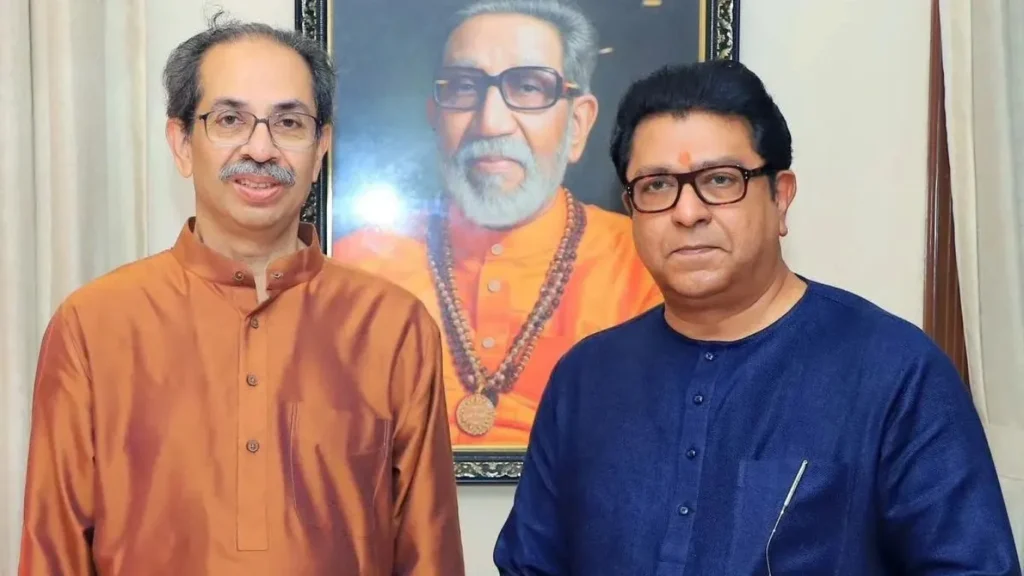
Raj Thackeray Remains on the Margins
Speculation about Raj Thackeray’s Maharashtra Navnirman Sena (MNS) playing a decisive role once again failed to materialise. The election results confirmed that the MNS remains a fringe force in Mumbai’s civic politics.
This outcome strengthens Uddhav Thackeray’s position as the primary representative of Marathi interests in the city, reducing the threat of vote fragmentation within the regional space.
The Expansion Challenge Ahead
While the election results offer reassurance, they also present a clear challenge for Uddhav Thackeray: expansion beyond traditional support bases.
To remain electorally competitive against the BJP’s vast organisational machinery, the Shiv Sena (UBT) must grow beyond its core Marathi vote bank. Thackeray has previously demonstrated an ability to do this through inclusive campaigns that appeal to broader urban identities.
Initiatives like the “Mi Mumbaikar” campaign showed that the Sena could attract non-Marathi voters by emphasising civic pride, urban governance, and shared economic aspirations rather than narrow identity politics.
The Muslim Vote and a New Coalition Strategy
With the Congress significantly weakened in Mumbai, the election results open up a strategic opportunity for Uddhav Thackeray to broaden his coalition.
One potential avenue lies in engaging with Muslim voters, who traditionally leaned towards the Congress or smaller secular parties. By positioning the Shiv Sena (UBT) as a credible, inclusive alternative to the BJP, Thackeray could consolidate minority support without alienating his core base.
This balancing act will be critical. Success would allow the Sena to transform from a regional identity party into a broader urban political force capable of challenging the BJP across constituencies.
Beyond the BMC: The Bigger Political Picture
Although losing control of the BMC is undeniably a blow, the broader election results suggest that Uddhav Thackeray’s political relevance extends far beyond municipal boundaries.
His ability to withstand an internal split, a hostile central government, and an aggressive BJP-Shinde alliance demonstrates resilience that few had predicted. More importantly, the civic polls have clarified leadership roles within Maharashtra’s opposition space.
With Congress weakened and regional alternatives fragmented, Uddhav Thackeray now occupies a central position in shaping opposition narratives in Mumbai and potentially across the state.
Also read: PSI-LRD Exam Call Letter Download Begins: Physical Tests for 13,591 Posts to Start on January 21
Conclusion: A Setback, Not a Defeat
The BMC election results mark the end of an era but not the end of Uddhav Thackeray’s political journey. Losing administrative control of Mumbai’s richest civic body has altered the balance of power, but it has not erased the emotional and ideological bond between the Thackerays and the city.
Instead, the results have revealed a more complex reality: Uddhav Thackeray remains a leader of consequence, a symbol of legacy, and a pivotal figure in Mumbai’s evolving political contest.
As Maharashtra looks ahead to future elections, the lessons from these election results will shape strategies, alliances, and narratives. For Uddhav Thackeray, the road ahead is challenging, but the foundation for a political revival remains firmly in place.