Trump bolsonaro Brazil’s political landscape entered a new phase of turmoil this week after former President Jair Bolsonaro was transferred from house arrest to a federal prison. The dramatic escalation came after Bolsonaro admitted that he attempted to tamper with the electronic monitoring device strapped to his ankle while serving his sentence at home. The incident has intensified the legal and political storm surrounding the former leader, who was previously convicted for plotting to overturn the 2022 election results after losing to President Luiz Inácio Lula da Silva.
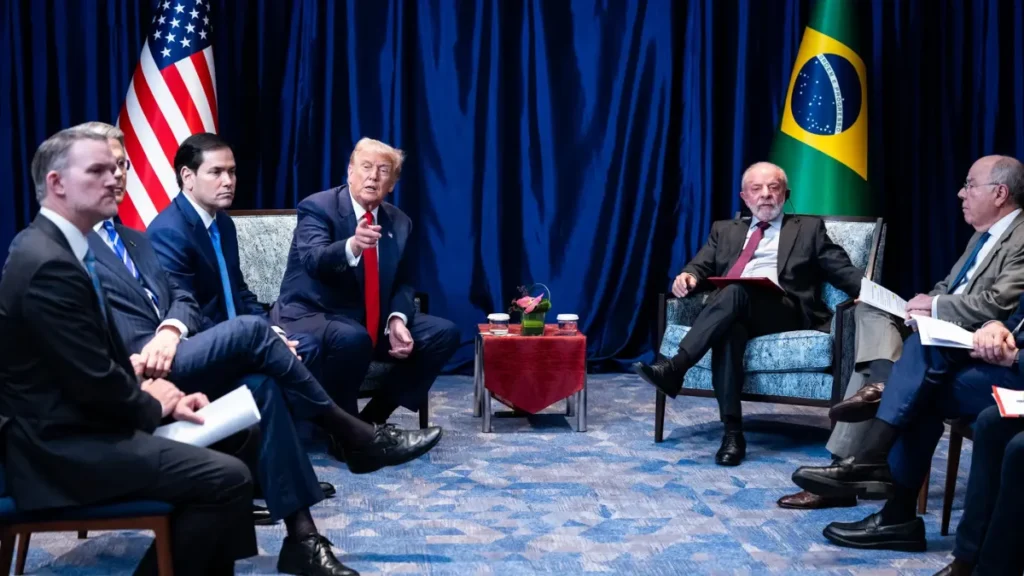
The 70-year-old former president, often discussed globally in the context of far-right leaders such as Donald Trump—giving rise to the popular political comparison “Trump bolsonaro”—was already serving a 27-year prison sentence. He was convicted of attempting to subvert the democratic process by pushing for a coup to remain in power. Despite being allowed to serve his early sentence under home confinement, Bolsonaro is now facing stricter punishment after his latest actions were deemed an attempt to escape justice.
Supreme Court Upholds Custody After Bolsonaro’s Confession
On Monday, Brazil’s Supreme Court took a firm stance by upholding Bolsonaro’s detention and ordering that he remain in preventive custody. The decision followed a significant admission from Bolsonaro himself, who acknowledged that he had tried to break or interfere with the ankle monitoring device assigned to him as part of his home-arrest conditions.
According to court reports, the tampering attempt occurred at 12:08 p.m. local time on Saturday. Within hours, an arrest warrant was issued by Justice Alexandre de Moraes—the same judge who has overseen several legal proceedings involving Bolsonaro in recent years. Moraes judged the incident as a clear intention to flee and evade the 27-year sentence that Bolsonaro received for attempting to orchestrate a coup after losing the election.
A panel of four Supreme Court justices—Alexandre de Moraes, Flávio Dino, Cristiano Zanin and Cármen Lúcia—voted unanimously during an online session to keep the former president in custody. All four concluded that Bolsonaro has repeatedly violated the terms of his conditional release and has shown disregard for judicial authority.
Bolsonaro Claims Mental Stress, Doctors Cite Medication Change
During the Sunday hearing, Bolsonaro attempted to defend himself, stating that he acted out of panic and confusion. He told a presiding judge that recent changes in his medication had affected his mental state, causing heightened anxiety and disorientation at the moment he tampered with the device. His legal team and medical doctors echoed the same explanation, insisting that the incident was not an intentional escape attempt but rather a reaction to deteriorating mental health.
However, Justice de Moraes rejected the defense in his official order. He wrote that Bolsonaro had admitted to the act and had exhibited “serious inappropriate behavior,” violating multiple precautionary restrictions set by the court. The judge added that Bolsonaro’s repeated defiance demonstrated “clear contempt toward the judiciary.”
Following his arrest Saturday morning, Bolsonaro was immediately transported to the federal police headquarters in Brasília, where he is now being held in preventive detention.
Public Reactions: Streets Divided Across Brazil
The news of Bolsonaro’s detention quickly triggered strong reactions nationwide. Since August, when his home confinement began, political tensions surrounding his fate have remained high.
After the tampering revelations emerged on Saturday, supporters and critics took to the streets across several Brazilian cities. Demonstrations erupted both in defense of Bolsonaro and in celebration of the court’s latest action. By Monday, however, gatherings around the federal police headquarters in Brasília had thinned considerably due to heavy rainfall. A handful of demonstrators remained near the building, while passing drivers honked their horns—some in protest against Bolsonaro, others in support of President Lula.
The deep political divide reflects the broader national turmoil that has escalated since Bolsonaro’s election defeat. The ongoing comparison between “Trump bolsonaro” movements—highlighting similarities in rhetoric, election disputes and loyal supporter bases—continues to resonate strongly in public debates across Brazil, the US and beyond.
Also read: “Come to the US, Train Americans, Go Home”: Trump’s New Vision for the H-1B Visa Program
Political Pressure Builds as Congress Returns
Meanwhile, Brazil’s political class is preparing for a tense week as Congress resumes its legislative session. Bolsonaro’s detention is expected to dominate political discussions, adding fuel to an already polarized environment.
Flávio Bolsonaro, the former president’s son and a sitting senator, announced that he will continue pushing for an amnesty bill aimed at protecting his father. Although the proposal gained significant traction earlier this year, momentum has slowed in recent months due to mounting legal challenges and internal divisions within the right-wing bloc.
Still, Flávio remains determined. He insisted that the political movement surrounding his father will regain strength and suggested that the amnesty issue will be fully addressed “in 2026,” hinting at future electoral battles. Flávio himself is considered a potential presidential candidate for the next election cycle.
However, not everyone within the conservative sphere agrees. Some right-wing leaders have begun to favor alternative candidates from outside the Bolsonaro family, including São Paulo Governor Tarcísio de Freitas, who has emerged as a rising figure among conservatives. This internal divide could shape the future of Brazil’s political right—and potentially influence global perceptions of the broader “Trump bolsonaro” political alignment.
Also read: Trump h1b Policy Debate Intensifies as White House Defends Stance on American Jobs
A Deepening Crisis With No Clear End in Sight
Bolsonaro’s move from house arrest to prison marks one of the most significant turning points in Brazil’s recent political history. The implications go far beyond a single legal case. His arrest has deepened national polarization, reshaped conservative leadership dynamics and raised questions about the resilience of Brazilian democracy.
As the legal process continues and political tensions escalate, Brazil faces an uncertain path ahead—one where the legacy of Jair Bolsonaro, and the global political parallels often drawn between leaders such as Trump bolsonaro, will continue to influence domestic and international discourse for years to come.