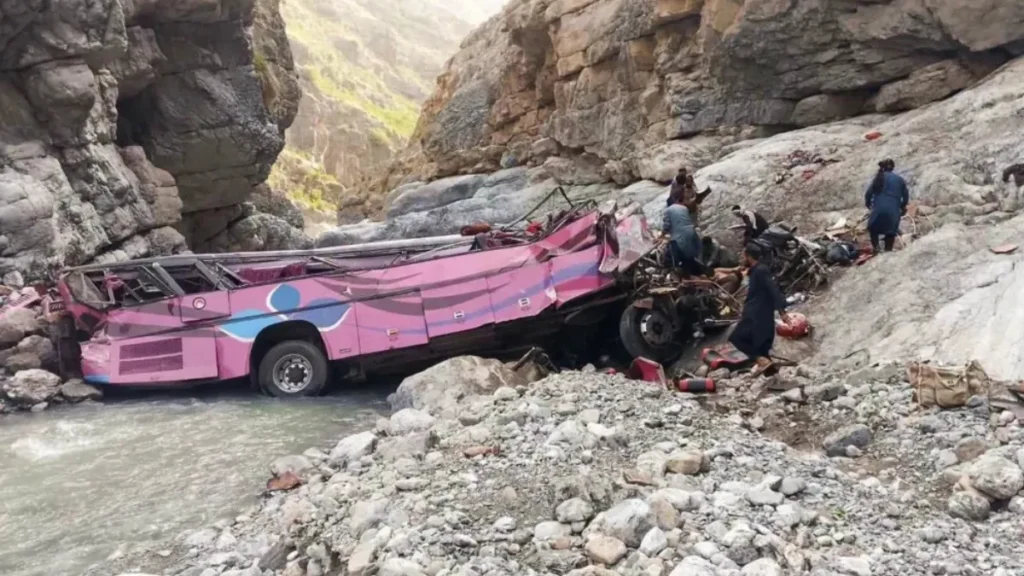
A tragic Pakistan Bus Accident claimed the lives of more than 40 people on Friday after an overloaded passenger bus veered off a mountain road and crashed into a deep rocky ravine near the Dana Sar area, close to the border of Khyber Pakhtunkhwa and Balochistan. Several others suffered serious injuries, making it one of the deadliest road accidents reported in the region this year.
Emergency teams rushed to the scene shortly after the crash, while local authorities launched rescue operations and began investigating the circumstances that led to the devastating incident.
Bus Lost Control on Dangerous Mountain Road
According to officials from the Balochistan government, the accident occurred when the driver reportedly lost control of the vehicle while negotiating a sharp bend along a mountainous highway. The bus left the roadway before tumbling down a steep, rock-filled gorge.
The impact of the crash caused extensive damage to the vehicle, making rescue efforts difficult due to the challenging terrain. Authorities confirmed that at least 40 passengers lost their lives, while around eight others sustained severe injuries and were taken to nearby medical facilities for treatment.
Rescue workers continued searching the accident site for several hours to ensure no passengers remained trapped inside the wreckage.
Preliminary Investigation Points to Overloading
Early findings from investigators suggest that overloading may have played a significant role in the crash.
Officials said the bus had already reached its intended passenger capacity before additional travelers were allowed to board. Reports indicate that another bus traveling along the same route had broken down, prompting authorities or transport operators to transfer its passengers onto the already crowded vehicle.
As a result, the bus was carrying significantly more passengers than recommended. Combined with reports of excessive speed on a winding mountain road, investigators believe these factors may have contributed to the driver losing control.
A detailed investigation is underway to determine whether mechanical failure, driver error, or violations of transport safety regulations also played a role.
National Leaders Express Condolences
Pakistan’s President, Asif Ali Zardari, expressed deep sorrow over the loss of life and extended condolences to the families of those who died in the accident. He also directed authorities to ensure that the injured receive immediate and appropriate medical care.
Balochistan Chief Minister Sarfraz Bugti also conveyed his condolences and instructed local officials to speed up rescue and relief efforts. He emphasized that hospitals and emergency services should provide every possible assistance to those injured in the crash.
Government agencies are expected to review the incident closely as part of the ongoing investigation.
Also read: FIFA World Cup 2026: Can a Host Nation End the Long Wait for World Cup Glory?
Mountain Roads Continue to Pose Safety Challenges
Serious road accidents remain a recurring concern in Pakistan’s mountainous regions, where steep terrain, narrow roads, and limited safety infrastructure often increase the risk of fatal crashes. Transport experts have also repeatedly highlighted issues such as overloaded vehicles, speeding, poor vehicle maintenance, and inconsistent enforcement of traffic regulations.
Many highways passing through remote areas feature sharp curves and deep valleys, requiring drivers to exercise extreme caution. However, accidents continue to occur due to a combination of human error and infrastructure challenges.
Road safety advocates have frequently called for stricter inspections of passenger buses, better driver training, and stronger enforcement of transport rules to reduce the number of fatal crashes.
Also read: Brazil Wildlife Trafficking Probe Brings Fresh Scrutiny to Vantara Zoo and Exotic Animal Trade
Similar Incidents Raise Road Safety Concerns
The latest Pakistan Bus Accident follows several serious road tragedies reported in recent months. In May, another deadly collision occurred in northwestern Pakistan when a minibus crashed into a stationary bus, leaving 17 people dead and several others injured.
The repeated occurrence of such accidents has renewed concerns about passenger transport safety across the country. Authorities are expected to examine whether stricter enforcement of safety standards, improved road infrastructure, and tighter regulations on overcrowded public transport can help prevent similar disasters in the future.
As rescue operations conclude and investigators gather further evidence, officials continue to identify victims and provide support to affected families while the nation mourns another devastating loss of life.