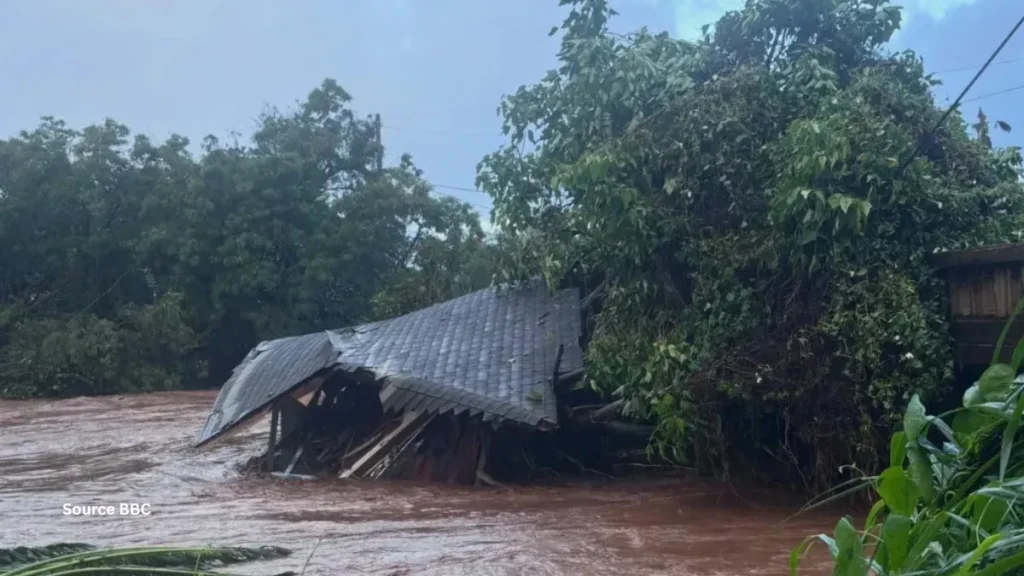
Honolulu, Hawaii: Hawaii Flash Flooding Oahu: A powerful storm system has triggered widespread devastation across Hawaii, forcing thousands of residents to flee their homes as authorities battle what officials are calling the worst flooding event in the state in over 20 years. The crisis, driven by relentless rainfall and dangerous weather conditions, has placed the spotlight firmly on hawaii flash flooding oahu, where the situation has been particularly severe.
The extreme weather marks the second major storm to strike the Hawaiian islands within a week, compounding damage and stretching emergency resources. Officials estimate that the total destruction caused by the back-to-back storms could exceed $1 billion, raising concerns about long-term recovery and infrastructure resilience across the state.
Thousands Evacuated Amid Rising Waters
The hardest-hit areas include parts of Oahu, the most populous island in the state, where rapidly rising floodwaters forced authorities to issue evacuation orders affecting approximately 5,500 residents north of Honolulu. Emergency shelters were quickly set up as families scrambled to find safety.
Floodwaters surged through neighborhoods, lifting vehicles, damaging homes, and leaving entire communities submerged. Many roads across the island were rendered impassable, isolating neighborhoods and complicating rescue operations.
According to Rick Blangiardi, more than 230 individuals have already been rescued by emergency teams. He emphasized the seriousness of the situation, urging residents to remain vigilant and prioritize safety.
“Take this storm as seriously as you can and stay safe,” Blangiardi said during a press briefing, highlighting the ongoing risks posed by the unstable weather system.
Dam Failure Fears Heighten Concerns
Authorities also issued urgent warnings about a potentially failing dam on Oahu, raising fears of catastrophic flooding if the structure were to collapse. Emergency services have been closely monitoring the situation while urging nearby residents to evacuate as a precaution.
The combination of overflowing rivers, saturated ground, and continued rainfall has made conditions highly unpredictable, particularly in low-lying and flood-prone areas.
Kona Low System Behind the Chaos
Meteorologists have attributed the severe conditions to a weather phenomenon known as a Kona Low. This slow-moving low-pressure system draws in warm, moisture-rich air, creating prolonged periods of heavy rainfall and increasing the risk of flash flooding.
The impact of this system has been widespread, with some areas recording more than 10 inches (25 cm) of rainfall in a short period. Wind gusts reaching up to 100 mph (160 km/h) have further intensified the damage, toppling trees, disrupting power lines, and affecting critical infrastructure.
Statewide Emergency Response Underway
Speaking at the same news conference, Josh Green confirmed that, despite the scale of destruction, no fatalities had been reported so far—a development he credited to the swift response of emergency services and early warnings.
He urged residents across the islands to follow official guidance, relocate to designated shelters, and avoid unnecessary travel.
“This will have serious consequences for us as a state,” Green said, noting that the storm has caused extensive damage to airports, schools, hospitals, and major roadways, in addition to residential areas.
Emergency teams have been working around the clock to conduct rescues, clear debris, and restore essential services. The Honolulu Department of Emergency Management has issued multiple flash flood warnings, advising residents to move to higher ground and stay away from flooded zones.
Multiple Islands Affected
While Oahu remains the epicenter of the crisis, the impact of the storm has extended to other islands, including Maui, Molokai, and Big Island, where flood watch alerts have also been issued.
Authorities are closely monitoring conditions across the archipelago as the storm system continues to move slowly, bringing additional rainfall and thunderstorms.
Although meteorologists suggest that the worst of the storm may have passed, intermittent heavy showers are expected to persist through the weekend and into early next week, raising concerns about further flooding in already saturated areas.
Economic and Infrastructure Impact
The scale of damage caused by the hawaii flash flooding oahu event is expected to have long-lasting economic repercussions. Early estimates indicate that repair costs for infrastructure, public services, and private property could surpass $1 billion.
Airports have faced disruptions, schools have been temporarily closed, and healthcare facilities have reported operational challenges due to flooding and access issues. Many residents are now facing the daunting task of rebuilding their homes and lives.
A State Familiar with Natural Disasters
This latest disaster adds to a growing list of challenges for Hawaii, a region frequently exposed to extreme natural events. The flooding follows closely on the heels of the devastating 2023 Lahaina wildfires, which claimed over 100 lives and left entire communities in ruins.
The recurrence of such events has intensified discussions around climate resilience, disaster preparedness, and the need for improved infrastructure to withstand increasingly severe weather patterns.
Also Read: NASA Artemis Rocket Launch: Moon Mission Back on Track as Space Agency Targets April Liftoff
Ongoing Vigilance Urged
Officials continue to stress the importance of caution as the situation evolves. Residents are being advised to stay updated through official channels, avoid flooded areas, and adhere strictly to evacuation orders where issued.
As Hawaii begins to assess the full extent of the damage, the focus remains on ensuring public safety and providing immediate relief to those affected. The hawaii flash flooding oahu crisis serves as a stark reminder of the power of nature and the importance of preparedness in the face of extreme weather.
With recovery efforts just beginning, authorities warn that the road ahead may be long, but the resilience of Hawaii’s communities will play a crucial role in overcoming this historic disaster.