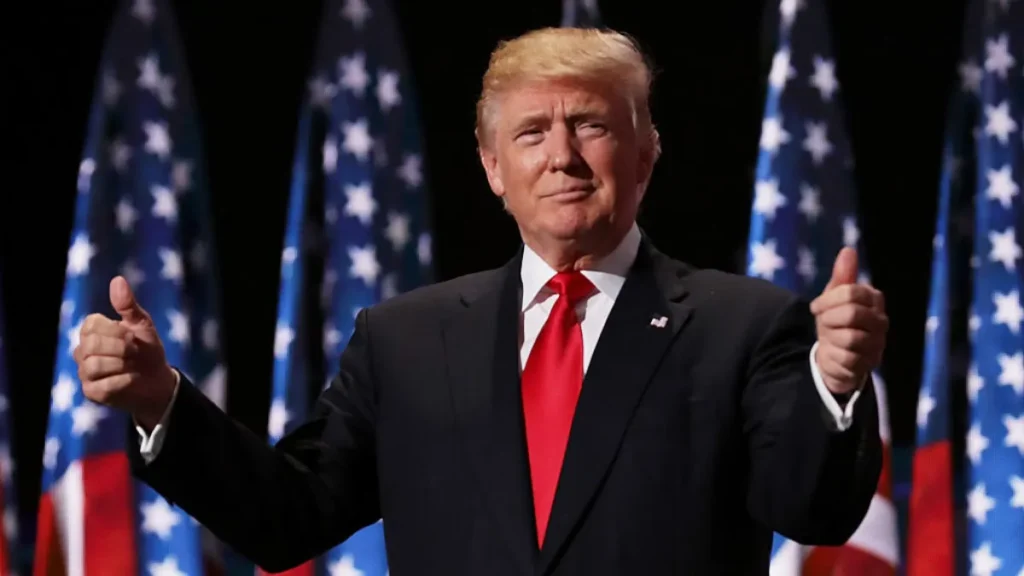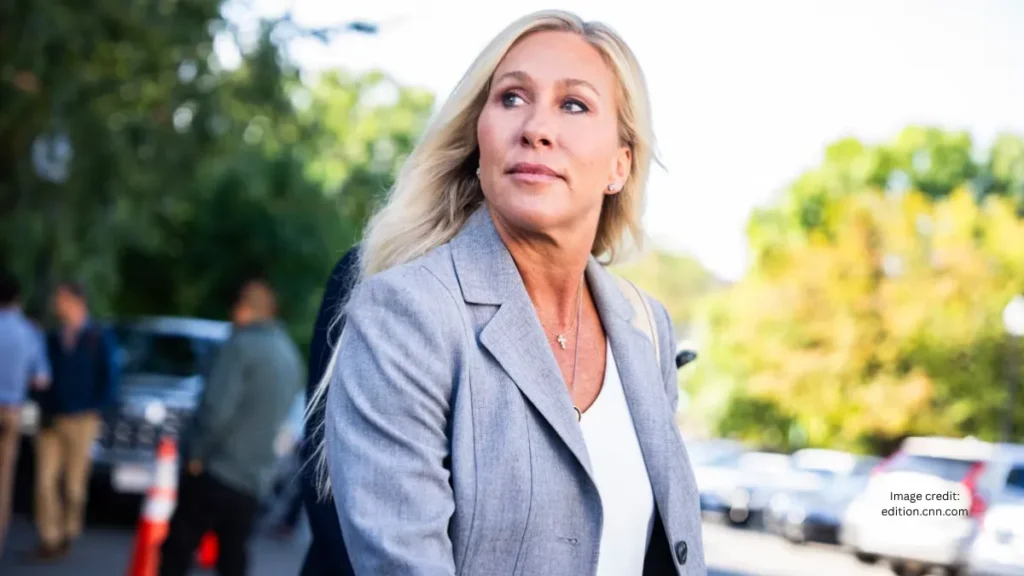
Marjorie taylor greene trump: In a move that stunned Washington and sparked nationwide debate, Representative Marjorie Taylor Greene- one of the most recognizable MAGA figures in American politics- publicly apologized for her past role in fueling political toxicity. Greene’s dramatic shift comes at a moment when her once-unshakeable alliance with former President Donald Trump appears to be fracturing. The evolution of the Marjorie Taylor Greene Trump relationship is not just a personal disagreement; it may signal a deeper shift within the Republican Party and the broader conservative movement.
During an unusually candid appearance on CNN’s State of the Union, Greene said something modern politicians almost never say: “I’m sorry.” Her straightforward contrition and willingness to reflect on her past rhetoric marks a significant departure from the confrontational style that helped define her early political identity and made her a central figure in the MAGA movement.
Greene Breaks Her Own Mold With an Unprecedented Apology
Speaking with CNN host Dana Bash, Greene admitted she had contributed to the rising toxicity that has strained American political culture.
“Humbly, I’m sorry for taking part in the toxic politics; it’s very bad for our country,” she said, striking a tone that surprised even her critics.
She elaborated that she has been consciously trying to reduce hostility, calling for more kindness and unity in a divided nation. Greene’s softer rhetoric represents a stark contrast to the firebrand persona that brought her national attention in 2020, when she entered Congress championing conspiracy theories and aggressively confronting political opponents.
Her apology was not prompted by political pressure, according to her own account, but by the assassination of conservative activist Charlie Kirk, a traumatic event within the MAGA community that forced her to reassess her approach.
Following the tragedy, Greene said she now fears for her own safety — a fear she claims was heightened by Trump’s public attacks against her. On X, she wrote that Trump’s comments amounted to a “dog whistle to dangerous radicals”, resulting in threats against her.
Yet Trump dismissed those concerns with characteristic bluntness, telling reporters:
“I don’t think her life is in danger. Frankly, I don’t think anybody cares about her.”
He even referred to Greene as “Marjorie ‘Traitor’ Greene.”
The use of the word “traitor” shocked many political observers, given Greene’s long-standing loyalty to him. This escalation marks the most public breakdown in the Marjorie Taylor Greene Trump dynamic to date.
The Epstein Files Push Greene and Trump Toward a Breaking Point
Much of the tension can be traced back to Greene’s unexpected decision to support the release of investigative files related to convicted sex offender Jeffrey Epstein. Greene joined a bipartisan push within the House to make the documents public — a move Trump strongly opposed for weeks.
Although Trump eventually reversed his stance and claimed Republicans should release the files, it was clear the disagreement had already widened the rift between him and Greene.
The question became unavoidable:
Why would Trump resist releasing files that victims and lawmakers across the political spectrum want disclosed?
While there is no evidence of wrongdoing by Trump in the Epstein case, his reluctance raised eyebrows. Greene’s insistence on transparency, by contrast, won her some unlikely respect among moderates and Democrats, even though she remains deeply conservative.
This was the first major policy split in the Marjorie Taylor Greene Trump relationship, but it would not be the last.
A Broader Reassessment: Cost of Living, Health Insurance, and “America First”
In recent weeks, Greene has broadened her critique of the president. She has:
- Attacked rising health insurance costs, revealing that premiums for her adult children were set to double.
- Criticized GOP leadership for failing to address the financial struggles of everyday Americans.
- Accused Trump of deviating from “America First” principles, suggesting he is now distracted by foreign travel and meetings.
“I would love to see Air Force One be parked and stay home,” Greene said, urging Trump to prioritize a domestic agenda.
The implication is unmistakable:
Greene is positioning herself as the true defender of the movement Trump founded.
For a figure once defined by her unwavering loyalty to Trump, this is a stunning reversal — and one with potentially far-reaching consequences.
From Fringe Firebrand to Calculating Power Player
Greene’s evolution has surprised many who previously saw her as a loud, combative figure with little interest in nuance or serious policy work. But her recent moves suggest she is becoming a far more sophisticated political actor.
A few years ago, Greene promoted QAnon conspiracy theories, made inflammatory remarks about school shootings, and advocated for a “national divorce” between red and blue states. Now she appears to be embracing a more mainstream posture — appearing on networks outside conservative media, adjusting her tone, and expressing remorse.
Some believe her shift is genuine. Others suspect it is strategic.
Political analysts note that Greene:
- Represents a deeply conservative yet politically complex district in northwest Georgia.
- Holds a powerful independent national following.
- Understands that Trump’s approval ratings have been sinking.
If Trump’s influence weakens, Greene could be positioning herself as the natural successor to the MAGA movement — or even setting the stage for a future statewide or national run.
While she denies ambitions for the Senate or governor’s office, skeptics note that political ambitions often evolve.
Republican Party Stability at Risk
Greene’s break from Trump has already exposed cracks in the Republican coalition in the House. The GOP majority is razor-thin, meaning that even a handful of dissenting voices can stall legislation.
Greene demonstrated this power by joining a small group of Republicans pushing a discharge petition on the Epstein files — directly defying the president’s wishes.
This move not only angered Trump but also:
- Highlighted the growing independence of certain House Republicans
- Showed that Greene is willing to use procedural tools to assert her agenda
- Undermined Trump’s attempt to maintain total control over his party
Trump has responded by threatening to support a primary challenger against her — a significant escalation considering Greene was once one of his most vocal defenders.
Is Greene’s Transformation Authentic or Calculated?
With so many dramatic shifts, the question arises:
Has Greene genuinely changed her political philosophy, or is she executing a long-term strategy?
Evidence of sincerity:
- The emotional impact of Charlie Kirk’s assassination
- Her emphasis on political unity and reducing toxicity
- Her highlighting of everyday economic struggles
- Her refusal to run for Senate or governor (at least for now)
Evidence of political calculation:
- Trump’s declining popularity
- The need for a broader appeal in potential future races
- A desire to distinguish “America First” from Trump personally
- Her deliberate outreach to non-conservative media audiences
Either way, Greene has broken free of the caricature that once defined her. She now represents an unpredictable force in Republican politics.
Will the Trump–Greene Feud Last? A Fragile Relationship With High Stakes
History suggests Trump’s political feuds often fade. Many lawmakers and former officials—once cast out of his orbit—have managed to return. Greene herself attended Trump’s joint session of Congress speech wearing a MAGA hat that read:
“Trump Was Right About Everything.”
Even now, despite the growing conflict, she insists she still supports Trump’s policies and campaign promises.
So is this a temporary rift or the beginning of a permanent divorce?
If the break is permanent, it signals something extraordinary:
A top MAGA figure believes the movement can survive — or even thrive — without Trump.
Greene’s statement that Trump no longer fully embodies “America First” directly challenges his claim of ownership over the movement.
Trump responded forcefully, asserting that he alone defines the phrase:
“Considering that I developed ‘America First,’ I think I’m the one who decides that.”
This philosophical disagreement cuts deeper than any policy dispute.
Also read: Donald Trump Warns Severe Penalties for Nations Trading with Russia: Global Markets on Alert
Republicans Quietly Preparing for a Post-Trump Era
Although most GOP lawmakers still publicly support Trump, subtle signs indicate a slow shift:
- Senator John Kennedy recently noted that Trump cannot serve more than two terms, reminding voters and politicians alike that his time is finite.
- Representative Thomas Massie told Republicans they would have to defend their votes on the Epstein files “long after Trump is no longer president.”
- Increasing numbers of Republican strategists are privately discussing how to distance themselves from controversies without angering the base.
Trump’s approval ratings remain among the lowest of his presidency, and some in the party appear to be planning for an eventual transition of power.
Greene’s move may accelerate that transition.
Also read: New York Film Festival Called Off Amid Claims of Pressure on Filmmakers From Chinese Authorities
Conclusion: The Future of the MAGA Movement Is No Longer Certain
The fallout between Marjorie Taylor Greene and Donald Trump marks a pivotal moment in American politics. The Marjorie Taylor Greene Trump dynamic has long symbolized the unity of the MAGA movement, but the cracks now visible suggest a deeper ideological struggle.
Greene’s apology, her critiques of Trump, and her newfound moderation may indicate that she is preparing to redefine what it means to be a MAGA conservative—without Trump at the center.
Whether her transformation is sincere or strategic, its impact is undeniable:
- Trump’s grip on the GOP is being tested.
- The Republican majority in the House is becoming more fragile.
- A future political realignment may be underway.
The coming months will reveal whether Greene and Trump reconcile or whether this split becomes a defining turning point in conservative politics.
One thing is certain:
The MAGA movement is entering a new phase — and Marjorie Taylor Greene is determined to shape it.