New York City witnessed a historic and deeply symbolic moment as Zohran Mamdani, an Indian-origin Democrat, officially assumed office as the city’s mayor, becoming the first Muslim mayor in New York City’s history. At just 34 years old, Mamdani also holds the distinction of being the youngest mayor in nearly a century, the first South Asian, and the first Africa-born individual to lead America’s largest city.
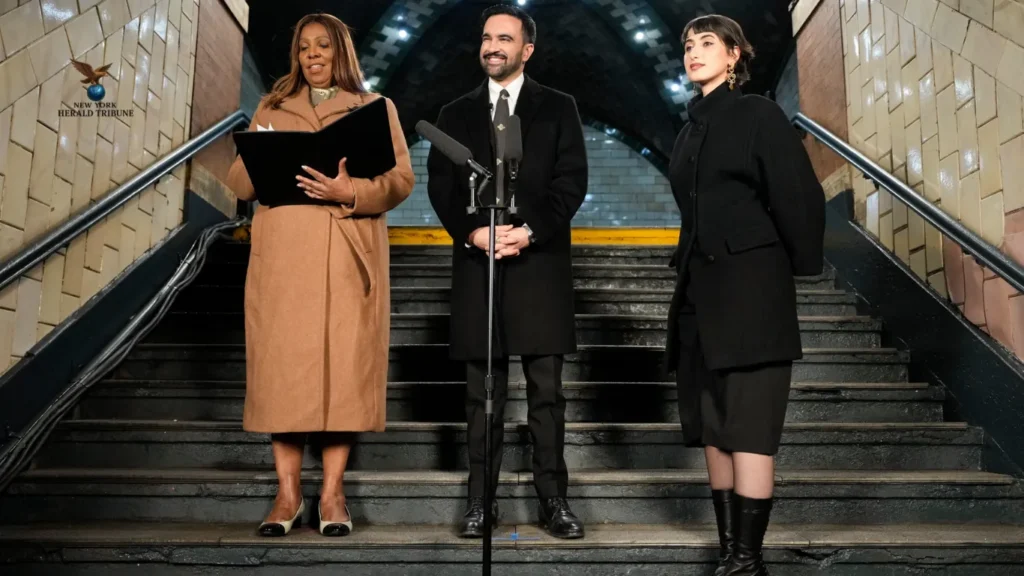
The swearing-in ceremony, held on Thursday, marked a powerful break from tradition. Instead of placing his hand on the Bible-a common but not constitutionally mandated practice among New York City mayors-Zohran Mamdani took his oath of office with his hand placed on the Holy Quran. The moment was unprecedented in the city’s long political history and resonated deeply with millions across the United States and beyond.
While the U.S. Constitution does not require any religious text for taking public office oaths, Mamdani’s choice reflected both his personal faith and the evolving multicultural identity of New York City.
A Two-Part Oath Ceremony Rooted in History and Symbolism
In a departure from standard protocol, Mamdani’s inauguration was planned as two separate oath-taking ceremonies, each carrying its own historical and cultural significance.
Private Oath at a Former Subway Station
The first oath was administered in a closed, former subway station located beneath New York City Hall. This private ceremony was attended only by close family members and select individuals. The location-an abandoned yet historically rich space-symbolized New York’s layered past and the unseen foundations that support the modern city.
During this private ceremony, Zohran Mamdani placed his hand on two Qurans:
- A Quran that once belonged to his grandfather
- A rare, pocket-sized Quran dating back to the late 18th or early 19th century
The second Quran is part of the prestigious collection housed at the Schomburg Center for Research in Black Culture, a division of the New York Public Library. Scholars believe this historic text originated during the Ottoman era, in regions that now include modern-day Syria, Lebanon, Israel, Palestine, and Jordan.
Public Swearing-In Ceremony
Later in the afternoon, a public inauguration ceremony was held, allowing New Yorkers from all walks of life to witness the historic moment. During this second oath, Mamdani again chose Qurans with personal significance-this time using religious texts belonging to both his grandfather and grandmother.
The selection of the Qurans was personally overseen by Mamdani’s wife, Rama Duwaji, who worked closely with scholars and curators to ensure the texts reflected not only Mamdani’s heritage but also the deep-rooted presence of Muslims in New York City.
According to one academic involved in the process, the Qurans chosen for the ceremony represent generations of Muslim life in the city, underscoring that Muslims are not newcomers but a long-standing part of New York’s social and cultural fabric.
The Rare Quran: A Journey Through Time and Continents
The pocket-sized Quran used by Zohran Mamdani has its own remarkable story. The text once belonged to Arturo Schomburg, a renowned Afro–Puerto Rican historian and intellectual whose collection later became the foundation of the Schomburg Center.
While the exact path of the Quran from its place of origin to New York remains unclear, historians believe it reflects the historic connections between Islam, Africa, and Black cultures across the Atlantic world.
Design and Historical Clues
The Quran is modest yet elegant in design:
- A deep red leather cover adorned with floral patterns
- Text written in black and red ink, indicating careful craftsmanship
- No author name or publication date, requiring historians to estimate its age based on writing style and binding
Experts suggest the Quran was not meant for display but for daily, personal use, highlighting the lived religious practices of its original owner.
According to Hiba Abid, a curator at the New York Public Library, the journey of this Quran mirrors Zohran Mamdani’s own life story-a story that spans continents, cultures, and histories. Mamdani was born in Uganda, raised with Indian heritage, and now leads one of the world’s most diverse cities. His wife, Rama Duwaji, is American-Syrian, further reflecting the global intersections represented during the ceremony.
Election Victory That Redefined New York Politics
Zohran Mamdani secured his place in history on November 4, 2025, when he won the New York City mayoral election in a result that stunned political observers and energized young and minority voters.
His victory marked several historic firsts:
- First Muslim mayor of New York City
- First mayor of Indian origin
- First South Asian mayor
- First Africa-born mayor
- Youngest mayor in nearly 100 years
Mamdani ran as a Democrat, building a campaign centered on economic justice, affordability, and inclusion. Inflation, rising living costs, and housing insecurity were at the heart of his message, particularly resonating with working-class families and first-time voters.
A Campaign Grounded in Faith and Community
Unlike many candidates who downplay religious identity, Zohran Mamdani spoke openly about his faith throughout the campaign. He visited mosques across the city, engaged with Muslim and South Asian communities, and mobilized thousands of first-time voters-many of whom felt seen in New York politics for the first time.
His outreach efforts extended far beyond religious lines, emphasizing that his campaign was about shared struggles and collective progress, not identity politics alone.
This approach helped Mamdani build a diverse coalition that reflected New York itself-immigrants, minorities, young professionals, and long-time residents united by concerns over affordability and opportunity.
Victory Speech with Global Resonance
After his election win, Mamdani addressed supporters at the Brooklyn Paramount Theatre, delivering a speech that blended history, emotion, and political conviction.
In a moment that captured international attention, he referenced Jawaharlal Nehru’s iconic “Tryst with Destiny” speech, delivered at midnight on August 15, 1947, as India gained independence. By invoking Nehru, Mamdani drew parallels between historic moments of transformation and New York City’s own evolving identity.
Standing beside him were:
- His wife, Rama Duwaji
- His father, Mahmood Mamdani, a globally respected academic
- His mother, Mira Nair, the acclaimed filmmaker behind Monsoon Wedding and Salaam Bombay!
Strong Stand on Immigration
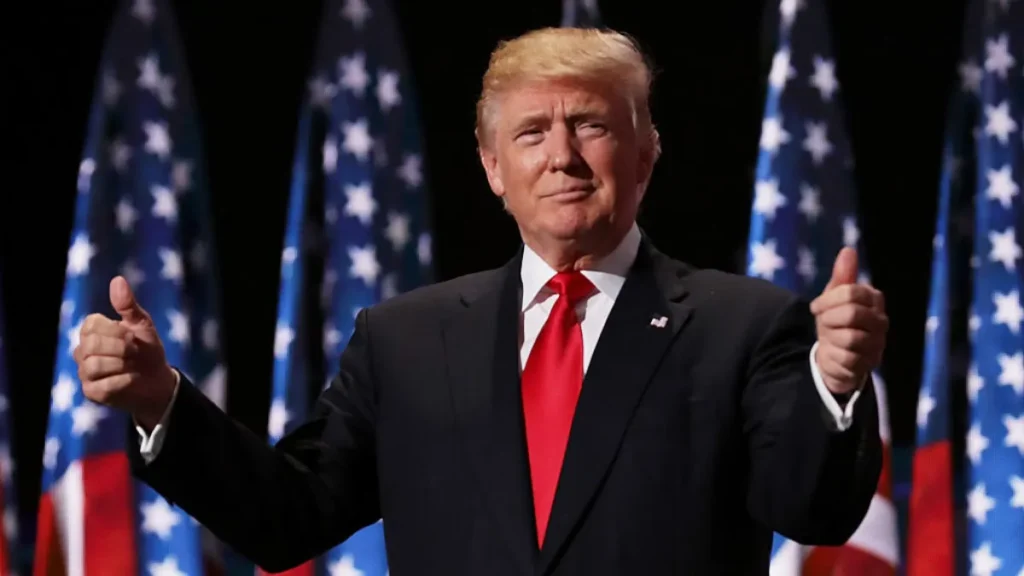
One of the most powerful moments of Mamdani’s speech came when he addressed U.S. immigration policies, openly criticizing former President Donald Trump’s approach.
“New York is a city of immigrants,” Mamdani declared. “Immigrants built this city. They worked hard to sustain it. And from today onward, immigrants will continue to lead this city. This is who we are-and we will protect that identity.”
The statement drew thunderous applause and was widely shared across social media, particularly among immigrant communities in the US, UK, and beyond.
A Celebration That Blended Cultures
Following his speech, Zohran Mamdani surprised supporters by breaking into dance with his wife to the Bollywood hit “Dhoom Machale”, creating a moment that instantly went viral. The spontaneous celebration highlighted Mamdani’s ability to blend cultures effortlessly-Indian, American, Muslim, and global.
His mother, Mira Nair, later joined him on stage, embracing her son in an emotional moment, while his father looked on proudly. The scene symbolized not just a political victory, but a generational milestone for immigrant families across the world.
What Zohran Mamdani’s Mayoralty Represents
The election and inauguration of Zohran Mamdani are being widely viewed as a turning point in American urban politics. His leadership represents:
- A generational shift toward younger leadership
- Greater visibility for Muslim and South Asian Americans
- A reaffirmation of New York City’s immigrant roots
- A move toward inclusive governance in a polarized era
Political analysts believe Mamdani’s tenure could influence Democratic strategies nationally, especially in engaging young voters and minority communities in major urban centers.
Conclusion
As Zohran Mamdani begins his term, expectations are high. Supporters hope he will deliver on promises related to housing affordability, cost-of-living relief, and social equity. Critics will be watching closely, but few dispute that his rise marks a defining chapter in New York’s story.
From a historic Quran oath beneath City Hall to a victory dance that captured the world’s attention, Zohran Mamdani’s journey to the mayor’s office is more than a political story-it is a reflection of modern New York itself.
As the city steps into this new era, one thing is clear: history has been made, and its impact will be felt far beyond the five boroughs.