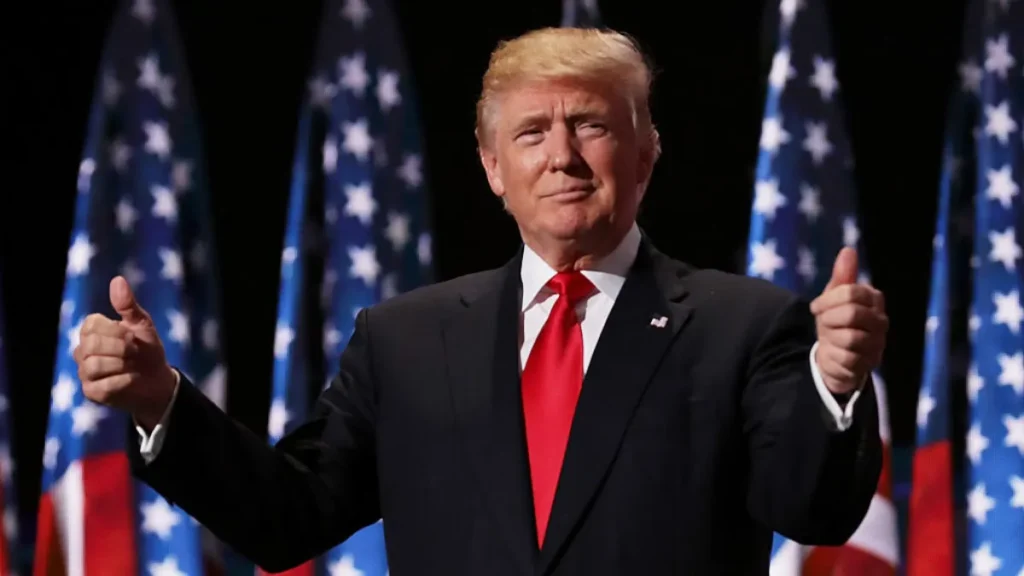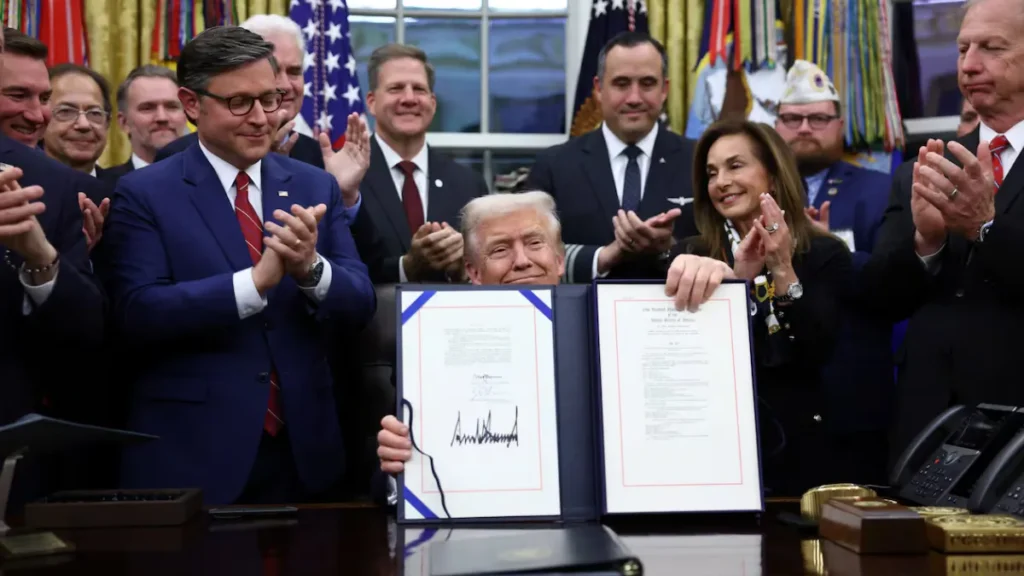
After 43 tense days of a partial government shutdown, President Donald Trump signed a funding bill on Wednesday, officially ending the longest shutdown in U.S. history. The bill passed the House of Representatives by a vote of 222–209, bringing temporary relief to millions of federal workers and restoring essential government operations.
Although the bill restores federal funding until January 31, it did not include any agreement on extending the Affordable Care Act (ACA) premium tax credits, known as the Obamacare subsidies, which are set to expire on December 31, 2025. The Senate had approved the bill earlier this week, clearing the path for Trump’s signature.
A “Great Day” for America, Says Trump
Before signing the legislation, President Trump declared, “The country has never been in a better place. This is a great day.” The measure will fund government operations through the end of January and prevent agencies from laying off employees until that time.
The White House described the move as a “critical step toward stability,” though Democrats argued that the temporary measure sidesteps long-term issues like healthcare affordability and worker protections.
Democrats Promise to Keep Fighting for ACA Subsidies
Following the House vote, leading Democrats announced that the fight to extend ACA subsidies was far from over. House Minority Leader Hakeem Jeffries, along with Whip Katherine Clark and Caucus Chair Pete Aguilar, issued a joint statement promising to push legislation that would extend the tax credits for three more years.
“These subsidies make healthcare more affordable for working and middle-class Americans,” Jeffries said. “This fight is not over. We are just getting started. We will fight today, tomorrow, next week, next month — until we win this for the American people.”
Democrats insist the subsidies are essential for keeping healthcare coverage affordable, while Republicans argue they unfairly benefit insurance companies.
GOP Lawmaker Compares Shutdown to a “TV Show”
Republican Representative David Schweikert criticized the entire shutdown episode, calling it “a television show that missed the real issues.” Meanwhile, Democratic Representative Mikie Sherrill warned that the House “must not become a rubber stamp for Trump’s agenda,” accusing the administration of “taking food and healthcare from children.”
The tension in Congress remains high, particularly after Democrats won high-profile elections in New Jersey and Arizona just eight days before the vote. Those victories, they argue, gave them a renewed mandate to defend healthcare subsidies that benefit millions of Americans.
Trump: “We’ll Find a Solution Together”
On Truth Social, President Trump referred to ACA subsidies as “a profit for insurance companies and a disaster for the American people.” He reiterated his stance that instead of funding insurers, direct financial assistance should go to citizens, enabling them to choose their preferred insurance plans.
“I am ready to work with both parties to solve this problem,” Trump wrote, signaling potential bipartisan cooperation on future healthcare reforms.
Background: The Obamacare Subsidy Debate
The Affordable Care Act (ACA), passed under President Barack Obama in 2010, was designed to make healthcare coverage accessible and affordable. Under the law, the federal government provides premium tax credits to low- and middle-income families — specifically those earning between 100% and 400% of the federal poverty level.
These credits are set to expire at the end of 2025. Democrats are pressing to extend them, warning that their expiration could double healthcare premiums for millions of Americans. Republicans, including Trump, counter that the subsidies inflate costs and primarily benefit large insurance companies.
According to federal data, 93% of Americans enrolled through the ACA marketplace currently receive subsidies, helping approximately 22–24 million people afford healthcare coverage.
A recent report estimates that if these credits expire, the average monthly premium could jump from $888 to $1,904 by 2026 — a 114% increase.
Federal Workforce Secures Temporary Relief
The new funding bill provides immediate relief to government employees. It prohibits federal agencies from laying off workers until January 30, marking a significant victory for federal labor unions.
Trump’s administration has previously pushed to downsize the federal workforce, which had approximately 2.2 million civilian employees at the start of his second term. However, analysts estimate that as many as 300,000 positions could be eliminated by the end of the year due to Trump’s cost-cutting initiatives.
The bill also guarantees back pay for all federal employees, including military personnel, border patrol agents, and air traffic controllers — ensuring compensation for the 43 days of missed wages.
The Longest Shutdown in U.S. History
The recent shutdown, which began on October 1, lasted 43 days, surpassing the previous record of 35 days set during Trump’s first term in 2018. The prolonged impasse disrupted federal operations, halted services, and placed immense financial strain on government workers and contractors.
According to the Bipartisan Policy Center in Washington, the shutdown led to:
- 670,000 federal employees placed on unpaid leave
- 730,000 working without pay
- Roughly 1.4 million families forced to rely on credit or debt to meet household expenses
Moreover, the U.S. Department of Agriculture (USDA) reported that funding for SNAP (Supplemental Nutrition Assistance Program) — commonly known as food stamps — had nearly run out. The USDA had only $5 billion reserved for the program, while at least $9.2 billion was required to sustain it through November.
Democrats Frame the Bill as “Temporary Relief, Not Victory”
Democrats celebrated the reopening of government offices but emphasized that the legislation is a temporary bandage rather than a permanent fix. They criticized the absence of healthcare provisions and social safety measures in the bill.
“The American people deserve long-term stability, not another countdown to crisis,” Jeffries said. “This vote may have ended the shutdown, but it hasn’t ended our fight for affordable healthcare.”
The Vote to end government shutdown became a symbolic phrase among Democrats, representing both the effort to restore government services and the continuing struggle for healthcare equity.
Republicans Defend Trump’s Fiscal Strategy
Republican leaders defended Trump’s approach, claiming that fiscal discipline and leaner government spending are essential to long-term economic growth.
A senior GOP aide noted, “This shutdown was about forcing Congress to make tough choices. We can’t continue to print money for inefficient programs.”
Still, economists warn that the shutdown’s financial toll — estimated at $6 billion in lost productivity and delayed contracts — will have lingering effects on the economy through early 2026.
Public Opinion Divided
Recent polls show a divided public:
- 51% of Americans blame the Trump administration for the shutdown.
- 43% support Trump’s stance on tightening spending and opposing ACA subsidies.
- 6% remain undecided.
Analysts suggest that while Trump’s decision to sign the bill could help stabilize his approval ratings, the unresolved ACA debate will remain a key issue heading into the 2026 midterm elections.
Also read: Donald Trump Promises $2,000 Tariff Dividend to Americans, Calls Critics “Fools”
Looking Ahead: Healthcare and Funding Battles Continue
As the government reopens, lawmakers are already preparing for another funding showdown before January 31, when the new bill expires. Both parties acknowledge that without bipartisan cooperation, another shutdown could loom.
President Trump stated, “We will continue working together to ensure that America remains strong, prosperous, and safe.”
However, Democrats insist that healthcare subsidies must remain on the table. “We can’t talk about prosperity if millions lose access to healthcare,” said Representative Clark.
The Vote to end government shutdown may have brought temporary peace to Washington, but the underlying divisions over healthcare, spending, and the role of government remain as deep as ever.
Also read: Trump Tariff Checks: Will Americans Really Get $2,000 From Tariff Revenues?
Conclusion:
The end of the 43-day government shutdown marks a critical moment in modern U.S. political history — one defined by deep partisan divides and competing visions of America’s future.
While President Trump celebrated the reopening of government operations, Democrats view the bill as merely the first step in a larger fight to protect healthcare access and middle-class stability.
As Washington braces for another funding battle in early 2026, one message rings clear from both sides of the aisle: the Vote to end government shutdown may have restored federal order for now, but the real fight — over the nation’s priorities, values, and future — is far from over.