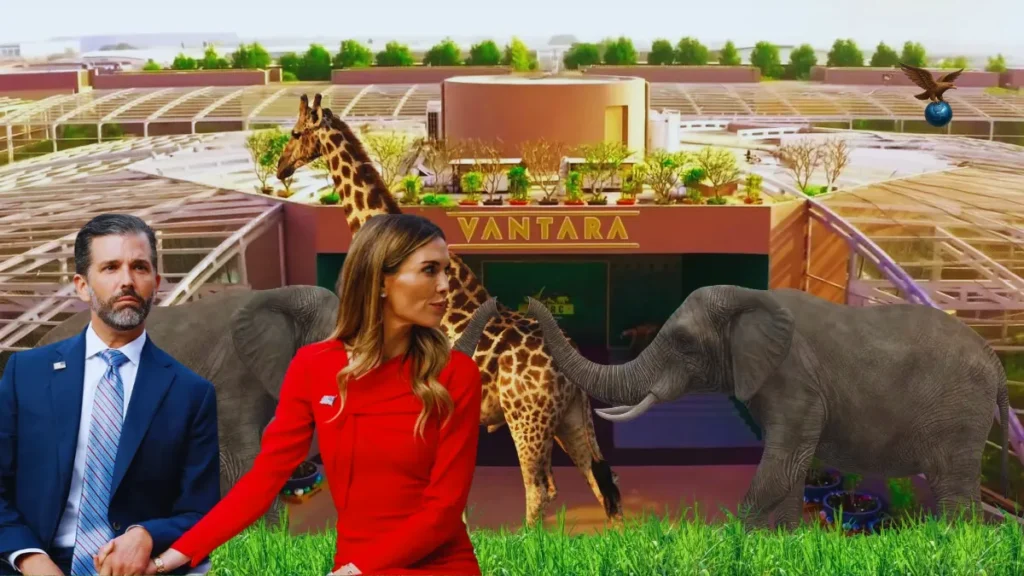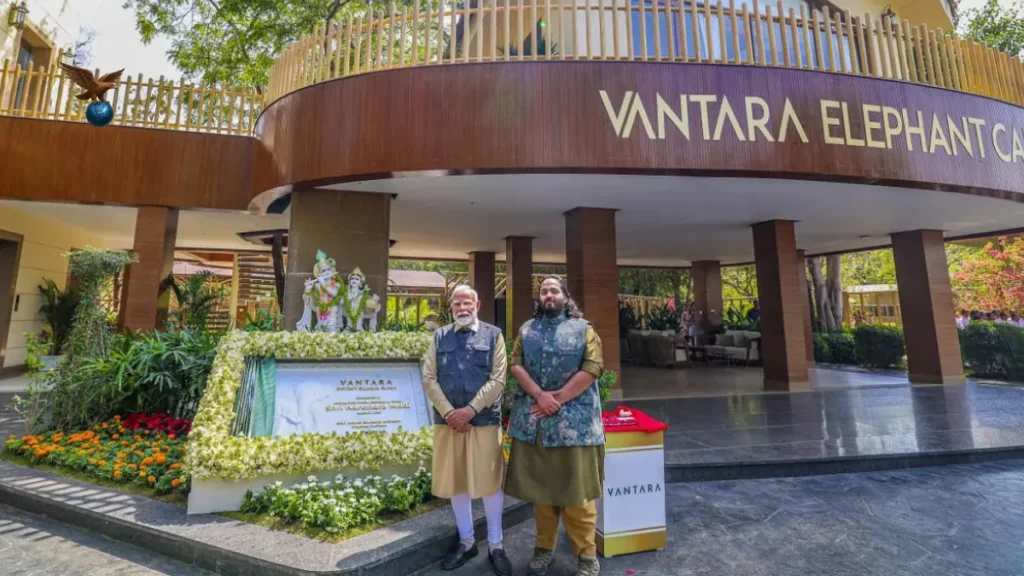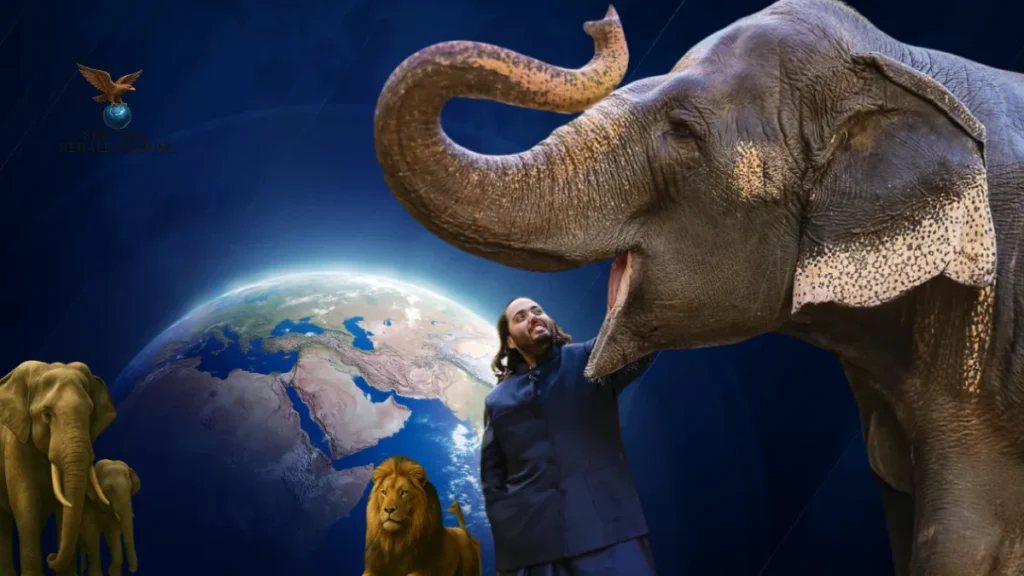
Vantara Zoo Jamnagar: Tucked deep inside Gujarat’s industrial heartland, adjacent to one of the world’s largest oil refinery complexes, stands an enormous and closely guarded wildlife facility known as Vantara zoo Jamnagar. Officially branded as the Greens Zoological Rescue and Rehabilitation Centre (GZRRC), Vantara presents itself as a modern sanctuary for rescued and endangered animals. Backed by immense financial power and owned by Anant Ambani, the youngest son of Indian billionaire Mukesh Ambani, the project claims to represent a new era of wildlife conservation in India.
Yet, behind the carefully curated narrative of rescue, rehabilitation, and conservation, Vantara zoo Jamnagar has become the subject of growing international scrutiny. Conservationists, wildlife activists, and environmental watchdogs across the globe are now asking uncomfortable questions: Is Vantara genuinely rescuing animals in distress, or is it quietly assembling one of the largest private wildlife collections in the world under the cover of conservation?
This investigation examines the origins, operations, animal acquisitions, and international controversies surrounding Vantara zoo Jamnagar, drawing on official records, conservation reports, and expert concerns to understand what is truly happening behind its high walls.
The Birth of Vantara Zoo Jamnagar
Vantara was launched with ambitious goals. Spread across approximately 35,00 acres of land in Jamnagar district, the facility was introduced as a state-of-the-art wildlife rescue and rehabilitation centre. Its promoters claimed it would offer medical care, safe enclosures, and long-term protection to animals rescued from abuse, illegal trade, circuses, and conflict zones.
The project gained rapid visibility due to the Ambani family’s global profile and India’s increasing focus on wildlife conservation. High-end veterinary hospitals, expansive enclosures, and advanced animal care infrastructure were highlighted as proof of its noble intent.
However, from the outset, critics noted one unusual feature: the sheer scale and diversity of wildlife being acquired by Vantara zoo Jamnagar in a remarkably short time.
A Sanctuary or a Growing Collection?
Between 2019 and 2023, official documentation shows that Vantara acquired over 3,800 animals, including numerous endangered species. These animals were sourced not only from within India but also from international suppliers, particularly South Africa.
While rescue centres typically take in animals from seizures or emergencies, conservation experts began questioning why a single private facility needed such vast numbers of exotic species—especially big cats such as lions, tigers, cheetahs, and servals.
The concern intensified when records revealed that Vantara zoo Jamnagar had applied to import 531 wild animals from South Africa’s Akwaaba Lodge and Predator Park, a facility widely criticized for its role in breeding big cats for profit.
The proposed shipment reportedly included:
- 50 hybrid lions
- 40 hybrid tigers
- 40 cheetahs
- 10 servals
- 20 giraffes
Yet, export data confirmed only 40 tigers and one ocelot leaving South Africa for India. The fate of the remaining animals, and the conditions under which they were transported or housed, remain unclear.
This lack of transparency has fueled suspicions about the true purpose of these acquisitions.
South Africa’s Role in the Global Big Cat Trade
South Africa has long been at the center of controversy for its captive big cat industry. While the country is home to native lions, it has increasingly become a major exporter of non-native species like tigers, despite having no officially registered tiger breeding facilities.
Investigations by international conservation groups reveal that South Africa is currently the world’s largest exporter of live captive-bred tigers and tiger parts. These animals are often bred for commercial purposes, including:
- Trophy hunting
- Private zoos
- Illegal bone and body-part trade supplying Asian markets
At the 78th CITES Standing Committee meeting in Geneva in 2025, conservationists raised alarms over South Africa’s failure to regulate this industry effectively. Reports highlighted the risk of captive-bred tigers entering illegal trade networks under the guise of legal exports.
Against this backdrop, confirmation that Vantara zoo Jamnagar received at least 60 tigers from South Africa raised significant red flags among wildlife experts.
Project Cheetah: A Troubled Experiment
Another major controversy linked to Vantara zoo Jamnagar is Project Cheetah, an ambitious initiative to reintroduce cheetahs to India after they were declared extinct in the country decades ago.
The plan involved relocating up to 120 cheetahs from South Africa over a ten-year period. In early 2023, the first batch of 12 cheetahs arrived in India amid global attention.
The outcome, however, has been deeply troubling.
Within weeks of arrival, one cheetah died. Over the next two years, repeated attempts to release the surviving animals into the wild failed. Today, most of these cheetahs remain confined to enclosures, unable to adapt to their intended habitats.
Despite these challenges, Vantara zoo Jamnagar reportedly imported 56 additional cheetahs from South Africa. Conservationists now question:
- Were these cheetahs bred specifically for export?
- What is the long-term plan for their welfare?
- Are these animals being used to establish captive breeding populations rather than true rewilding efforts?
The absence of clear answers has intensified doubts about whether Project Cheetah serves conservation goals or commercial ambitions.
The CITES ‘Z-Code’ Loophole Explained
One of the most critical aspects enabling Vantara zoo Jamnagar’s massive animal acquisitions lies within international wildlife trade regulations under CITES (Convention on International Trade in Endangered Species of Wild Fauna and Flora).
Under CITES rules, highly endangered species listed in Appendix I cannot be traded for commercial purposes. However, there is an exception known as the ‘Z’ purpose code, which allows transfers for zoological institutions.
This loophole has become increasingly controversial.
By classifying shipments under the ‘Z-code’:
- Private facilities can import endangered species legally
- Commercial zoos can present acquisitions as conservation
- Captive breeding operations can continue with minimal oversight
Critics argue that Vantara zoo Jamnagar has benefited significantly from this loophole, allowing it to build a vast wildlife collection while avoiding the scrutiny normally applied to commercial animal trade.
Transparency and Accountability Concerns
A recurring issue surrounding Vantara zoo Jamnagar is the lack of public transparency. While the facility regularly promotes images of animals in enclosures and veterinary care units, detailed records about:
- The origin of animals
- Breeding activities
- Mortality rates
- Plans for release or relocation
are not easily accessible to independent observers.
Conservationists emphasize that genuine rescue centers prioritize returning animals to the wild whenever possible. In contrast, long-term captivity—especially of healthy animals—raises ethical questions.
The concern is that Vantara may evolve into a closed-loop breeding facility, similar to South Africa’s canned lion industry, where animals are bred, displayed, and potentially traded under legal cover.
Environmental Concerns: Wildlife Next to a Refinery
Another point of contention is Vantara’s location. The facility is situated near the Reliance oil refinery complex, one of the largest petrochemical hubs in the world.
Environmental scientists warn that petrochemical zones are associated with:
- Air pollution
- Water contamination
- Soil degradation
These factors pose potential risks to sensitive wildlife species, particularly big cats with complex health and habitat needs. Critics question whether an industrial zone is an appropriate location for a conservation facility housing thousands of animals.
Global Calls for Investigation
International conservation organizations have begun demanding accountability. The Wildlife Animal Protection Forum of South Africa (WAPFSA) has formally urged South Africa’s Minister of Forestry, Fisheries, and Environment, Dion George, to investigate the legality of animal exports to India.
Among their key demands are:
- A full independent audit of Vantara zoo Jamnagar
- Stricter regulation of South Africa’s captive big cat breeding industry
- Urgent reform of CITES regulations, particularly the ‘Z-code’ exemption
These calls reflect growing global concern that wildlife exploitation is being repackaged as conservation.
What True Conservation Really Means
Experts argue that authentic conservation efforts look very different from large-scale captive facilities. True conservation focuses on:
- Protecting natural habitats
- Preventing poaching and illegal trade
- Supporting community-based conservation programs
- Reintroducing animals into the wild when feasible
Importing large numbers of animals into enclosed spaces, critics say, does little to address the root causes of wildlife decline.
The Road Ahead for Vantara Zoo Jamnagar
Vantara zoo Jamnagar stands at a crossroads. With unmatched resources and influence, it has the potential to support meaningful conservation initiatives. However, without transparency, independent oversight, and clear commitments to ethical practices, skepticism will continue to grow.
Wildlife is not a luxury asset or a symbol of prestige. It is a shared global responsibility.
As scrutiny intensifies, the world will be watching closely to see whether Vantara transforms into a model of ethical conservation—or becomes a cautionary tale of how wealth and power can reshape wildlife protection for the wrong reasons.
Read also: Messi Vantara Visit Brings a Spiritual and Emotional Close to Lionel Messi’s Historic India Tour
Why This Story Matters
The debate surrounding Vantara zoo Jamnagar is not just about one facility. It reflects a broader global challenge: ensuring that conservation is driven by science, ethics, and transparency-not profit or prestige.
As wildlife populations decline worldwide, the choices made today will determine whether future generations see animals thriving in the wild or confined behind walls.
The question remains: is Vantara a sanctuary of hope-or an illusion of conservation?