Washington, D.C.– US helicopter crash: In a major legal and regulatory development, the United States government has formally accepted responsibility for a catastrophic US helicopter crash that claimed 67 lives earlier this year, acknowledging failures by both military aviation personnel and federal air traffic control authorities. The admission marks a pivotal moment for families seeking accountability and raises renewed questions about aviation safety around one of the nation’s busiest and most sensitive airspaces.
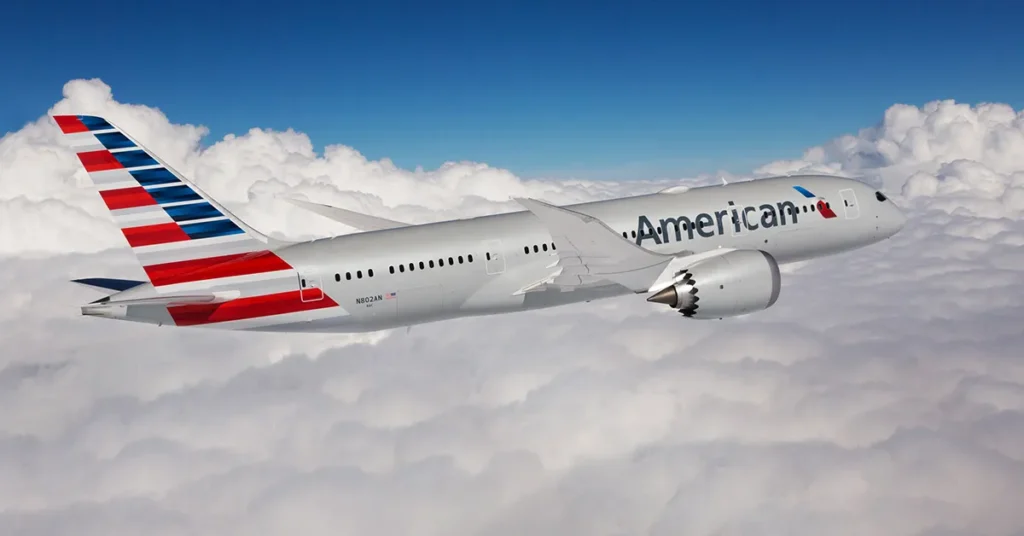
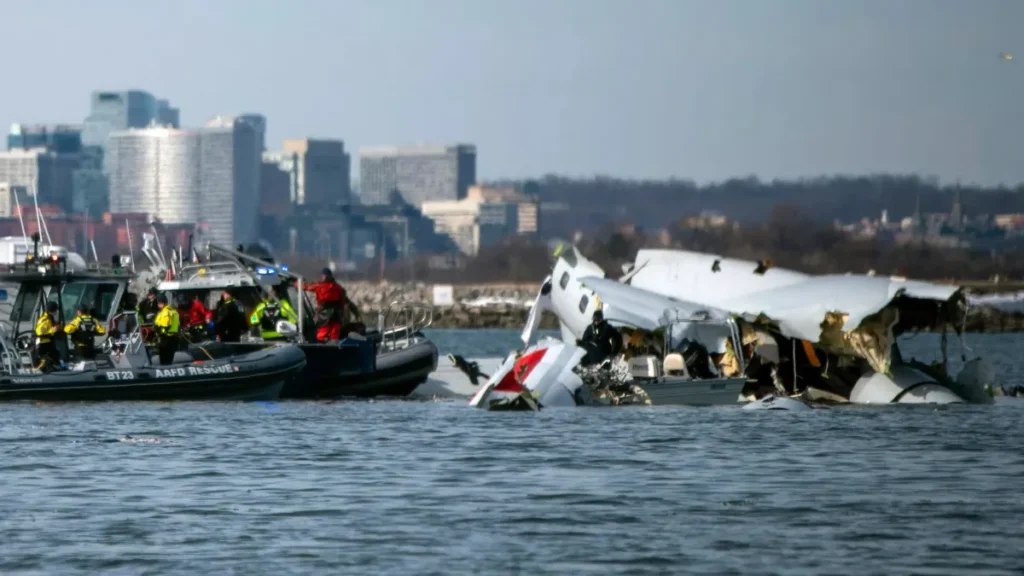
The admission came late Wednesday night in a court filing by the U.S. Department of Justice, which stated that the federal government was legally liable for the fatal January 29 mid-air collision involving a U.S. Army Black Hawk helicopter and a regional passenger jet operated by American Airlines. The collision occurred near Reagan Washington National Airport, just outside the capital, in an area known for its dense civilian and military air traffic.
A Tragedy That Shook the Nation
The deadly US helicopter crash unfolded in the evening hours as the American Airlines regional jet was approaching Reagan National Airport for landing. At the same time, a U.S. Army Black Hawk helicopter was operating in the same airspace. The two aircraft collided mid-air, killing all 67 people on board both aircraft.
The victims included airline passengers, flight crew members, and military personnel. Families across the United States and beyond were left grappling with sudden loss, unanswered questions, and growing concerns about how such a disaster could occur in tightly controlled airspace just miles from the White House, the Pentagon, and the U.S. Capitol.
From the outset, aviation experts described the crash as deeply troubling, given the sophisticated radar systems, strict flight protocols, and overlapping layers of civilian and military oversight in the Washington, D.C., region.
Government Acknowledges Breach of Duty
In its filing, the Justice Department acknowledged that the federal government “owed a duty of care to plaintiffs” and that this duty was breached in a manner that directly led to the tragedy. The government further conceded that the breach was a proximate cause of the collision, meaning it was closely and directly linked to the fatal outcome.
According to the filing, both the Army helicopter pilots and the regional jet pilots failed to maintain adequate vigilance to “see and avoid” each other. While aviation rules rely heavily on coordination and communication, visual awareness remains a fundamental responsibility for flight crews, particularly in congested airspace.
The Justice Department also acknowledged failures on the ground. It stated that a Federal Aviation Administration air traffic controller involved in managing the airspace did not comply with an FAA order. This lapse, combined with actions by military aviation personnel, resulted in shared responsibility across federal agencies.
“As a result of both agencies’ conduct,” the filing stated, “the United States was liable for damages.”
The Federal Aviation Administration declined to comment publicly on the admission, citing ongoing legal proceedings.
Families’ Legal Team Calls Admission Significant
Robert Clifford, a prominent aviation attorney representing the family of one of the victims, said the government’s filing marked a critical step toward accountability.
“The United States admits the Army’s responsibility for the needless loss of life in the crash,” Clifford said, “as well as the FAA’s failure to follow air traffic control procedure.”
However, Clifford also emphasized that the government’s admission did not absolve other parties entirely. According to the Justice Department’s own filing, federal authorities maintain that their actions were only one of several contributing factors to the deadly crash.
“The government, however, rightfully acknowledges that it is not the only entity responsible for this deadly crash,” Clifford added. “It asserts that its conduct is but one of several causes of the loss of life that January evening.”
For families, the acknowledgment represents both validation and frustration-validation that government failures played a role, and frustration that responsibility remains contested among multiple entities.
American Airlines Pushes Back
On the same day the Justice Department admitted federal liability, American Airlines took a clear legal stance of its own. The airline filed a separate motion seeking dismissal from the lawsuit, arguing that it should not be held responsible for the fatal collision.
In its filing, American Airlines expressed sympathy for the victims’ families and recognized their desire for justice. However, the company argued that the appropriate legal target was not the airline, but the federal government.
“The proper legal recourse is not against American,” the airline said in its motion. “It is against the United States government.”
American Airlines asked the court to dismiss it from the case entirely, asserting that it was not legally responsible for the actions of military aircraft or federal air traffic controllers operating under government authority.
The motion is likely to be contested by plaintiffs’ attorneys, setting the stage for a complex legal battle over liability, jurisdiction, and the respective roles of civilian airlines and government agencies in shared airspace.
FAA Tightens Helicopter Restrictions After Crash
In the weeks following the US helicopter crash, federal aviation authorities moved to impose stricter controls on helicopter operations around Reagan National Airport.
In March, the FAA announced restrictions on helicopter flights in the area after the National Transportation Safety Board concluded that their presence posed an “intolerable risk” to civilian aircraft. The NTSB’s assessment underscored long-standing concerns about the mixing of military, law enforcement, and commercial aviation traffic in one of the most congested corridors in the country.
The issue gained further urgency in May, when a separate incident involving an Army helicopter near the Pentagon forced two civilian planes to abort landings. While no injuries were reported in that incident, it intensified scrutiny of military flight operations in the National Capital Region.
Following that close call, the FAA barred the U.S. Army from conducting helicopter flights around the Pentagon, citing safety concerns and the need to protect civilian air traffic.
Senate Acts to Tighten Safety Rules
The deadly crash and subsequent near-misses prompted swift action on Capitol Hill. On Wednesday, the U.S. Senate unanimously passed legislation aimed at tightening safety rules for military helicopter operations, particularly in shared civilian airspace.
The legislation seeks to improve coordination between military aviation units and civilian air traffic controllers, enhance pilot training requirements, and strengthen oversight mechanisms to prevent similar tragedies in the future.
Lawmakers from both parties described the measures as overdue, noting that warnings about helicopter traffic near major airports had surfaced multiple times over the years without sufficient corrective action.
“This tragedy should never have happened,” one senator said during debate. “We owe it to the victims and their families to ensure that our skies are safer going forward.”
Broader Questions About Airspace Safety
The US helicopter crash has reignited a broader national debate about how military and civilian aviation coexist, particularly in urban areas where airspace is limited and traffic is intense.
Washington’s airspace is uniquely complex, with layers of restricted zones, security corridors, and overlapping flight paths. Military helicopters regularly operate in the region for training, transport, and security missions, while Reagan National Airport handles millions of commercial passengers each year.
Aviation safety experts have long warned that this combination creates inherent risks, especially when communication breaks down or procedures are not strictly followed.
The government’s admission of liability adds weight to those concerns, suggesting that systemic issues-not just individual errors-may have contributed to the disaster.
What Comes Next in the Legal Battle
With the federal government acknowledging liability, the focus now shifts to determining damages and the allocation of responsibility among all parties involved.
Families of the victims are expected to pursue compensation through the courts, a process that could take years given the complexity of the case and the number of plaintiffs involved. The government’s acknowledgment may streamline some aspects of the litigation, but disputes over the extent of liability and the role of other entities are likely to continue.
American Airlines’ effort to exit the lawsuit will also be closely watched, as its outcome could shape future cases involving collisions between civilian and military aircraft.
Meanwhile, investigations by aviation authorities, including the NTSB, are expected to continue examining the technical, procedural, and human factors that led to the fatal collision.
Read also: Trump Signs Formal Pardon for Tina Peters, Lawyer Says It Covers State Conviction-Trump pardon tina
A Somber Reminder
For the families of the 67 victims, no legal admission or legislative reform can undo the loss they have suffered. The US helicopter crash stands as a stark reminder of the consequences when safety systems fail in environments where precision and vigilance are paramount.
As the legal process unfolds and new regulations take effect, the tragedy has already left a lasting mark on U.S. aviation policy. Whether those changes will be enough to prevent similar disasters remains a question that regulators, lawmakers, and the public will continue to confront in the months and years ahead.