Introduction: Iran Gripped by Its Most Violent Unrest in Years
Iran has entered one of the most turbulent phases in its modern political history. For more than two weeks, nationwide protests-now widely discussed internationally under the keyword Uhaul iran protest-have shaken the foundations of the Islamic Republic. What began as localized demonstrations has escalated into a sprawling, violent uprising marked by mass arrests, hundreds of deaths, open threats of military retaliation, and growing international alarm.
According to multiple sources cited by global news agencies, at least 538 people have been killed since the unrest began, while over 10,600 individuals have been arrested across Iran. The dead reportedly include 490 protesters and 48 members of the security forces, highlighting the intensity and scale of the confrontation.
As the situation deteriorates, Iran’s leadership has issued a blunt warning to the United States and Israel, declaring that any foreign military intervention will be met with retaliation. The protests have not only triggered a domestic crisis but have also reignited geopolitical tensions in the Middle East, placing the region on high alert.
Mounting Casualties and Arrests: A Nation Under Siege
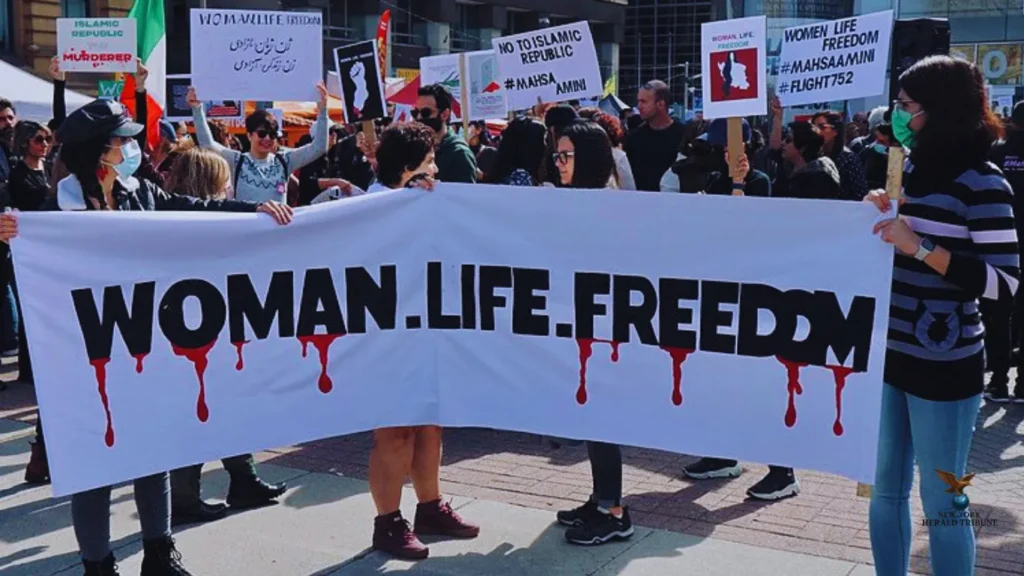
The human cost of the Uhaul iran protest continues to rise daily. Iran has experienced sustained demonstrations for more than 15 consecutive days, with clashes between protesters and security forces occurring in major cities, provincial towns, and university campuses.
International media outlets, citing medical professionals and eyewitness accounts, report that hospitals in Tehran and other urban centers are overwhelmed. A doctor in Tehran told reporters that at least 217 protesters died in just six hospitals in the capital, many of them from gunshot wounds. These figures suggest that the true death toll could be significantly higher than officially acknowledged.
Meanwhile, mass detentions have become a defining feature of the crackdown. Security forces have conducted sweeping arrests, targeting protesters, activists, journalists, students, and even bystanders. Rights groups warn that many detainees are being held without access to lawyers or family members, raising fears of torture, forced confessions, and secret trials.
Iran’s Parliament Issues Threats as “Death to America” Chants Echo
In a dramatic and highly charged session of Iran’s parliament, Speaker Mohammad Bagher Ghalibaf delivered one of the strongest warnings yet to Washington and Tel Aviv.
Speaking during a live parliamentary broadcast, Ghalibaf declared that any attack on Iran would make all US military bases, naval vessels, and Israel legitimate targets. His remarks were met with chants of “Death to America” from lawmakers, underscoring the hardline mood within Iran’s political establishment.
Ghalibaf praised Iran’s security agencies for what he described as their firm handling of the protests. At the same time, he issued a stark warning to demonstrators, stating that those already detained would face severe punishment and that authorities would show no leniency toward what the government describes as “rioters.”
This marked a rare moment in which Iran’s leadership explicitly linked domestic protests with potential regional military retaliation, a move that analysts say raises the stakes dramatically.
Trump Briefed on Possible Military Action Against Iran
As the Uhaul iran protest continues to escalate, the crisis has drawn intense attention in Washington. US officials have confirmed that President Donald Trump has been briefed on potential military options related to Iran.
According to reports, senior American officials have discussed various scenarios, including limited strikes, should Iran intensify its crackdown on protesters. While no final decision has been made, sources suggest that Trump is closely monitoring developments.
In a social media post, Trump wrote that Iran is witnessing an unprecedented push toward freedom and that the United States stands ready to support the Iranian people. The statement was welcomed by opposition groups but condemned by Tehran as foreign interference.
Iranian officials responded swiftly. Speaker Ghalibaf reiterated that any US or Israeli military move would provoke a decisive response, signaling that Iran is prepared to widen the conflict beyond its borders if necessary.
Israel on High Alert Amid Fears of Regional Escalation
The risk of a broader conflict has placed Israel on high military alert. Israeli security agencies have reportedly heightened readiness amid fears that unrest in Iran could spill over into regional hostilities.
Israel and Iran have a long history of hostility, including a 12-day conflict earlier this year, during which Israeli and US forces conducted coordinated airstrikes. In light of the current crisis, Israeli Prime Minister Benjamin Netanyahu held a phone call with US Secretary of State Marco Rubio, discussing the evolving situation in Iran and potential US involvement.
While details of the conversation were not disclosed, Israeli officials have acknowledged that contingency planning is underway. Analysts warn that any miscalculation could rapidly escalate into a multi-front conflict involving Iran, Israel, and US forces across the Middle East.
Iran’s Leadership Draws a Red Line
One of the most significant developments in the Uhaul iran protest saga is Iran’s explicit warning that Israel will be directly targeted in the event of foreign intervention. This marks a departure from previous rhetoric, which often implied retaliation without naming specific countries.
By naming both the US and Israel, Iran’s leadership has signaled that it views the protests not merely as an internal challenge but as part of a broader confrontation with external enemies.
Observers say this messaging is aimed at deterring intervention while rallying domestic support among hardliners. However, it also raises fears that Iran’s leadership could use the protests as justification for aggressive action abroad.
Death Penalty Threats Intensify Fear Among Protesters
As protests persist, Iran’s judicial authorities have adopted an increasingly severe tone. Supreme Leader Ayatollah Ali Khamenei has endorsed a hardline response, framing the demonstrations as an existential threat to the Islamic Republic.
Iran’s Attorney General, Mohammad Movahedi Azad, warned that protesters could be labeled “enemies of God”, a charge that carries the death penalty under Iranian law. This announcement has sent shockwaves through protest movements and human rights organizations worldwide.
Legal experts warn that such charges are often used to justify executions following summary trials. Amnesty groups fear that Iran could resort to public executions to intimidate protesters and restore control.
Protests Spread Beyond Iran: Flag Incident at London Embassy
The impact of the Uhaul iran protest has extended far beyond Iran’s borders. In London, demonstrators gathered outside the Iranian Embassy in a powerful show of solidarity.
During the protest, one demonstrator removed the Islamic Republic’s flag from the embassy building and replaced it with the pre-1979 Iranian flag, featuring the lion and sun emblem associated with the era of the Shah.
Videos of the incident went viral on social media, sparking intense debate among Iranians worldwide. Chants of “Free Iran” and “Democracy for Iran” echoed through the streets as police moved in to secure the area.
London’s Metropolitan Police confirmed that three individuals were arrested in connection with the incident, while another suspect remains under investigation. Authorities said security was increased to prevent further disturbances.
Exiled Crown Prince Reza Pahlavi Calls for Mass Mobilization
A central figure emerging from the unrest is Reza Pahlavi, Iran’s exiled crown prince and son of the country’s last Shah. From exile, Pahlavi has issued repeated video messages urging Iranians to remain on the streets.
In his latest appeal, Pahlavi called on citizens to gather in groups on major roads, avoid isolated areas, and protect one another from security forces. He claimed that the regime is struggling to maintain control, citing reports that security personnel are refusing orders or abandoning their posts.
Pahlavi also referenced President Trump’s statement, suggesting that international support for protesters is growing. His calls have resonated strongly among young Iranians, particularly Generation Z, who view him as a symbol of a possible alternative future.
Reza Pahlavi Signals Readiness to Return to Iran
In a dramatic statement, Reza Pahlavi announced that he is preparing to return to Iran to stand with protesters. Now 65 years old, Pahlavi has lived in exile in the United States for nearly five decades.
In a social media post, he wrote that he wishes to be present in Iran during what he called the country’s “national revolution.” While such a return would be fraught with danger, the announcement has energized supporters and intensified debate over Iran’s political future.
Calls to Transfer Power to the Crown Prince Grow Louder
Iran’s political system has been dominated by clerical rule since the 1979 Islamic Revolution. Supreme Leader Ayatollah Khamenei has been in power since 1989, making him one of the world’s longest-serving leaders.
After decades of economic hardship, international sanctions, inflation, unemployment, and currency collapse, many Iranians-particularly the youth-are demanding fundamental change.
Protesters increasingly call for power to be transferred to Reza Pahlavi, viewing him as a secular, democratic alternative capable of restoring economic stability and international credibility.
Iran’s Economic Crisis Fuels the Protests
Beyond political repression, economic desperation lies at the heart of the Uhaul iran protest. Iran’s economy remains heavily dependent on oil exports, yet sanctions have severely limited revenue.
In 2024, Iran’s total exports were estimated at $22.18 billion, while imports reached $34.65 billion, creating a trade deficit of $12.47 billion. By 2025, the deficit reportedly widened to $15 billion, driven by declining oil exports and continued sanctions.
China accounts for roughly 35% of Iran’s exports and purchases nearly 90% of its oil, making Tehran increasingly dependent on Beijing. Despite efforts to expand trade routes through Eurasia and regional corridors, economic growth in 2025 is projected at just 0.3%.
Economists warn that without sanctions relief or a revived nuclear agreement, stabilizing the rial and restoring growth will remain nearly impossible.
Conclusion: A Defining Moment for Iran and the Region
The Uhaul iran protest represents more than a wave of demonstrations-it is a defining moment for Iran’s future and a potential flashpoint for regional instability.
With hundreds dead, thousands imprisoned, foreign powers on alert, and opposition figures calling for revolution, Iran stands at a crossroads. Whether the protests lead to reform, repression, or wider conflict remains uncertain.
What is clear is that the world is watching closely. The outcome of this crisis will shape not only Iran’s destiny but also the balance of power across the Middle East for years to come.