A Dramatic Start to a High-Stakes Global Visit as Donald Trump Heads to World Economic Forum 2026
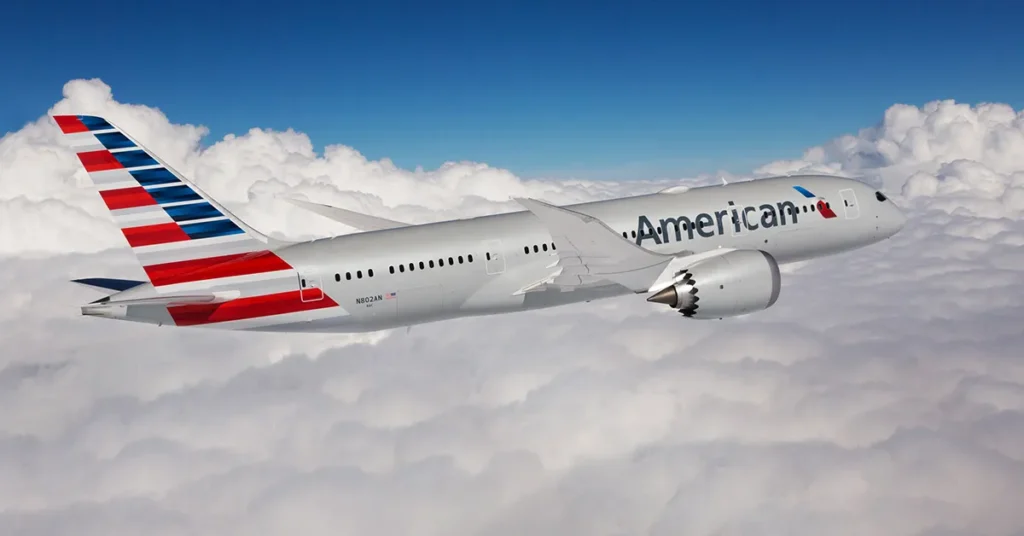
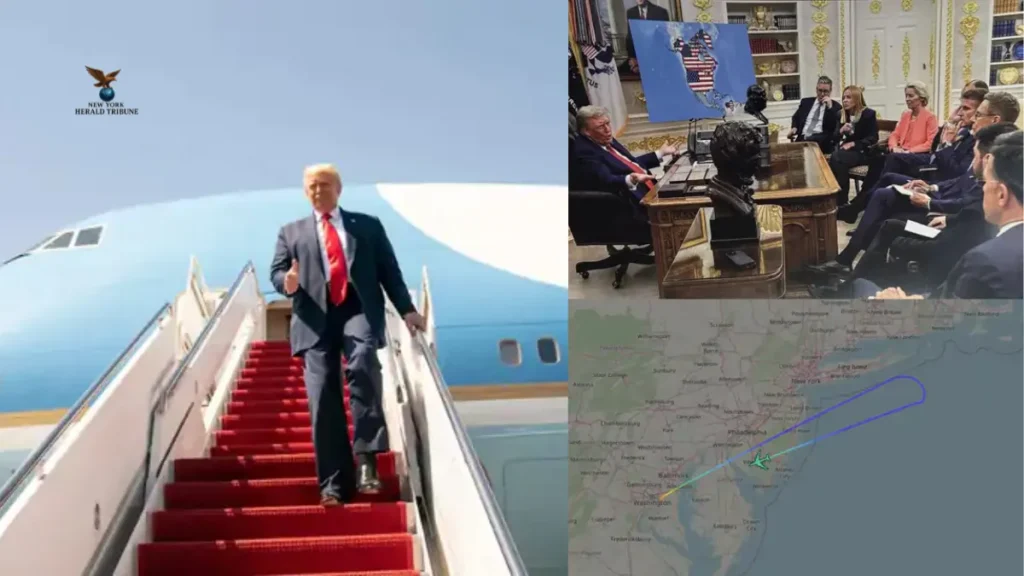
Trump Plane to Switzerland: The journey of former US President Donald Trump to one of the world’s most influential economic gatherings began with an unexpected twist. The Trump plane to Switzerland was forced to return to Washington shortly after take-off due to a technical malfunction, according to an official statement released by the White House. Despite the setback, Trump swiftly boarded an alternative aircraft and proceeded to Davos, Switzerland, underscoring the importance of his presence at the World Economic Forum (WEF) 2026 amid rising global tensions.
The incident briefly raised questions about presidential travel safety and the ageing fleet used for official US presidential journeys. However, officials confirmed that the issue was minor, precautionary measures were followed, and there was never any threat to the President’s safety.
Trump’s Davos visit is being closely watched across political, business, and diplomatic circles worldwide. From trade wars and geopolitical instability to discussions on Greenland’s future, NATO responsibilities, and global supply chains, his agenda is ambitious and controversial.
Technical Glitch Forces Mid-Air Return of Trump Plane to Switzerland
According to the White House press office, the aircraft carrying Donald Trump experienced a minor electrical fault shortly after take-off from Washington. White House Press Secretary Caroline Leavitt stated that the flight crew identified the issue early and recommended returning to base as a precaution.
“Following standard safety protocols, the decision was made to return the aircraft,” Leavitt explained. “The issue was technical in nature and did not pose an immediate risk.”
The Trump plane to Switzerland safely landed back in Washington, after which Trump transferred to a backup aircraft. Within hours, he resumed his journey to Europe without any delay to his scheduled commitments.
Officials emphasized that such procedures are routine and demonstrate the effectiveness of aviation safety standards surrounding presidential travel.
Trump Proceeds to Davos Without Delay
Despite the brief disruption, Trump’s itinerary remained intact. He departed shortly afterward on an alternate aircraft and continued his journey to Switzerland, where he is scheduled to address the World Economic Forum in Davos.
Trump’s appearance at WEF marks his first return to Davos in nearly six years, his last visit being in January 2020 during his first presidential term. This year’s visit carries heightened significance due to global uncertainty, economic fragmentation, and intensifying geopolitical rivalries.
World leaders, investors, policymakers, and corporate executives are closely monitoring Trump’s statements, anticipating signals that could influence markets, trade negotiations, and diplomatic alignments.
World Economic Forum 2026: A Critical Global Moment
The World Economic Forum 2026, taking place from January 19 to January 23 in Davos, is themed “A Spirit of Dialogue.” The theme reflects a pressing need for conversation and cooperation at a time when the world is facing overlapping crises.
This year’s gathering includes:
- Representatives from over 130 countries
- Nearly 3,000 delegates
- More than 60 heads of state and government
- Around 850 global CEOs
- Over 400 senior political leaders, including foreign, finance, and trade ministers
The forum is unfolding against the backdrop of trade wars, rising protectionism, military conflicts, climate concerns, and disruptive technological changes such as artificial intelligence.
Trump’s arrival at Davos has added an extra layer of intensity to discussions already charged with urgency.
Trump to Address the World on Greenland’s Future
One of the most anticipated moments of Trump’s Davos visit is his global address scheduled for Wednesday evening at approximately 7 PM. According to media reports, the speech will focus heavily on the future of Greenland, a topic that has increasingly dominated Trump’s strategic thinking.
Trump views Greenland as a critical asset in terms of:
- Arctic security
- Strategic military positioning
- Access to rare minerals
- Countering growing influence from rival global powers
His remarks are expected to outline America’s position on Arctic geopolitics and may include sharp warnings to European nations and strategic competitors.
Rising Global Tensions Heighten Interest in Trump’s Speech
Trump’s Davos speech comes at a time when:
- Trade disputes are escalating across continents
- Military tensions are rising in multiple regions
- Supply chains are being restructured
- Governments are reassessing alliances
Analysts believe Trump will use the platform to assert that the United States is no longer bound by outdated global frameworks and is prepared to redefine its role in world affairs.
His advisers suggest the message will be clear: economic power, security commitments, and diplomacy will now be closely intertwined.
High-Level Business Engagement: Trump to Meet Seven Indian Business Leaders
Following his keynote address, Trump is scheduled to host a private high-level engagement with seven prominent Indian business leaders, reflecting the growing strategic importance of India in global trade and geopolitics.
The invited Indian business leaders include:
- N. Chandrasekaran, Chairman, Tata Sons
- Sunil Bharti Mittal, Chairman, Bharti Enterprises
- P. Gopalan, CEO, Vodafone Idea
- Sahil S. Parekh, CEO, HCL Technologies
- Sanjiv Bajaj, Chairman & Managing Director, Bajaj Finserv
- Anish Shah, Group CEO, Mahindra Group
- Harsh Mariwala, Founder & Chairman, Marico Group
The meeting is expected to focus on:
- US–India trade cooperation
- Technology partnerships
- Supply chain diversification
- Investment opportunities
With ongoing negotiations around a new trade framework between the US and India, this interaction is being closely followed by global markets.
Ageing Aircraft and Air Force One Concerns
The incident involving the Trump plane to Switzerland has once again drawn attention to the age of the aircraft currently serving as Air Force One. The planes in use are nearly four decades old, and despite plans for replacement, delays have plagued the program.
Boeing has been tasked with developing new presidential aircraft, but the project has faced repeated setbacks. In the meantime, the US continues to rely on older planes that, while well-maintained, are increasingly vulnerable to technical issues.
Last year, the Qatari royal family gifted Trump a luxury Boeing 747-8 jumbo jet, which is expected to eventually join the presidential fleet after extensive security modifications. The gift sparked political debate and raised ethical questions, but officials confirmed that the aircraft is undergoing rigorous checks to meet US security standards.
Trump’s Hardening Stance on Greenland and Arctic Power
Trump’s rhetoric on Greenland has become increasingly assertive. He considers the island central to America’s long-term security strategy, particularly as activity in the Arctic accelerates.
In a recent social media post, Trump shared a controversial map depicting Greenland, Canada, and Venezuela as part of a broader American sphere, triggering widespread international reaction.
European leaders and diplomats have expressed concern, but Trump remains firm, arguing that geopolitical realities demand a stronger American footprint in strategically sensitive regions.
Tariff Warnings and Trade Pressure on Europe
Alongside Greenland, Trump has issued strong tariff warnings to European nations. The US has already imposed 10% tariffs on eight European countries, including:
- Denmark
- France
- Germany
- The United Kingdom
US officials have indicated that tariffs could rise to 25% if resistance continues. Trump’s message is unambiguous: trade will be used as a tool of negotiation and leverage.
This approach has unsettled European policymakers, many of whom fear further economic fragmentation.
NATO, China, and Russia: Key Talking Points in Davos
Trump is also expected to reinforce his long-standing position on NATO, arguing that the United States cannot continue bearing a disproportionate share of global defense costs.
He has repeatedly called on European allies to increase defense spending and share responsibility more equitably.
Regarding China, Trump views Beijing as America’s primary rival across trade, technology, and global influence. His stance on Russia remains confrontational, with Washington maintaining a firm line on security and geopolitical expansion.
Trump’s Davos address is likely to touch on all three fronts, making it one of the most consequential speeches of the forum.
Venezuela and Rising Anxiety in Latin America
Trump’s growing involvement in Venezuela has alarmed several Latin American governments. Recent US military actions in the region have heightened instability, according to regional analysts.
While the Trump administration frames these actions as necessary for regional security, critics argue they reflect an aggressive interventionist policy that risks long-term consequences.
European leaders, including French President Emmanuel Macron, have voiced concern, warning that such strategies could undermine global stability.
Global Markets React to Political Uncertainty
Business leaders arriving in Davos agree on one point: geopolitics is no longer a background risk.
Investment decisions, supply chain strategies, and technology partnerships are now deeply influenced by political developments. Trump’s policies, statements, and actions are seen as key variables shaping global economic planning.
Executives report that:
- Supply chains are being redesigned with political risk in mind
- Technology alliances are shifting
- Investment flows are increasingly selective
Davos 2026 reflects a world where economics and geopolitics are inseparable.
Why World Economic Forum 2026 Matters More Than Ever
This year’s forum is taking place during a period of overlapping crises:
- Ongoing conflicts
- Tariff wars
- Fear of a global slowdown
- Climate emergencies
- Rapid AI-driven transformation
The discussions and informal meetings in Davos often shape policy and markets for years to come, making this gathering particularly significant.
India’s Expanding Influence at Davos
India’s presence at WEF 2026 is larger and more confident than ever. Over 100 Indian business leaders, senior policymakers, and ministers are attending.
India is using the platform to:
- Promote investment opportunities
- Highlight manufacturing growth
- Strengthen digital leadership
- Position itself as a reliable global partner
India’s growing influence signals a gradual shift in global economic power toward emerging markets.
Why WEF 2026 Is Crucial for India
India sees Davos 2026 as an opportunity to reinforce its image as one of the world’s fastest-growing major economies. The country’s leaders are engaging directly with global investors to attract capital, technology, and partnerships.
With supply chains being restructured worldwide, India aims to present itself as a stable and scalable alternative.
Also read: Trump invited Putin to board of peace: Inside the Unexpected US Move on Gaza and the Global Reaction
Conclusion: Trump’s Davos Visit Shapes a Turning Point
From the unexpected return of the Trump plane to Switzerland to his high-profile engagements in Davos, Donald Trump’s visit encapsulates the uncertainty and intensity defining today’s global landscape.
His speeches, meetings, and policy signals are expected to leave a lasting impact on trade, diplomacy, and global markets. As the world watches closely, Davos 2026 may well mark a turning point in how power, economics, and geopolitics intersect in the years ahead.