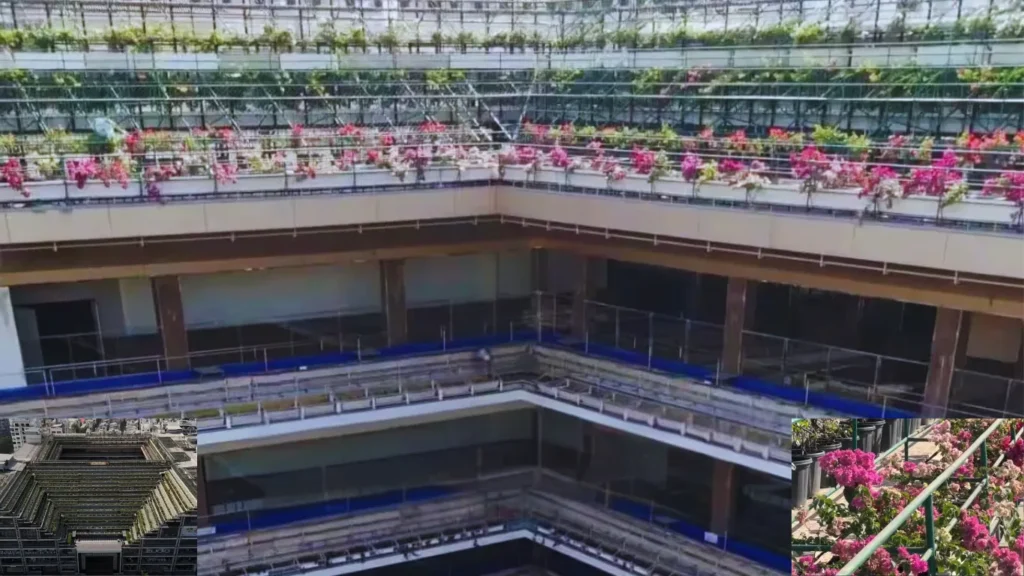
Mall in Garden: Surat, a city long known for its diamond and textile industries, is now preparing to surprise the world with an architectural and environmental marvel that challenges the traditional idea of shopping malls. Rising in the bustling Citylight area, this extraordinary project is not just another glass-and-concrete commercial complex. Instead, it introduces India-and possibly the world-to a bold new concept: Mall in Garden.
Unlike conventional malls where a few decorative plants are added for visual appeal, this project completely flips the idea on its head. Here, the garden comes first, and the mall is built within it. The result is a breathtaking six-storey destination where nature dominates every corner, offering visitors an experience that feels closer to a mountain valley than an urban shopping centre.
A Mall Where Nature Takes Centre Stage
The moment visitors step into this upcoming landmark, they are expected to feel an immediate shift-from city chaos to calm, oxygen-rich surroundings. Spread across six floors, the project features more than 400,000 plants, making it one of the most plant-dense commercial developments in the country. To put that number into perspective, it feels less like entering a mall and more like walking into a carefully curated forest.
What makes the Mall in Garden concept even more remarkable is the inclusion of Japanese flower varieties, specially imported to create a stunning “Flower Valley” inside the complex. These vibrant blooms, arranged in layered, step-style gardens, are designed to evoke the feeling of standing in a cool valley in Kashmir-despite Surat’s otherwise warm climate.
High-Tech Climate Control for Exotic Plants
Maintaining such a massive and diverse collection of plants inside a commercial building is no small feat. The developers have relied on advanced engineering and high-tech systems to ensure every plant thrives. Temperature and humidity inside key garden zones are carefully controlled using modern climate-management machines, allowing tropical and foreign plant species to flourish year-round.
There are dedicated indoor tropical gardens, orchid zones, terrace gardens, and step gardens showcasing nearly 20 different flower colours. Even areas that are usually ignored in most malls-such as basements and parking zones-have been transformed into green spaces filled with natural plants. Instead of rushing through dull parking levels, visitors will now find themselves pausing to admire greenery even before entering the main shopping areas.
Shopping, Dining, and Leisure-Surrounded by Greenery
While nature is the star attraction, the project does not compromise on modern amenities. Four floors are dedicated to retail spaces, offering a mix of shopping outlets, while two additional floors are reserved for food courts, restaurants, and entertainment zones. However, unlike traditional malls, every section is designed to remain visually and physically connected to the surrounding gardens.
From orchid gardens to open terrace greenery, the entire structure functions like a “green island” amid Surat’s fast-growing concrete landscape. Clean air, natural fragrances, and visual calm are expected to become defining features of the visitor experience.
A New Identity for Surat
City planners and residents alike believe this project could become a defining landmark for Surat. As Indian cities continue to expand rapidly, green spaces are shrinking. The Mall in Garden concept offers a powerful alternative-showing that commercial development and environmental responsibility do not have to be opposites.
The project, named “Aashirwad High Street,” is strategically located between Bhatar, Ghod Dod Road, and Vesu-three of Surat’s most prominent areas. Its central location makes it easily accessible, while its design ensures it stands apart from anything the city has seen before.
Developers say the goal is not just to create a shopping destination, but to offer citizens a place to breathe, relax, and reconnect with nature. For many residents, this means no longer needing to travel far during weekends for a refreshing break-the experience of a serene hill valley will now exist within city limits.
Visionaries Behind the Green Dream
According to mall operator Mahendra Rathi, the uniqueness of the project lies entirely in its Mall in Garden philosophy. “People have seen gardens inside malls before,” he explains, “but this is a mall that exists inside a garden. Nature is not an accessory here-it is the foundation.”
The project is inspired by the vision of nature enthusiast and managing director M. D. Gopalbhai, who envisioned a commercial space that actively contributes to environmental well-being. Bringing this vision to life has required years of dedication, planning, and continuous care.
A Massive Team Dedicated to Green Maintenance
Sustaining more than four lakh plants is a full-time responsibility. A dedicated team of 200 people has been working behind the scenes for the past six years to develop and maintain the greenery. This includes 100 professional gardeners, along with security and housekeeping staff who ensure both safety and cleanliness across the complex.
The level of commitment reflects the seriousness of the project’s environmental goals. This is not a temporary display or marketing gimmick-it is a long-term green infrastructure designed to grow and evolve with time.
An Environmental Landmark for the Future
Perhaps the most striking aspect of the Mall in Garden project is its potential impact beyond commerce. By integrating dense greenery into every functional space-including basements and parking areas-it sends a strong message about sustainable urban development.
As climate concerns grow globally, projects like this could shape the future of city planning, especially in rapidly urbanising regions like India. Surat’s Mall in Garden is more than a mall-it is a statement, a vision, and a possible blueprint for greener cities worldwide.
When completed, Aashirwad High Street is expected to stand as a symbol of how modern engineering, environmental responsibility, and human comfort can coexist. For Surat, it is not just a new destination-it is the beginning of a greener identity on the global map.