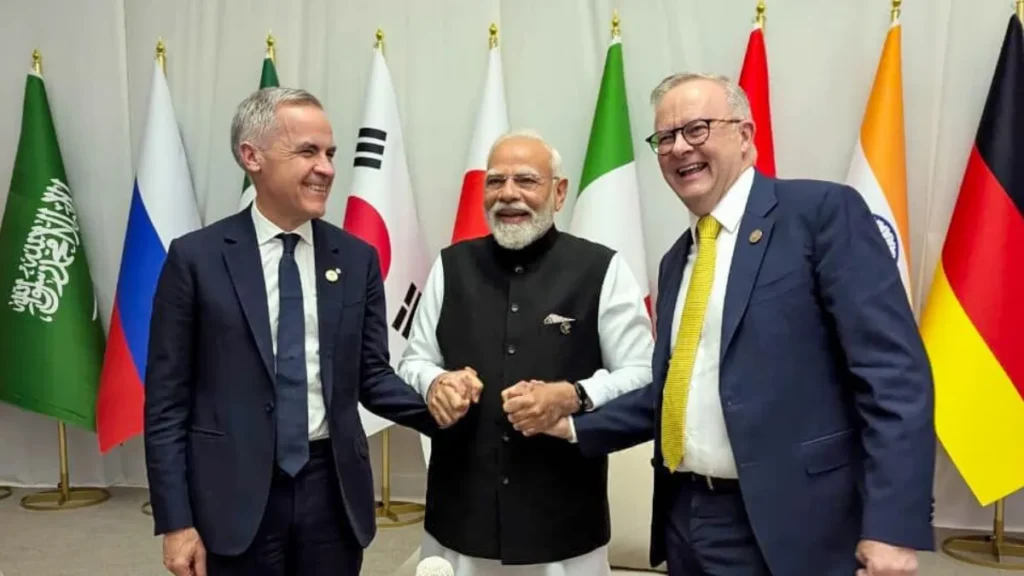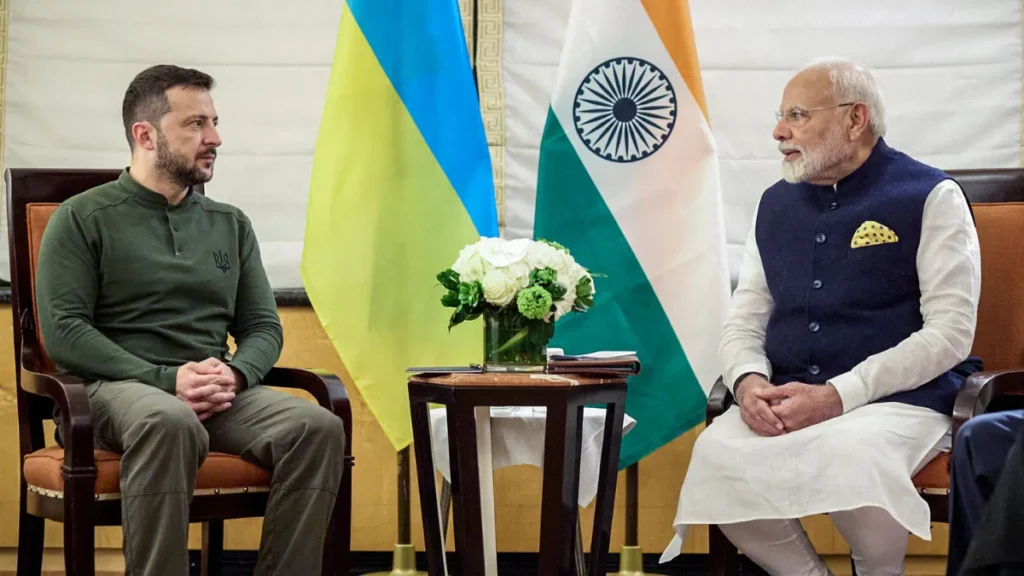
President Zelensky to Visit India: Less than a week after Russian President Vladimir Putin’s visit to India, the country is gearing up to welcome Ukrainian President Volodymyr Zelensky. This high-profile engagement comes as part of India’s carefully balanced diplomatic strategy, underscoring its desire to maintain neutrality while fostering peace amid the ongoing Russia-Ukraine conflict. Analysts and foreign policy experts are now closely watching whether Prime Minister Narendra Modi will use this visit to advocate for dialogue and peace, and what it signifies for India’s role on the global stage.
Timing and Background of-President Zelensky to Visit India
The idea of President Zelensky visiting India was initiated last year when Prime Minister Modi visited Ukraine in August 2025. During that visit, Modi extended a formal invitation to the Ukrainian leader. Since then, Indian and Ukrainian officials have been in discussions, planning the details of the potential visit. According to multiple reports, Zelensky’s visit is expected in January 2026, marking his first official trip to India. While Ukraine has sent delegations to India in the past-specifically in 1992, 2002, and 2012-Zelensky will be the first sitting Ukrainian president to undertake this visit.
In 2012, former Ukrainian President Viktor Yanukovych visited India, strengthening bilateral ties and signing agreements in trade, energy, and technology sectors. While no official statement has been released by either India or Ukraine confirming Zelensky’s travel, preparations are reportedly well underway.
India’s Diplomatic Balancing Act
Welcoming President Zelensky immediately after hosting President Putin highlights India’s deliberate balancing strategy. Since the onset of the Russia-Ukraine war, India has maintained that it seeks peace and will remain neutral in the conflict. Modi’s diplomacy underscores this stance. Last July, he visited Russia, followed by a trip to Ukraine the very next month. During Putin’s visit to India, Modi emphasized, “India is not biased; India stands for peace.”
Only hosting President Putin without engaging with Ukraine could have sent a misleading signal that India supports Russia in the ongoing war. To counter such perceptions, Modi and his government are keen on hosting Zelensky, demonstrating that India’s foreign policy is independent and oriented toward peace. In joint statements during Putin’s visit, Modi highlighted India’s commitment to supporting efforts aimed at resolving the Ukraine crisis peacefully.
Will Modi Push for a Ceasefire Between Russia and Ukraine?
The idea of India brokering a ceasefire between Russia and Ukraine is being widely speculated. Experts suggest that while Modi is likely to discuss peace initiatives with both sides, facilitating a ceasefire is far more complex.
Professor Rajan Kumar of Jawaharlal Nehru University (JNU) explains, “It would have been simpler for Modi to broker a ceasefire when the war was solely between Russia and Ukraine. Now, the conflict involves Russian forces and NATO countries as well. Peace proposals by former US President Donald Trump have been met with varied responses from Zelensky, often changing after discussions with European leaders.”
Similarly, Professor Amitabh Singh of JNU highlights India’s caution: “India will not propose any ceasefire formula because it does not want to be accused of bias. Previously, countries like China and South Africa tried proposing solutions, which the US and European nations perceived as pro-Russia. India is following a neutral approach to maintain credibility on the international stage.”
While India is unlikely to broker a formal ceasefire, discussions between Modi and Zelensky will likely cover avenues for reducing hostilities and promoting dialogue. Modi’s prior engagement with Putin has set the stage for India to play a mediating role without compromising its neutrality.
Will Putin Be Upset by Zelensky’s Visit?
According to experts, the answer is no. Professor Rajan Kumar notes that Putin is well aware of India’s independent foreign policy. India has historically maintained a neutral stance in global conflicts, and hosting Zelensky is consistent with this approach. Inviting the Ukrainian leader is seen as a balancing act rather than a challenge to Russia.
During Modi’s visit to Ukraine following Putin’s India trip, there was no objection from the Russian side. Modi maintained communication with Putin via phone after returning from Ukraine, signaling transparency and coordination. Since 2022, India has consistently refrained from taking sides in the Russia-Ukraine war, including abstaining from voting on multiple resolutions in the United Nations General Assembly and Security Council that targeted Russia.
Why a Ceasefire Remains Elusive
Despite repeated efforts by global leaders, including former US President Trump, a ceasefire between Russia and Ukraine remains out of reach. Three major factors contribute to this deadlock:
- Territorial Disputes: Zelensky’s 10-point peace plan clashes with Russia’s demands. Putin insists on recognizing Russian control over Donetsk, Luhansk, and Crimeaterritories seized since 2014. Zelensky firmly rejects surrendering any territory, emphasizing Ukraine’s sovereignty. He has stated, “Russia wants us to give up our lands, but we will not concede an inch.”
- Mutual Distrust: Russia has demanded assurances that Ukraine will not join NATO. Zelensky seeks security guarantees and accountability for war crimes before any truce. Both leaders are wary of one another’s intentions, fearing that a ceasefire may not prevent future aggression.
- Domestic Political Pressure: Both leaders face intense domestic expectations to avoid appearing weak. Any agreement perceived as a concession could damage their political standing and popularity.
Public sentiment in both Russia and Ukraine shows a strong desire for peace, with surveys indicating that over half of each country’s population favors a ceasefire. However, political realities make immediate peace unlikely.
Strategic Interests Behind the Conflict
Experts suggest that beyond territorial and security concerns, global geopolitics play a significant role. Western nations, including the US and UK, aim to expand influence in Ukraine and other parts of Europe, while Russia seeks to maintain its status as a dominant power on the continent. As Professor Amitabh Singh observes, “The West wants a strong influence in Ukraine and Europe, while Russia wants recognition as a superpower, similar to its Soviet-era standing. This struggle for geopolitical influence perpetuates the conflict.”
What India Stands to Gain from Zelensky’s Visit
According to Professors Rajan Kumar and Amitabh Singh, the visit is strategically important for India in several ways:
- Reaffirming Independent Foreign Policy: Hosting Zelensky demonstrates that India’s diplomatic decisions are sovereign, not influenced by external pressure, whether from Russia, the US, or Europe.
- Communicating Neutrality in the Russia-Ukraine War: Modi’s engagement with Zelensky signals that India is committed to peace rather than siding with either Russia or Ukraine. This positions India as a responsible mediator on the global stage.
- Enhancing India’s Role in the Global South: India is recognized as a leader among developing nations in Asia, Africa, and Latin America. By hosting both Putin and Zelensky, India strengthens its credibility as a global South leader advocating for peace and stability.
Lessons from Putin’s Visit to India
President Putin’s recent visit resulted in 19 agreements across sectors including trade, energy, science, and defense. Some notable outcomes include:
- Labor Mobility Agreements: Allowing Indian skilled workers to take up employment opportunities in Russia, addressing Russia’s skilled labor shortage.
- Maritime Collaboration: Joint efforts to improve shipping routes and research in the Arctic region.
- Fertilizer and Agriculture Cooperation: Agreements to produce urea in Russia, ensuring timely supply for Indian farmers.
- Defense Technology Transfers: Collaborative development of defense equipment and local manufacturing of Russian weapon components in India.
- Economic Partnership Framework: A roadmap aiming to achieve $100 billion in bilateral trade by 2030.
- Energy Security: Commitment from Russia to continue supplying crude oil to India consistently.
These agreements have strengthened India-Russia ties while signaling to the international community, including the US, that India’s foreign policy is resilient and independent.
Geopolitical Implications of President Zelensky’s Visit
The upcoming visit of President Zelensky is expected to further cement India’s status as a neutral but influential player in global diplomacy. Analysts argue that India’s balanced approach enhances its credibility with both Western nations and Russia, demonstrating its capability to mediate and maintain dialogue with all parties.
Experts also suggest that the visit could pave the way for discussions on economic, technological, and defense cooperation with Ukraine, similar to the agreements signed with Russia. Such engagements would diversify India’s international partnerships and reinforce its strategic autonomy.
Conclusion: A Landmark Diplomatic Move
President Zelensky’s visit to India is far more than a ceremonial state visit; it is a strategic maneuver that highlights India’s diplomatic finesse. By welcoming both Putin and Zelensky in quick succession, India demonstrates its commitment to neutrality, peace, and global leadership.
Prime Minister Modi’s engagement with the Ukrainian leader will likely focus on promoting dialogue, exploring avenues for reducing tensions, and reinforcing India’s independent stance. While a ceasefire in the Russia-Ukraine war remains uncertain due to complex geopolitical realities, India’s balanced diplomacy positions it as a key actor capable of influencing international discourse.
In a world increasingly divided by conflict and competing interests, India’s careful navigation of its relationships with Russia, Ukraine, and the West underscores the country’s aspiration to be a global peacemaker. President Zelensky’s visit, therefore, represents a significant chapter in India’s ongoing journey toward asserting its role as a mediator and leader in international diplomacy.