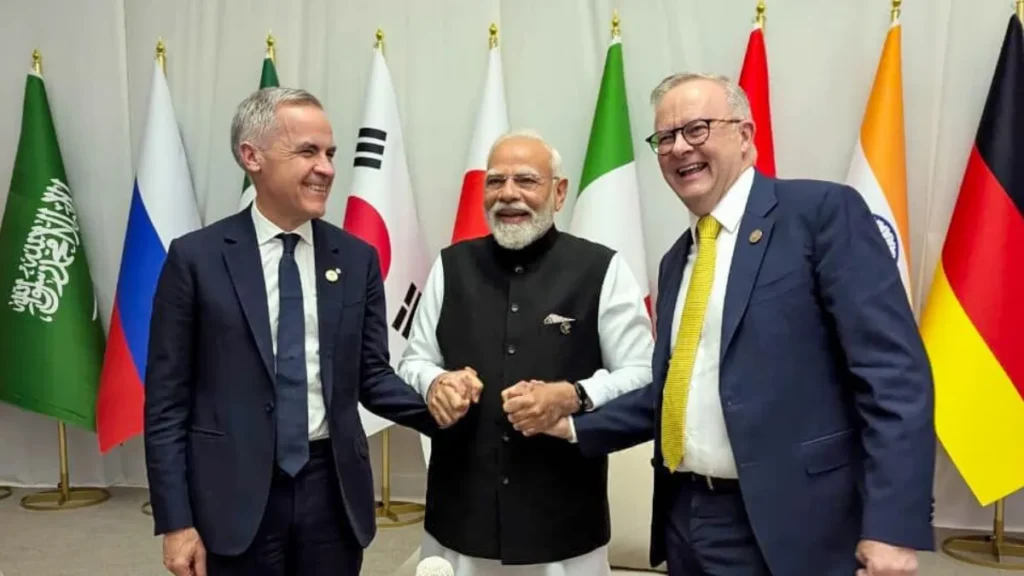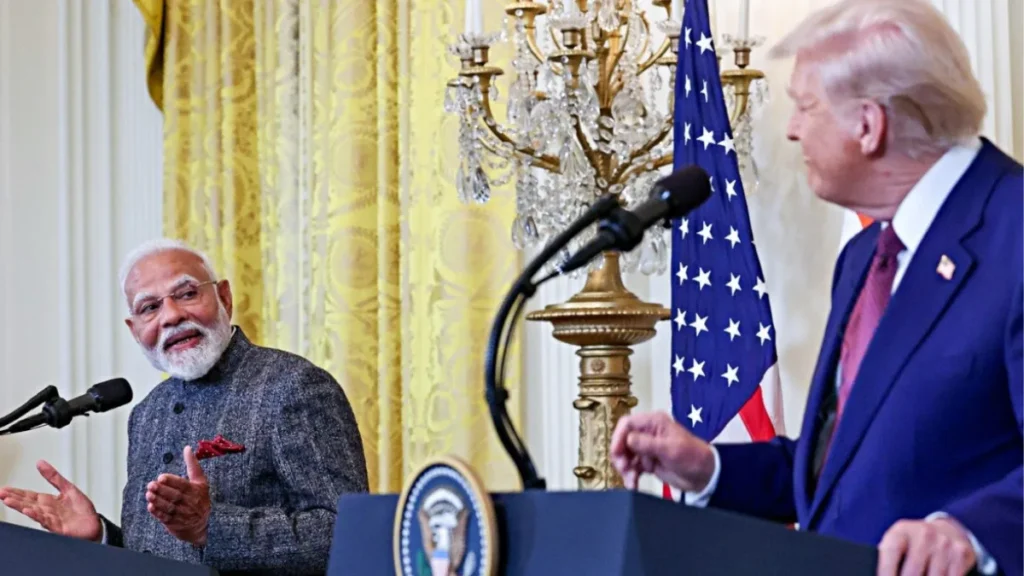
Core-5: A major geopolitical debate has erupted after reports suggested that US President Donald Trump is considering the formation of a powerful new international grouping called “Core-5.” The proposed bloc would include the United States, India, China, Russia, and Japan-five of the world’s most influential nations in terms of population, economy and military strength. If the proposal moves forward, analysts say it could significantly diminish the role of traditional Western-led groups such as the G7, sparking global discussions on whether this marks a shift toward a new world order-and whether India is set to replace G7 as a central pillar of global decision-making.
Although the White House has not officially confirmed the idea, the report has already caused a political storm. The plan was first highlighted by the American publication Politico, which claimed that the concept appeared in a longer, unpublished version of the National Security Strategy document. A shorter, official version of the strategy was released last week, but the alleged extended draft reportedly referenced the creation of a strategic coalition of major population and power centres.
What Is the US ‘Core-5’ Plan?
According to reporting widely referenced in Indian and international media, including NDTV, the supposed strategy outlines the formation of a high-level group called Core-Five or C-5, featuring:
- United States
- China
- Russia
- India
- Japan
Each of these nations holds a population exceeding 100 million and commands significant economic and military capabilities. The proposal suggests that the C-5 would conduct regular leadership summits-similar in structure to the G7-but focused on hard-power topics rather than traditional economic or democratic themes.
The first major agenda point for the proposed group reportedly involves security in the Middle East, with particular emphasis on efforts to normalize relations between Israel and Saudi Arabia. Such a move would place the proposed C-5 at the centre of one of the world’s most sensitive geopolitical regions and position the group as a potential peace-broker.
If implemented, this new bloc could reshape global alliances and challenge the long-established dominance of Western-centric institutions. This has led many analysts to speculate whether the proposal reflects an emerging vision of India to replace G7 influence in shaping global policy, especially as New Delhi’s diplomatic and economic influence continues to rise.
White House Denies Existence of the Document
Despite global reactions, the Biden administration has strongly denied the presence of any such secret strategy. White House Press Secretary Hannah Kelley stated that no “alternative, private or classified version” of the 33-page National Security Strategy exists beyond what has already been publicly released.
However, security analysts remain divided. Some believe the leaked details reflect ideas consistent with the worldview that shaped Trump’s first term—prioritizing power-based alliances over traditional diplomatic frameworks. Others argue that even if the document does not officially exist, the concept aligns with long-term strategic thinking within certain conservative US policy circles.
The strategic intent behind such a grouping also mirrors earlier Trump-era moves that sought to disrupt or sideline institutions like NATO, the World Trade Organization and even the G7 itself-an approach often described as “Trumpian.”
A Shift Toward a Multipolar World?
The resurfacing of this idea comes at a time when major global powers are already questioning the relevance of older Western-led structures. Many analysts argue that institutions such as the G7 and even the G20 struggle to represent the realities of a rapidly shifting multipolar order.
In this context, the proposal suggests that a small group of heavyweight nations-representing massive populations, military power and economic influence—would be better positioned to negotiate on pressing global issues. These include security crises, energy disruptions, technological wars, and shifting trade landscapes.
This concept also feeds into rising global speculation about India to replace G7 relevance in future international governance systems. With India’s economic growth, demographic strength, technological advancements, and increasingly assertive diplomatic stance, the country is emerging as a natural candidate for inclusion in any new power-centered coalition.
Why This Matters for India
For India, such a grouping would mark a dramatic upgrade in global status. It would place the country at the same negotiating table as the world’s most formidable powers, enhancing its influence across strategic sectors from defense to energy to global governance.
Moreover, participation in a hard-power dominated bloc could help India assert itself more forcefully on global issues, balancing both Western and Eastern alliances while strengthening its position as a key global mediator.
However, joining a group that includes both China and Russia may also present challenges, especially given India’s border tensions with China and its complex relationship with Moscow amid shifting global alignments.
Also read: President Zelensky to Visit India: What Modi’s Strategy Means Amid the Russia-Ukraine Conflict
Conclusion
Whether or not the ‘Core-5’ plan is officially real, the debate surrounding it highlights major changes underway in international politics. The world is moving rapidly toward multipolarity, and the idea of India to replace G7-style influence no longer seems far-fetched. If such a grouping ever materializes, it could redefine global power structures for decades to come-placing India in the center of a new superpower coalition.