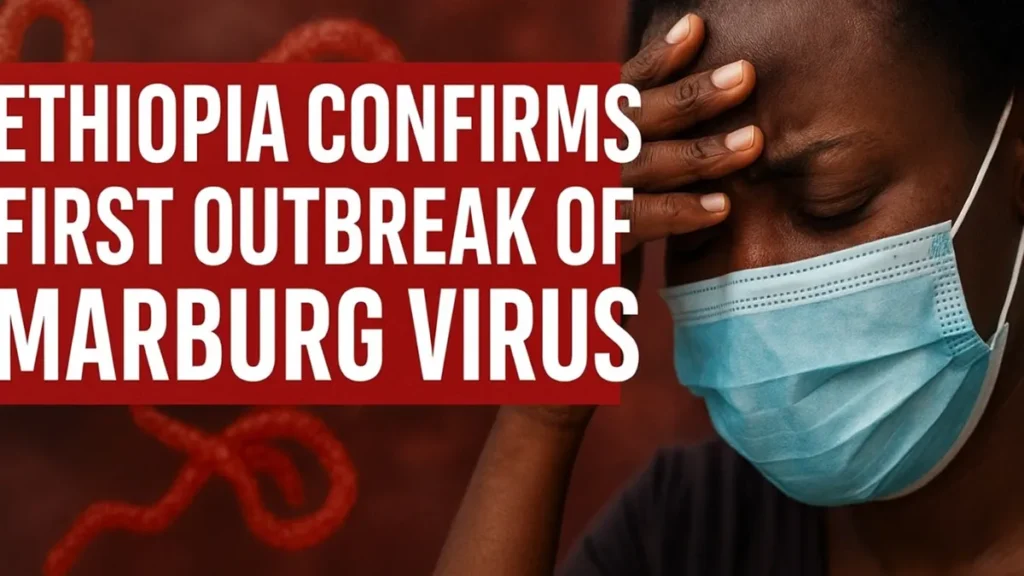
South Ethiopia Region has reported its first-ever outbreak of the Marburg Virus, marking a significant public health emergency for the country. Ethiopia’s Ministry of Health officially confirmed the outbreak after laboratory tests identified the presence of the deadly virus in samples collected from several suspected cases of viral haemorrhagic fever.
Health officials revealed that nine cases have been detected so far in Jinka town, a major hub in the South Ethiopia Region. This marks the first documented occurrence of the disease within Ethiopia’s borders.
Genetic Analysis Confirms Strain Linked to East African Outbreaks
According to the Ethiopia Public Health Institute, genetic sequencing has shown that the detected Marburg virus strain is closely related to those involved in earlier outbreaks across East Africa. This finding provides important clues about the virus’s origin and transmission patterns and helps global health experts understand how the outbreak may evolve.
Marburg Virus, a member of the Filoviridae family – the same family responsible for Ebola virus disease – is known for causing severe and often fatal illness. The confirmation of its presence in Ethiopia has raised significant concern among national and global health agencies.
Government Responds With Urgent Measures
In response to the outbreak, Ethiopian authorities have activated a full-scale emergency response plan. The ministry has deployed specialized teams to conduct:
- Intensive community-wide screening
- Isolation and clinical care for suspected and confirmed cases
- Rapid contact tracing to prevent further spread
- Public awareness campaigns focused on prevention and early symptom recognition
Health workers on the ground are collaborating closely with local communities, particularly in areas with confirmed cases, to curb transmission through early detection.
WHO Steps In With Technical and Operational Support
The World Health Organization (WHO) and partner organizations are providing extensive support to the Ethiopian government. A multidisciplinary response team with expertise in viral haemorrhagic fever, including specialists in epidemiology, laboratory science, risk communication, and infection prevention, has been deployed to the affected region.
Additionally, essential medical equipment, personal protective gear, and laboratory supplies have been dispatched to strengthen Ethiopia’s outbreak response capabilities.
WHO emphasized the urgency of controlling the spread of the Marburg Virus, noting that timely intervention is critical to preventing a wider regional risk.
What Is the Marburg Virus?
The Marburg Virus is a highly infectious pathogen first identified in 1967. It spreads to humans primarily through exposure to fruit bats, and later from person to person through direct contact with bodily fluids, contaminated surfaces, or infected materials.
Early Symptoms:
- High fever
- Severe headaches
- Muscle pain
- Extreme fatigue
As the disease progresses, many patients develop internal and external bleeding, typically within a week of symptom onset. Without timely medical care, the illness can be fatal.
No Licensed Treatment Yet, but Supportive Care Saves Lives
Currently, no approved vaccine or antiviral treatment is available for the Marburg Virus. However, several promising drugs and vaccine candidates are in the clinical trial phase.
For now, health experts stress that early supportive treatment can significantly improve survival. This includes:
- Oral or intravenous rehydration
- Treatment of specific symptoms
- Close monitoring of vital signs
- Management of complications such as bleeding or organ failure
Hospitals across the South Ethiopia Region have been instructed to follow strict infection prevention protocols to protect both healthcare workers and patients.
Marburg Virus in Africa: A History of Deadly Outbreaks
Although the outbreak is new for Ethiopia, the African region has recorded several previous episodes of the Marburg Virus, including in:
- Angola
- Ghana
- Kenya
- Tanzania
- Uganda
- Rwanda
- South Africa
- Democratic Republic of the Congo
- Equatorial Guinea
Many of these outbreaks resulted in high fatality rates, making the virus one of the most dangerous pathogens monitored by global health agencies.
Risk of Further Spread and Global Concerns
Because the outbreak has appeared in a region with significant movement across communities, health experts warn that continued vigilance is essential. Neighboring countries are closely monitoring the situation, given the potential for cross-border spread.
International disease surveillance teams are coordinating with Ethiopia to track any possible expansion of the virus, especially in remote or underserved areas where healthcare access is limited.
Also read: Trump and BBC: Former President Rejects BBC Apology, Announces Plan for Major Lawsuit
Public Advised to Remain Alert but Not Panic
Ethiopia’s Ministry of Health has urged the public to stay calm while following recommended precautions. These include:
- Avoiding contact with individuals displaying symptoms
- Reporting suspicious illness immediately
- Practicing proper hygiene
- Avoiding handling animals suspected to carry the virus, especially fruit bats
Health experts emphasize that misinformation can worsen outbreaks. Therefore, authorities are working to circulate clear and verified information to prevent fear and panic.
Also read: New York Film Festival Called Off Amid Claims of Pressure on Filmmakers From Chinese Authorities
Conclusion
The confirmation of the Marburg Virus outbreak in Ethiopia marks a critical moment for the country’s public health system. With strong support from WHO and ongoing government interventions, efforts are underway to contain the virus and prevent further transmission. While the situation remains serious, rapid action, medical preparedness, and community cooperation offer hope for controlling the outbreak before it escalates.