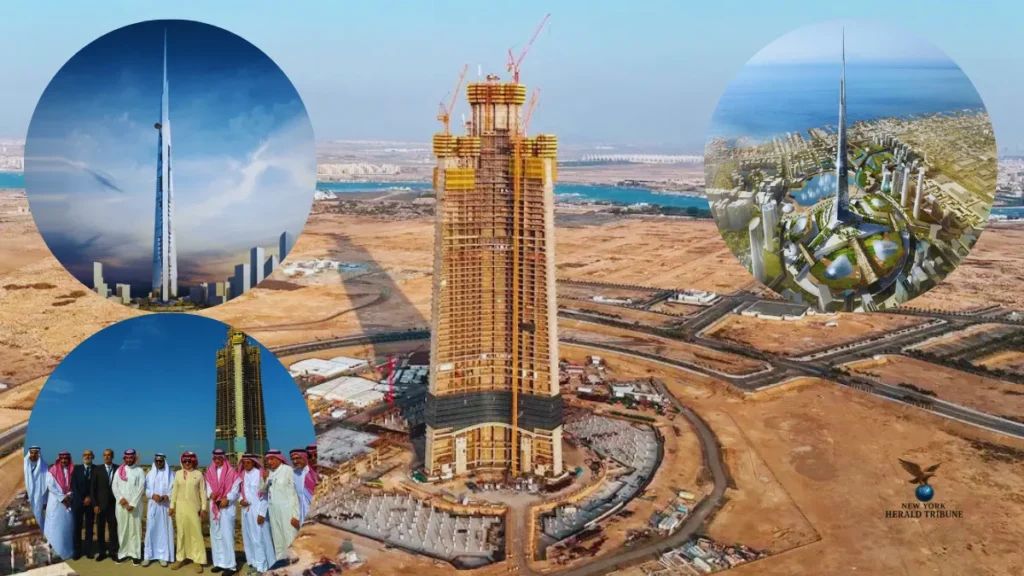
Jeddah Tower: Saudi Arabia is preparing to rewrite architectural history with the construction of what is set to become the tallest building on Earth. Rising to an unprecedented height of one full kilometre, the Jeddah Tower is designed to surpass Dubai’s iconic Burj Khalifa and permanently change the global skyline. Scheduled for completion by 2028, the project represents a bold statement of ambition, engineering excellence, and national transformation under Saudi Arabia’s long-term development strategy.
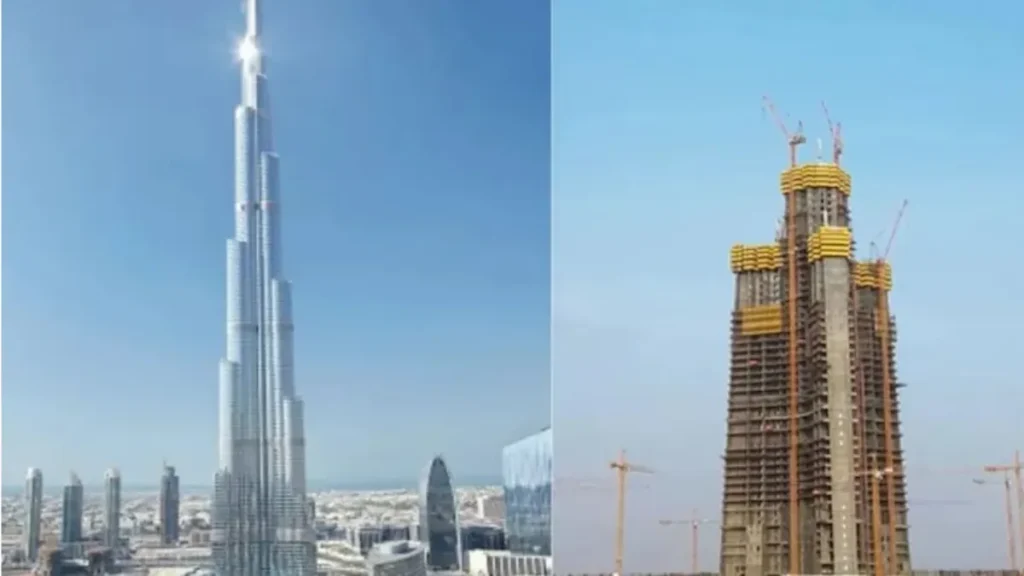
For more than a decade, the Burj Khalifa has held the title of the world’s tallest building at 828 metres. That record, however, is now expected to fall. Once completed, the jeddah tower will stand at approximately 1,000 metres, making it at least 172 metres taller than its nearest rival. The project has reignited international attention, positioning Saudi Arabia at the centre of the global race for architectural supremacy.
A Monumental Vision Taking Shape in Jeddah
The jeddah tower is being constructed in Jeddah Economic City, a major urban development along the Red Sea coast. The city itself is designed as a futuristic hub for business, tourism, and innovation, with the tower as its centrepiece. When finished, the skyscraper will not only dominate the skyline but also symbolise Saudi Arabia’s economic and cultural aspirations.
The tower’s construction resumed in 2025, following years of delays, marking a renewed commitment to the project. Its revival aligns closely with Vision 2030, the ambitious reform programme championed by Crown Prince Mohammed bin Salman Al Saud. Vision 2030 aims to diversify the Saudi economy beyond oil, attract global investment, and establish the Kingdom as a destination for tourism, technology, and global commerce.
From Announcement to Revival: The Journey of Jeddah Tower
The idea of constructing the jeddah tower was first announced in 2011, at a time when the Middle East was witnessing a surge in mega infrastructure projects. From the outset, the tower was envisioned as a structure unlike anything the world had ever seen-taller, stronger, and more technologically advanced than any existing skyscraper.
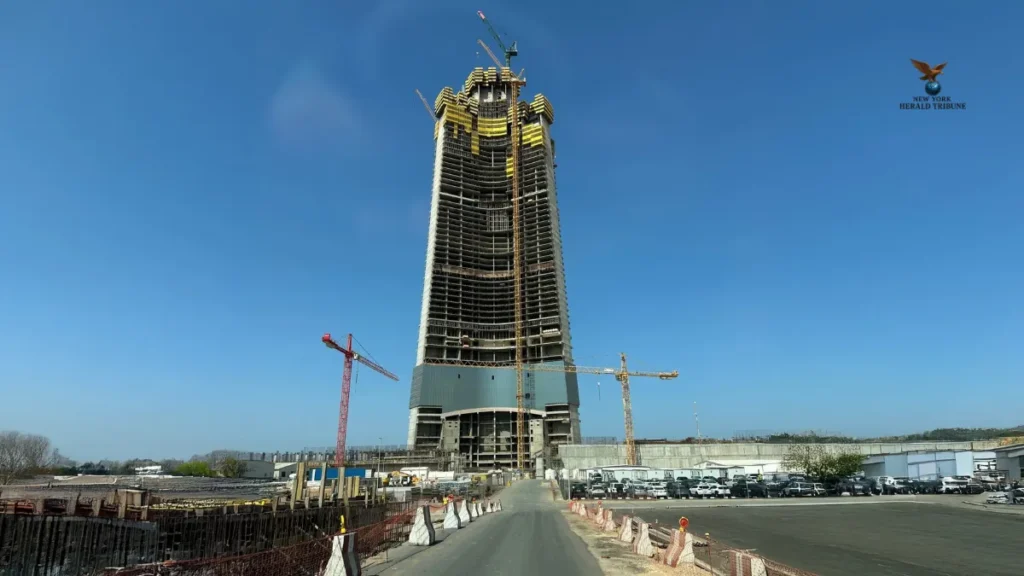
Initial construction progressed steadily, and by the late 2010s, more than 60 floors had been completed. However, the project encountered serious setbacks due to financial and administrative challenges. Allegations of corruption and broader economic adjustments in the region led to a halt in construction. By the time work stopped, 63 floors had already been built.
For several years, the unfinished tower stood as a reminder of stalled ambition. That narrative changed dramatically in 2025 when construction officially resumed. With new oversight, improved planning, and renewed financial backing, progress has accelerated rapidly.

Construction Progress: 80 Floors Already Completed
According to recent reports, approximately 80 floors of the jeddah tower have now been completed, indicating strong momentum. Engineers and construction teams are reportedly working at a rapid pace to meet the revised completion timeline.
Each additional floor presents immense technical challenges, particularly given the unprecedented height of the structure. Wind resistance, seismic stability, material strength, and vertical transportation systems all require cutting-edge solutions. The pace of construction suggests that these challenges are being addressed with advanced engineering techniques and international expertise.
Engineering a One-Kilometre Skyscraper
Building a structure that reaches 1,000 metres into the sky is not simply a matter of adding more floors. The jeddah tower represents a unique engineering challenge that has pushed the boundaries of what modern construction technology can achieve.
At such extreme heights, wind forces become a major concern. Engineers have designed the tower with an aerodynamic shape that reduces wind pressure and minimises sway. The foundation itself is among the deepest ever built for a skyscraper, ensuring stability on the Red Sea coastal terrain.
The materials used in the tower are specially engineered to withstand immense pressure while remaining lightweight enough to support vertical expansion. Advanced concrete mixtures and high-strength steel play a crucial role in maintaining structural integrity.
How Jeddah Tower Will Surpass Burj Khalifa
The Burj Khalifa, standing at 828 metres with 163 floors, has long been considered an unmatched feat of engineering. However, the jeddah tower is designed to exceed those limits on every level.
While the final number of floors has not been officially confirmed, it is expected to significantly exceed the Burj Khalifa’s count. The vertical transportation system will include ultra-high-speed elevators, capable of travelling vast distances in minimal time, ensuring efficiency and comfort for occupants and visitors.
The tower’s height will also allow for record-breaking observation decks, offering views unmatched anywhere else in the world.
What Will Be Inside the Jeddah Tower?
The jeddah tower is not merely a symbolic structure; it is a fully functional vertical city. Once completed, it will house a diverse mix of spaces designed to serve business, hospitality, and residential needs.
Offices
High-end office spaces will cater to multinational corporations, financial institutions, and innovative startups. The prestige of operating from the world’s tallest building is expected to attract global businesses.
Luxury Hotel
A world-class hotel will occupy a significant portion of the tower, offering unparalleled views and premium services. It is expected to become one of the most exclusive hospitality destinations in the world.
Residential Apartments
Luxury residential units will allow residents to live at extraordinary heights, offering privacy, security, and panoramic views of Jeddah and the Red Sea.
Observation Decks
The tower will feature observation areas at record-breaking elevations, designed to attract tourists from around the globe.
A Catalyst for Tourism and Global Attention
The completion of the jeddah tower is expected to significantly boost Saudi Arabia’s tourism sector. As the tallest building on the planet, it will become an instant global landmark, drawing millions of visitors annually.
Saudi Arabia has already taken major steps to open its borders to international tourism, investing heavily in cultural, entertainment, and heritage projects. The tower fits perfectly within this strategy, serving as a flagship attraction that reinforces the Kingdom’s evolving global image.
Economic Impact and Job Creation
Beyond its symbolic value, the jeddah tower is expected to generate substantial economic benefits. During construction, the project has already created thousands of jobs across engineering, construction, logistics, and design sectors.
Once operational, it will support long-term employment in hospitality, property management, tourism, and corporate services. The surrounding Jeddah Economic City is also expected to benefit from increased investment and development.
Vision 2030 and the Future of Saudi Infrastructure
The jeddah tower is one of several mega projects shaping Saudi Arabia’s future under Vision 2030. Alongside developments such as NEOM, the Red Sea Project, and Qiddiya, the tower represents a shift toward innovation-driven growth.
These projects aim to position Saudi Arabia as a global leader in sustainable development, smart cities, and futuristic infrastructure. The tower’s completion will signal that the Kingdom is capable of delivering projects on a scale matched by few nations.
Read also: Deva Art Exhibition Showcases India’s Spiritual Art Heritage in Dubai
Sustainability and Modern Design Principles
Despite its size, the jeddah tower is being designed with sustainability in mind. Energy-efficient systems, water conservation technologies, and advanced climate control mechanisms are expected to reduce its environmental footprint.
Natural light optimisation and high-performance insulation will also contribute to energy efficiency, ensuring that the tower meets modern environmental standards despite its immense scale.
A New Era for Global Architecture
When completed, the jeddah tower will mark the beginning of a new era in skyscraper design. Its unprecedented height will challenge architects and engineers worldwide to rethink what is possible in vertical construction.
For decades, the Burj Khalifa symbolised human ambition and engineering excellence. The rise of the jeddah tower signals that the limits of architecture continue to expand.
Read also: Visit of PM to Oman Strengthens Strategic, Economic and Cultural Partnership
Conclusion: The World’s Tallest Building Takes Shape
The jeddah tower is more than just a building-it is a statement of vision, resilience, and ambition. After years of delays, its revival and rapid progress have reignited global interest. Standing one kilometre tall, it is poised to claim the title of the world’s tallest building and redefine what modern engineering can achieve.
As construction continues toward its anticipated 2028 completion, the world watches closely. Once finished, the jeddah tower will not only eclipse the Burj Khalifa but also secure Saudi Arabia’s place at the forefront of global architectural innovation.