India–Russia News: In a significant development that could reshape strategic cooperation in Eurasia and the Indian Ocean Region, Russia’s lower house of parliament, the State Duma, has officially approved a landmark military logistics agreement with India. The pact, known as the Reciprocal Exchange of Logistics Support (RELOS), grants both nations’ armed forces access to each other’s military bases, facilities, ports, and logistical systems.
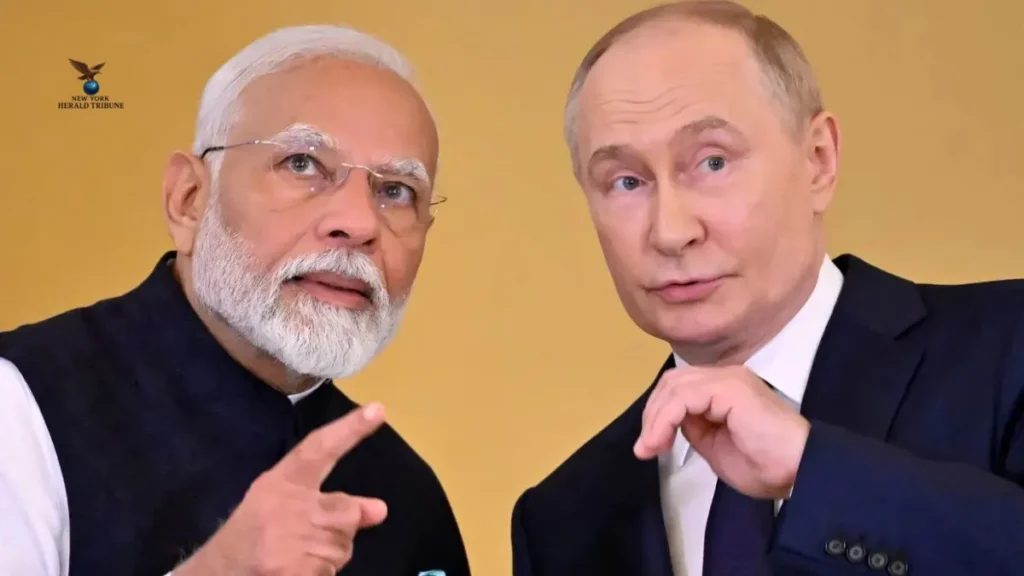
The approval comes just two days before President Vladimir Putin’s state visit to New Delhi, adding considerable diplomatic weight to the upcoming India–Russia annual summit. The move underscores the growing depth of bilateral ties at a time when global geopolitics is undergoing rapid transformation.
This major update forms one of the most important highlights in India Russia news, especially in the context of defence cooperation, military logistics, and Indo-Pacific security dynamics.
A New Era of Defence Cooperation Between India and Russia
The RELOS pact was formally signed on 18 February this year, but required parliamentary ratification in Russia before its implementation. Last week, Russian Prime Minister Mikhail Mishustin forwarded the agreement to the State Duma, which has now given its full approval.
Under this deal, the armed forces of India and Russia will be able to:
- Use each other’s military bases and infrastructure
- Refuel aircraft and warships at each other’s facilities
- Access logistics hubs, supply points, ports, and airfields
- Receive support for repairs, maintenance, medical needs, and emergency supplies
- Carry out military transit and movement through territories using shared logistics
Importantly, the cost incurred will be shared equally between both nations.
For India, this development marks a historic achievement. Defence experts point out that once RELOS formally comes into force, India will be the only country in the world to have military logistics-sharing agreements with both the United States and Russia — two nations that remain strategic rivals in global security.
Russia Says Agreement Deepens “Strong and Time-Tested” Relationship
Reacting to the Duma’s approval, the Speaker of the Russian Parliament noted that India and Russia share an exceptionally strong relationship, built over decades of strategic trust. He added that the RELOS pact would “significantly enhance military cooperation and ensure both countries can support each other easily in times of need.”
The Russian government echoed the same sentiment, stating that this agreement would help both countries operate more smoothly across different theatres, especially in the Indo-Pacific, Central Asia, and Arctic regions, where Russia maintains a large military presence.
On the Indian side, Chief of Naval Staff Admiral Dinesh Tripathi confirmed that the pact was in its final stages from India’s end. When asked whether this could create friction between the US and Russia, he clarified that the agreement is strictly logistical and will not result in any military conflict of interest.
This makes the latest update an important milestone in ongoing India Russia news, especially for analysts tracking defence diplomacy.
Why the RELOS Agreement Is So Important
The Reciprocal Exchange of Logistics Support (RELOS) is considered one of the most consequential defence agreements in the entire history of India–Russia military cooperation.
Here’s why the pact is strategically significant:
1. Expanded Military Reach
India will gain unprecedented access to Russian military facilities spanning:
- The Arctic region
- Vladivostok and Far Eastern bases
- Central Asian airfields
- Russian naval ports along the Pacific and Baltic coasts
Similarly, Russia will be able to use Indian naval bases situated near some of the world’s busiest and most strategic maritime routes.
2. Cost-Effective Operations
The shared logistics model reduces operational expenses for both militaries, enabling:
- Cheaper refuelling
- Faster restocking
- Immediate repairs or medical assistance
This is particularly crucial during joint exercises, humanitarian missions, and anti-piracy operations.
3. Strengthening India’s Strategic Position
With multiple logistics-sharing deals already in place-including with the US (LEMOA), France, Australia, Singapore, and South Korea — adding Russia to this list amplifies India’s strategic autonomy.
4. Faster Deployment Capabilities
The pact allows India and Russia to conduct:
- Joint military exercises more efficiently
- High-seas defence cooperation
- Quicker humanitarian relief missions
- More coordinated naval patrols
This ensures smoother operations in the Indian Ocean and Indo-Pacific regions.
Putin’s India Visit: Tight Security and High Expectations
President Vladimir Putin is scheduled to visit New Delhi on 4 December, where he will attend the 23rd India–Russia Annual Summit. Due to heightened geopolitical concerns, Putin will stay at a classified or “secret” location in Delhi. Authorities have deliberately avoided releasing details to ensure maximum security.
From 4–5 December, the Indian capital will remain under a multi-layered security blanket, including:
- SWAT teams
- Anti-terror squads
- Quick Action Teams
- Expanded surveillance grids
- Intelligence-led monitoring
More than 50 members of Russia’s advance security and protocol team have already arrived in Delhi to coordinate arrangements.
Among the various items on the agenda, defence cooperation is expected to be the top focus of discussions.
India Considering Russia’s Offer of the SU-57 Stealth Fighter Jet
Russia has already signalled its readiness to supply India with the SU-57, its most advanced stealth fighter jet, representing the next generation of air combat technology.
Key features of the SU-57 include:
- Stealth capabilities
- Supercruise speed
- Advanced avionics
- High manoeuvrability
- Multi-role combat performance
India has been evaluating options to strengthen its air force, especially as older aircraft are gradually phased out. The potential purchase of SU-57s could reshape India’s aerial defence strategy for the next two decades.
Given the global attention this topic has drawn, it is currently a major highlight across international India Russia news coverage.
Future Projects: S-500, BrahMos Upgrade, and Joint Warship Manufacturing
During the upcoming summit, both nations are expected to discuss:
1. Collaboration on Russia’s S-500 System
Often referred to as a next-generation air defence shield, the S-500 Prometey could mark a new phase of technological cooperation if India joins the research or procurement programme.
2. Next Version of the BrahMos Missile
India and Russia jointly developed the BrahMos, one of the world’s fastest cruise missiles. Work on its next-phase upgrade is likely to be deliberated.
3. Joint Warship Construction
Both navies may begin discussions on co-developing advanced warships for the Indian Navy, strengthening maritime capabilities in the Indo-Pacific.
India Expected to Discuss Purchase of Additional S-400 Missile Systems
According to reports from news agency PTI, India is likely to hold talks about acquiring more units of the S-400 Triumf air defence system from Russia.
This consideration gained momentum following the system’s exceptional performance during “Operation Sindoor”, a confidential counter-threat operation near the Pakistan border.
India Already Has 3 S-400 Units
Out of the five originally contracted systems:
- Three have been delivered
- The fourth was delayed due to the Russia–Ukraine conflict
- The fifth is pending future timelines
What Makes the S-400 So Effective?
Launched in 2007, the S-400 is considered one of the world’s most advanced air defence systems. It can neutralise:
- Fighter jets
- Drones
- Cruise missiles
- Ballistic missiles
- Even stealth aircraft
Its ability to track and engage multiple threats simultaneously makes it a crucial asset for India’s air defence grid.
More updates on this procurement are expected to dominate India Russia news following Putin’s visit.
Geopolitical Importance of the Agreement
The RELOS agreement arrives at a time when:
- The US–Russia rivalry continues
- China is expanding its influence across Asia
- The global defence landscape is undergoing major realignments
India, meanwhile, has maintained a balanced and multi-aligned strategy, engaging deeply with several global powers without compromising its strategic autonomy.
This pact strengthens India’s position by allowing it to:
- Enhance its presence in the Arctic and Pacific
- Improve maritime logistics across Russia’s vast geography
- Strengthen defence preparedness across multiple borders
- Counter regional security challenges more efficiently
For Russia, India remains:
- A major defence partner
- A long-term geopolitical ally
- A stable market for advanced weapon systems
Thus, the agreement is viewed as a win–win step in a world marked by shifting alliances.
Impact on Global Defence Partnerships
India’s unique position — having logistics-sharing agreements with both the United States and Russia — highlights its role as a strong, independent global player. This is especially crucial at a time when military logistics agreements shape global naval and aerial mobility.
India’s strategic outreach now covers:
- The Indian Ocean
- The Pacific
- Central Asia
- Europe
- The Mediterranean
- The Arctic region
This gives New Delhi a military reach that few nations possess.
It is expected that the RELOS pact will encourage:
- More joint India–Russia naval drills
- Stronger Arctic cooperation
- Greater collaboration in defence technology
- Wider coordination on regional security
These developments ensure that India Russia news remains a focal point for defence analysts worldwide.
Conclusion: A Landmark Moment in India–Russia Defence Relations-India–Russia News
The Russian Parliament’s approval of the RELOS agreement marks a historic milestone in the long-standing Indo-Russian partnership. As both countries prepare for President Putin’s visit and a series of high-level defence discussions, the agreement sets the stage for deeper military integration, broader strategic cooperation, and enhanced global influence for both nations.
With the expansion of logistical support, discussions on SU-57 fighter jets, potential S-500 collaboration, and further procurement of S-400 systems, the India–Russia relationship is entering one of its strongest phases in decades.
This comprehensive development ensures that India Russia news will continue to dominate global headlines in the coming weeks.