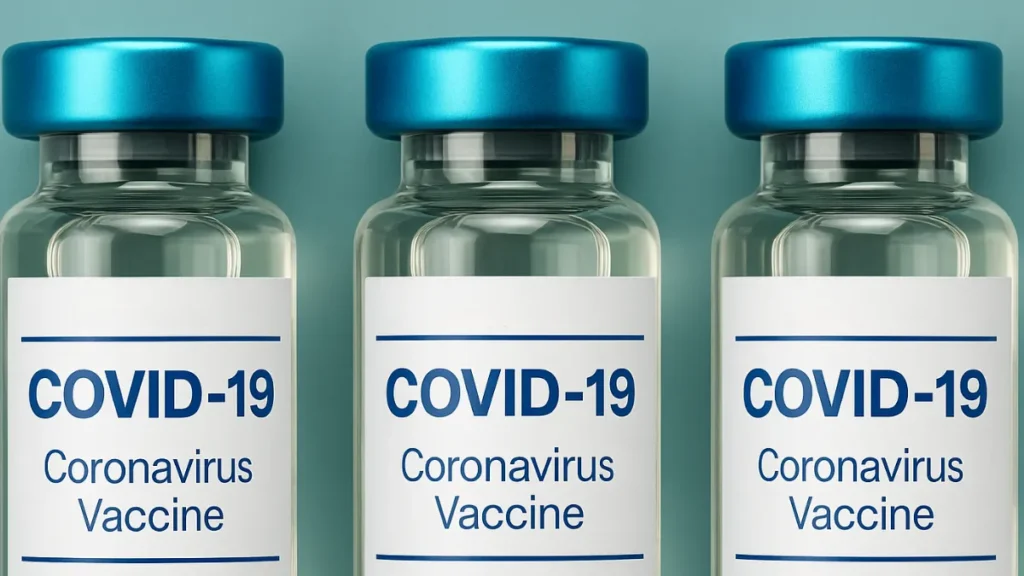
A newly revealed internal memo from the US FDA has sparked intense national debate after senior agency official Dr. Vinay Prasad stated that at least 10 children who died from heart inflammation may have experienced vaccine-related complications. The document, dated Friday and reviewed by Reuters, marks one of the most consequential internal acknowledgements by the agency regarding potential risks connected to COVID-19 vaccinations in minors.
In the memo, Dr. Prasad-who serves as the US FDA’s chief medical and scientific officer — wrote that staff analyses had determined that “no fewer than 10” out of 96 evaluated child deaths between 2021 and 2024 were “likely, probable, or possibly” related to COVID-19 vaccination. He described the findings as “a profound revelation” and asserted that it represented the first time the agency would acknowledge that vaccination may have contributed to child fatalities.
“These deaths are related to vaccination (likely/probable/possible attribution made by staff),” Prasad wrote. “This is a profound revelation. For the first time, the U.S. FDA will acknowledge that COVID-19 vaccines have killed American children.”
While Prasad’s memo does not conclude that vaccines are broadly unsafe, nor does it challenge prior agency guidance directly, the stark wording has triggered new scrutiny of how safety signals are assessed, documented, and communicated to the public.
Shift in Federal Policy Under Health Secretary Robert F. Kennedy Jr.
The memo surfaces at a time when U.S. vaccine policy is undergoing major shifts under Health Secretary Robert F. Kennedy Jr., who was appointed to the role by President Donald Trump in his second administration. Kennedy, long known for his opposition to certain vaccines, has already implemented tighter restrictions on COVID-19 vaccine availability — limiting access primarily to adults aged 65 and above and people with specific underlying health risks.
Kennedy’s appointment and subsequent policy changes represent a dramatic reversal from the approach taken during the administrations of both Donald Trump’s first term and President Joe Biden. In those earlier years, federal health agencies promoted COVID-19 vaccines as essential tools to prevent severe disease and death. The vaccines, first released under emergency use authorization in 2020, were broadly recommended across nearly all age groups at various points during the pandemic.
Kennedy, however, has repeatedly questioned vaccine safety, previously linking childhood vaccines to autism — a claim consistently rejected by mainstream medical research. His elevation to Health Secretary has heightened concerns among public health experts about whether long-standing immunization strategies could be weakened.
US FDA Memo Leaves Key Questions Unanswered
The newly surfaced US FDA memo does not reveal the identities or medical histories of the children whose deaths were examined. Nor does it identify which pharmaceutical manufacturers produced the vaccines administered in those cases. The memo also does not specify whether the children had underlying health conditions that might have contributed to their deaths.
According to the internal review, staff examined 96 deaths in individuals under 18 years old between 2021 and 2024. Prasad reported that the preliminary analysis concluded that at least 10 of these cases involved myocarditis or related heart inflammation soon after vaccination.
“It is difficult to read cases where kids aged 7 to 16 may be dead as a result of COVID vaccines,” Prasad wrote, calling the findings emotionally challenging even for trained medical professionals.
Prasad added that the agency would begin implementing new oversight measures, though details of the proposed changes were not specified in the memo.
Findings Not Peer-Reviewed, Adding to Controversy
In its reporting, The New York Times noted that the internal US FDA review had not undergone peer review — the gold standard for scientific validation. The Times also reported that the Centers for Disease Control and Prevention (CDC) will be reviewing the findings at an upcoming vaccine advisory committee meeting.
This lack of peer review has drawn criticism from legal and medical scholars. Dorit Reiss, a professor at UC Law San Francisco who specializes in vaccine policy and law, argued on social media that substantial policy shifts should not be based on unpublished internal analyses conducted by unspecified teams.
“It is more problematic given that Dr. Prasad’s expertise is not in vaccines, but it would be problematic even if he were a vaccine expert,” Reiss wrote on X (formerly Twitter). Her comments highlight growing concerns about transparency, scientific rigor, and political pressure in federal decision-making.
Background of Dr. Vinay Prasad and His Return to the US FDA
Dr. Prasad, an oncologist by training, has been a prominent public critic of certain COVID-19 policies since early in the pandemic. He openly opposed blanket mask mandates and universal vaccine mandates, arguing that risk profiles varied widely across age groups and health statuses.
Despite his earlier criticisms, Prasad returned to a top scientific leadership position at the US FDA in September, where he now advises the commissioner and senior officials on emerging medical trends and regulatory science.
Supporters say his willingness to challenge long-held assumptions brings fresh scrutiny to institutional processes that require improvement. Critics argue that his limited background in vaccine science raises concerns about potential biases.
Context: COVID-19 Mortality Among Children in the U.S.
According to CDC data, 1,071 individuals between the ages of five and 18 died from COVID-19 between January 4, 2020, and June 24, 2023. While comparatively low compared to adult mortality, the figures still underscore that COVID-19 can pose serious risks to children — particularly those with chronic medical conditions.
Most vaccine experts continue to maintain that the overall benefits of vaccination far outweighed the risks during the peak of the pandemic. However, disagreements remain about the degree of risk from vaccine-associated myocarditis in younger populations, especially adolescent males, who experienced higher incidence rates.
Prasad used the memo to argue that comparing the number of pediatric COVID deaths to the number of alleged vaccine-related deaths was “a flawed comparison” due to incomplete data.
“We do not know how many fewer kids would have died had they been vaccinated,” he wrote. “And we do not know how many more kids died from taking vaccines than has been voluntarily reported.”
Prasad’s statements echo broader criticisms of passive reporting systems such as VAERS, which collect reports of adverse events but do not independently verify causality.
Mixed Reactions From Public Health Officials
While the memo focused on potential vaccine-related deaths in minors, US FDA Commissioner Marty Makary offered a contrasting perspective during a televised interview on Fox News. Makary defended the vaccine’s performance for older adults, stating that COVID-19 shots were “amazing for people at risk and for older people, especially when it was a good match for the circulating virus.”
Makary’s comments reflect a more traditional stance within the US FDA, emphasizing the life-saving benefits of vaccination in older age groups where COVID-19 mortality risk has consistently been highest.
Additional research continues to support vaccine efficacy in these populations. A study published last month on U.S. veterans found that updated COVID-19 vaccine formulas significantly reduced the risk of severe outcomes such as hospitalization and death.
Experts Stress Need for Nuanced Interpretation
Public health analysts caution that the new US FDA memo should be interpreted carefully. Internal assessments of adverse events often function as preliminary investigations, not definitive determinations of causation.
Medical experts also stress that myocarditis following mRNA vaccination is rare, typically mild, and generally resolves with treatment. However, the cases flagged in the memo — involving fatal outcomes — represent the most severe end of the spectrum and may require deeper investigation.
Several experts warned against drawing broad conclusions from early findings that have not undergone peer review. Many noted that child deaths reported after vaccination could involve numerous confounding factors, including undiagnosed medical conditions, viral myocarditis from other infections, or unrelated cardiac issues.
Political and Public Repercussions Expected
The memo’s release is likely to intensify already polarized debates around COVID-19 policies, vaccine mandates, and federal health agency credibility. Opponents of mass vaccination campaigns are expected to cite the memo as evidence of mismanagement, while vaccine advocates argue that isolated cases do not justify rolling back public health protections.
Health Secretary Kennedy’s involvement adds further political complexity. His long-standing opposition to several mainstream vaccine policies has drawn significant support from some groups, while alarming many medical professionals who fear erosion of trust in immunization programs more broadly.
Political analysts anticipate congressional hearings, increased scrutiny of the US FDA’s internal operations, and renewed disagreements between federal agencies and state-level health authorities.
Also read: Trump h1b Policy Debate Intensifies as White House Defends Stance on American Jobs
Path Ahead for the US FDA and Public Health Agencies
As the debate evolves, the US FDA now faces pressure to:
- Release more detailed data regarding the reviewed cases
- Explain the methodology used to assess vaccine involvement
- Clarify how final determinations will influence future vaccine approvals
- Reassure the public that the regulatory process remains grounded in scientific evidence
Whether the agency will publish a peer-reviewed version of the analysis remains unknown.
Public health experts emphasize that transparent communication will be essential to maintaining public confidence. They also warn that inconsistent messaging — especially when political pressures are involved — can foster confusion and skepticism.
With the pandemic’s acute phase behind the country, officials face a delicate balance: acknowledging rare but serious risks without undermining the broader value of vaccines in reducing illness and death.
Also read: Meta Buried Evidence of Social Media Harm, US Court Documents Reveal
Conclusion
The emergence of the US FDA memo linking 10 possible child deaths to COVID-19 vaccination marks a significant and deeply controversial moment in the ongoing assessment of vaccine safety. While the findings remain preliminary and non–peer-reviewed, they have sparked urgent calls for increased transparency, stronger oversight, and a more cautious approach to future vaccination policies — especially for children.
As federal agencies prepare for further review and public scrutiny, the debate over COVID-19 vaccines continues to evolve, shaped by new data, shifting political landscapes, and growing public demand for clear, evidence-based communication.