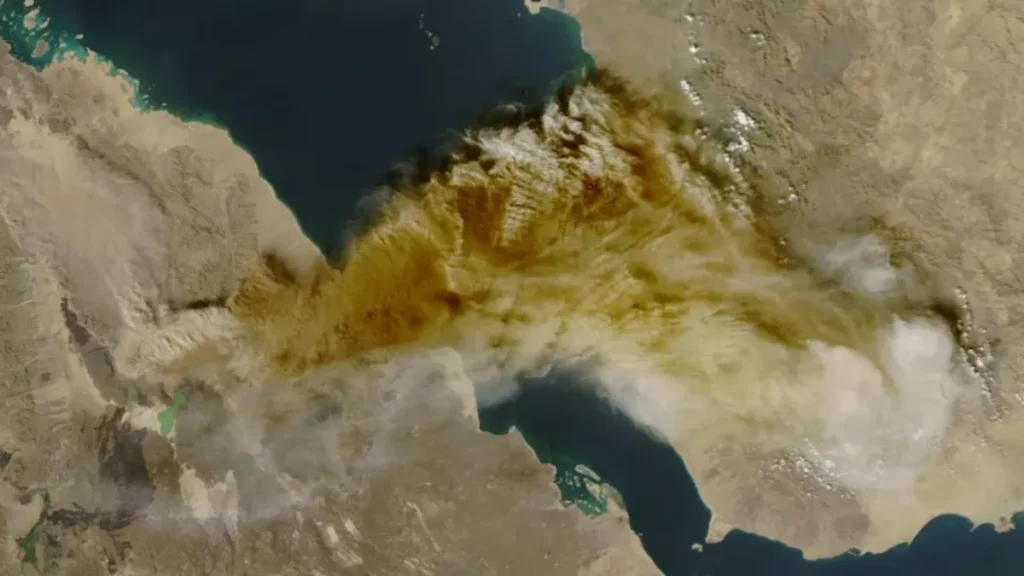
The term ethiopia volcano eruption map captures a dynamic and scientifically significant region where Earth’s crust is stretching, splitting, and reshaping itself. Ethiopia, situated atop the East African Rift System, hosts some of the most geologically active zones on the continent. These landscapes, shaped by millions of years of tectonic movement, continue to evolve through volcanic eruptions, seismic activity, and geothermal processes. Understanding how eruptions are mapped, monitored, and interpreted is essential to grasping Ethiopia’s geological identity and the communities that coexist with its powerful natural forces.
This article examines how Ethiopia’s volcanic regions are represented through eruption maps, why these visual tools matter, and how ongoing research is helping scientists decode one of the world’s most extraordinary tectonic environments.
Understanding Ethiopia’s Rift Landscape
Ethiopia lies in the heart of the East African Rift, where the African Plate is slowly tearing apart. This unique geological setting gives rise to a chain of volcanoes, fissures, and geothermal hotspots. The rift is divided into two primary branches: the Eastern Rift and the Western Rift, but Ethiopia’s volcanic activity is concentrated mostly along the Afar Depression and the Main Ethiopian Rift.
The ethiopia volcano eruption map reflects how these geological features interact over time. It highlights active volcanoes like Erta Ale, Fentale, Dallol, and Nabro, documenting past and ongoing eruptions, lava lake activity, and ash distribution. Such maps also delineate hazard zones and track patterns that can help predict future events.
Why Volcano Eruption Maps Matter in Ethiopia
Volcano eruption maps are more than visual aids—they are critical scientific tools. For geologists, they reveal patterns of tectonic activity. For local governments, they guide emergency planning. For residents, they offer essential knowledge about environmental risks. In Ethiopia, where rural communities often live near active volcanic regions, access to accurate and updated mapping is vital.
These maps serve several key purposes:
- Monitoring Eruptive Behavior: They track the locations and frequency of eruptions to understand how individual volcanoes evolve.
- Identifying Hazard Zones: Maps indicate areas exposed to lava flows, ash plumes, ground cracks, and gas emissions.
- Supporting Research: They provide data for geoscientists studying rift formation and mantle dynamics.
- Guiding Development Projects: Infrastructure planning depends on knowing which regions are geologically unstable.
The ethiopia volcano eruption map integrates satellite imagery, field research, historical records, and real-time monitoring stations, offering a holistic view of the region’s volcanic systems.
Table: Key Volcanoes Featured in the Ethiopia Volcano Eruption Map
| Volcano Name | Location | Volcano Type | Last Significant Eruption | Notable Features |
|---|---|---|---|---|
| Erta Ale | Afar Region | Shield Volcano | 2017 | One of the world’s longest-active lava lakes |
| Dallol | Danakil Depression | Hydrothermal Field | Ongoing activity | Extremely acidic hot springs and colorful mineral formations |
| Nabro | Eritrea–Ethiopia Border | Stratovolcano | 2011 | Major ash-producing eruption affecting East Africa |
| Fentale | Central Rift Valley | Stratovolcano | Holocene activity | Crater lake, geothermal vents |
| Aluto | Ziway–Shala Basin | Caldera | Recent unrest reported | Major geothermal development site |
| Tullu Moje | Rift Valley | Fissure System | Holocene activity | Long volcanic fissures and lava fields |
The Geological Story Behind the Ethiopia Volcano Eruption Map
The East African Rift is one of the few places on Earth where continental breakup is visible at the surface. Ethiopia’s segment reveals how continents evolve over millions of years. Volcanic activity occurs when magma rises through thinning crust, forming fissures, cones, and calderas.
In regions like the Afar Depression, the crust is so thin that eruptions occur frequently along linear cracks rather than traditional cone-shaped volcanoes. This geological pattern is clearly visible in any updated ethiopia volcano eruption map, which often displays elongated fissure zones and widespread lava fields rather than isolated cones.
The story is also one of contrast: while some areas host explosive stratovolcanoes, others produce gentle basaltic flows similar to those seen in Iceland. This diversity makes Ethiopia an exceptional natural laboratory for volcanologists.
Erta Ale: A Central Feature of the Ethiopia Volcano Eruption Map
No discussion of Ethiopian volcanism is complete without Erta Ale. Known as the “Smoking Mountain,” it is famous for having one of the world’s longest continuously active lava lakes. Its shield structure resembles those found in Hawaii, with frequent lava lake overflows and fissure eruptions.
Mapping Erta Ale involves documenting:
- Crater dimensions
- Lava lake fluctuations
- Crustal movement and fissure expansion
- Recent flank eruptions
During the 2017 eruption, satellite data played a major role in updating the ethiopia volcano eruption map, allowing scientists to visualize how lava traveled across remote desert terrains and how fissures extended over several kilometers.
Dallol: A Hydrothermal Marvel
While Dallol is not a traditional volcano with explosive eruptions, it is one of the hottest and lowest places on Earth. Its hydrothermal activities produce bright yellow, green, and orange mineral pools that attract global attention.
Mapping Dallol is essential because:
- Toxic gas emissions can affect nearby salt miners
- The ground is unstable due to ongoing hydrothermal reactions
- New vents emerge unpredictably
Its unique environment requires ongoing observation, and many eruption maps now include it due to its geological hazards and scientific importance.
The Role of Technology in Mapping Ethiopian Volcanism
Modern eruption maps are created using a combination of:
- Satellite Imagery: Captures heat signatures, ash plumes, and lava flows.
- Seismic Sensors: Detect underground activity and magma movement.
- GPS Instruments: Measure rift widening and ground deformation.
- Thermal Cameras: Track active lava flows and hotspots.
These tools improve the accuracy of the ethiopia volcano eruption map, ensuring that each update reflects real-time changes in the landscape.
Societal Impact of Volcanic Eruptions in Ethiopia
Communities in Afar and the Rift Valley live in regions shaped by volcanic soil, geothermal heat, and periodic eruptions. While these natural features offer benefits—like fertile soil and geothermal energy—they also pose risks.
Past eruptions have resulted in:
- Temporary displacement of residents
- Air pollution affecting livestock
- Damage to salt mining operations
- Disruption of transportation routes
- Health impacts from volcanic gases
Accurate mapping helps minimize these impacts by guiding evacuation routes, informing policymakers, and improving public awareness.
How the Ethiopia Volcano Eruption Map Helps Predict Geological Change
Predictive modeling is a growing component of geological science. By analyzing patterns visible in the ethiopia volcano eruption map, researchers can anticipate potential eruption sites or seismic events. Areas with repeated fissure formation or rapid ground deformation often signal future activity.
In Ethiopia, predictive efforts focus mainly on:
- The Afar Rift
- The Aluto–Langano region
- The northern rift boundaries near Eritrea
These studies have already led to the installation of new monitoring stations and improved early-warning systems.
Historical Eruptions Documented in Eruption Maps
Volcanic activity in Ethiopia is not new. Historical records, oral traditions, and geological deposits reveal centuries of eruptions. Notable events include:
- The 1320s eruption of Fantale
- Multiple medieval eruptions in the Afar region
- The 1861–1862 Alayta fissure eruptions
- The 1969 and 2017 Erta Ale eruptions
- The 2011 Nabro eruption, one of the largest in East African history
These events serve as reference points in every ethiopia volcano eruption map, offering context for contemporary volcanic behavior.
Environmental and Ecological Effects
Ethiopia’s volcanic landscapes are home to diverse ecosystems. Lava fields create microhabitats, geothermal springs support extremophile organisms, and ash layers enrich the soil. But eruptions can also disrupt these ecosystems.
Environmental effects may include:
- Loss of vegetation
- Alteration of water sources due to ash contamination
- Changes in soil chemistry
- Impact on migratory bird routes in Rift Valley lakes
Mapping these environmental shifts helps conservationists and ecologists anticipate long-term ecological impacts.
Future of Volcanic Mapping in Ethiopia
As research expands, future eruption maps will become even more precise. Upcoming improvements may include:
- Higher-resolution satellite mapping
- AI-assisted lava flow prediction
- Integration of climate data
- Enhanced public access to geohazard maps
- Real-time updates through mobile platforms
These advancements will significantly strengthen the utility of the ethiopia volcano eruption map, particularly for local communities and emergency services.
Also read: Ethiopia Confirms First Outbreak of Marburg Virus: Health Authorities on High Alert
The Human Dimension: Communities Living with Fire
In Afar especially, volcanic activity is a part of life. Nomadic groups navigate rugged lava fields, traders cross the Danakil to harvest salt, and families settle in areas near geothermal resources. Understanding the risks is essential, and eruption maps serve as an educational tool.
Community engagement programs now incorporate:
- Workshops about volcanic hazards
- Distribution of printed eruption maps in local languages
- Training for early-response teams
- School-level education about Rift Valley geology
These initiatives highlight how mapping is not just scientific—it is deeply human.
Also read: Nigeria Children Kidnapped: Rising Christian Targeted Violence Sparks Global Concern
Conclusion
The ethiopia volcano eruption map is more than a representation of geological features. It is a window into an evolving landscape shaped by tectonic forces that continue to redefine the African continent. Through detailed mapping, scientific research, and community engagement, Ethiopia is better equipped to understand and respond to its volcanic future.
From the lava lakes of Erta Ale to the hydrothermal wonders of Dallol and the active calderas of the Rift Valley, Ethiopia’s volcanic regions reflect a complex and dynamic natural system. As technology advances and monitoring expands, eruption maps will remain vital in capturing this ongoing geological story, guiding safety measures, and enriching our understanding of one of the world’s most extraordinary volcanic regions.