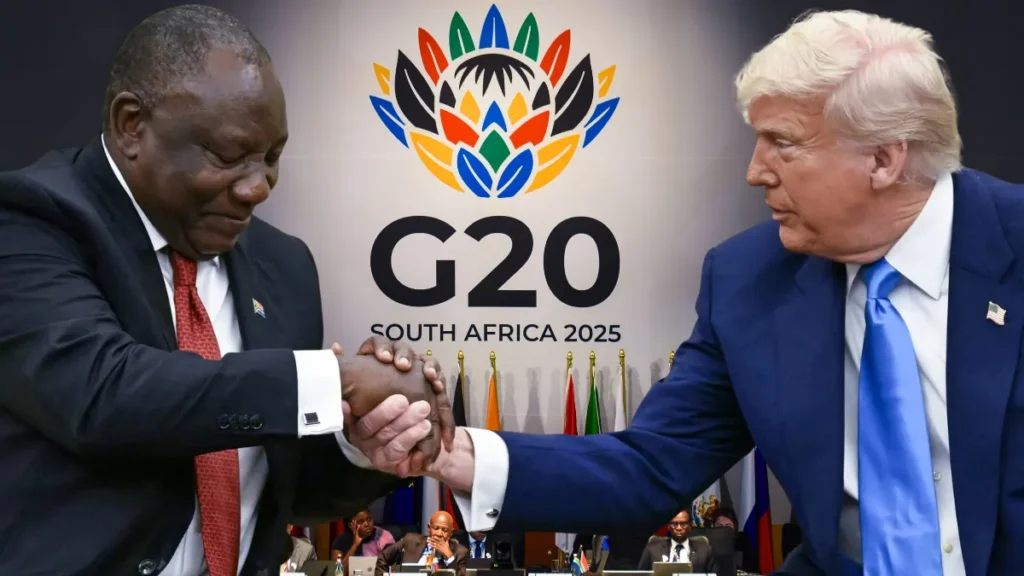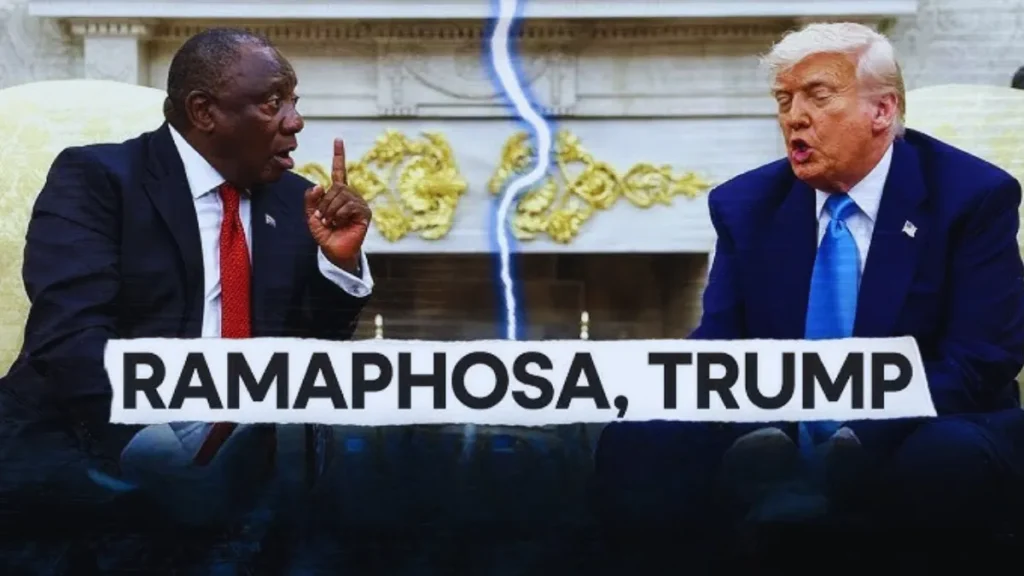
A major diplomatic stir has unfolded at the G20 Summit in Johannesburg as South Africa forcefully rejected pressure from former U.S. President Donald Trump over the handover of the forum’s presidency. The unexpected clash between Trump and Ramaphosa has not only disrupted the usual protocol but has also sparked a global debate on dominance and representation inside the world’s most influential economic bloc.
Historic Declaration Marks Unusual Start of G20 Summit
The summit opened with a surprise decision. Leaders of the world’s major economies adopted a joint declaration at the very beginning of the conference — a step that breaks G20 tradition, where such agreements are normally signed on the final day after rounds of negotiations.
The consensus on the declaration was even more striking given that the United States — under Trump’s direction — had officially boycotted the summit. Washington opposed key sections of the document, particularly climate-related commitments, yet the declaration was passed unanimously in its absence.
According to senior South African officials, the early adoption was intended to demonstrate unity among member nations and to prevent Washington from using last-minute objections to derail the agreement.
Ramaphosa Rejects U.S. Envoy for G20 Presidency Transfer
On Saturday, the tension escalated dramatically when South Africa announced that President Cyril Ramaphosa would not transfer the G20 presidency to a representative of the U.S. Embassy in Johannesburg — a decision directly contradicting Trump’s expectations.
Trump’s team had conveyed that the United States would send the chargé d’affaires from its embassy to officially take over the presidency on behalf of the country. South Africa rejected the proposal without hesitation.
Speaking on behalf of the government, Foreign Minister Ronald Lamola clarified that the G20 presidency would not be handed over to a junior official. “If the United States wishes to be represented, they must send someone of an appropriate level,” Lamola said. “That means a head of state, a minister, or a special envoy formally appointed by President Trump.”
Lamola’s announcement drew strong attention across diplomatic circles and instantly amplified the clash between Trump and Ramaphosa.
Earlier Remarks Hint at Growing Frustration With Washington
This week’s confrontation did not emerge overnight. Days earlier, during the opening session of the summit, Ramaphosa indirectly criticized Trump’s approach to global diplomacy.
“Threats have no place in the G20,” Ramaphosa said in his address — without naming Trump but clearly referring to him. He went on to emphasize that no nation’s voice should be prioritized simply because of its military, geographic, or economic power.
“It cannot be that income levels or military capacity determine whose opinions matter,” he stated, earning applause from several leaders who have long pushed for more balanced decision-making within the group.
Ramaphosa’s remarks signaled a clear departure from the tone of previous summits, reflecting a broader frustration among developing nations over what they see as Western dominance of global economic forums.
US Opposition to Declaration Failed to Halt Consensus
According to South Africa, Washington objected to specific language relating to climate change, including commitments to accelerate the shift away from fossil fuels. American negotiators attempted to reopen discussions, but Pretoria refused to renegotiate.
Ramaphosa’s spokesperson later confirmed that the declaration was deliberately finalized at the start of the summit to protect it from obstruction. “There was overwhelming support for the draft. That is why it was adopted during the initial sessions,” the spokesperson said.
The situation ultimately isolated the United States — in sharp contrast to previous years, when Washington played a central role in driving discussions.
What the G20 Declaration Includes
The newly adopted declaration sends a strong political message on several key global issues:
| Key Theme | Significance |
|---|---|
| Climate Action | Pushes for accelerated transition to clean energy |
| Global Debt Relief | Supports easing pressure on developing nations |
| Multilateralism | Calls for equal representation of all economies |
| Global Conflicts | Urges peaceful resolution through diplomacy |
| Counter-terrorism | Rejects the idea of “good” or “bad” terrorists |
The counter-terrorism section is particularly notable, echoing India’s long-standing stance that terrorism cannot be justified in any form or by any political interpretation.
Also read: Ethiopia Confirms First Outbreak of Marburg Virus: Health Authorities on High Alert
Domestic and Global Reactions to the Diplomatic Stand-Off
The assertive posture taken by South Africa has been applauded across much of the Global South, especially in Africa and Asia, where countries have been seeking a stronger voice in global discussions. Many analysts view it as a major turning point — a signal that emerging economies are no longer willing to operate under Western-driven norms.
In contrast, Washington’s absence from the summit and the fallout over the presidency handover have created uncertainty about the United States’ future engagement with the G20. Critics inside the U.S. have already expressed concerns that the country may be losing geopolitical influence.
What the Clash Means for the Future of G20
The clash between Trump and Ramaphosa could have long-term implications for the forum. If South Africa’s stance is adopted by other nations, the G20 could evolve into a more decentralized and balanced organization — one in which developing countries assert more decision-making power.
The incident also raises a broader question: will countries continue to accept unilateral pressure from powerful economies inside multilateral forums, or is the balance of power shifting?
Conclusion
What began as a routine summit quickly transformed into a defining diplomatic moment. The dramatic clash between Trump and Ramaphosa has broken long-standing traditions, challenged the United States’ ability to influence multilateral decisions, and highlighted growing demands for fairness within the global economic system.
Whether this marks a temporary dispute or the beginning of a wider rebalancing remains to be seen. But one thing is clear: the G20 summit in Johannesburg will be remembered not only for its declaration — but for the moment the developing world openly pushed back.