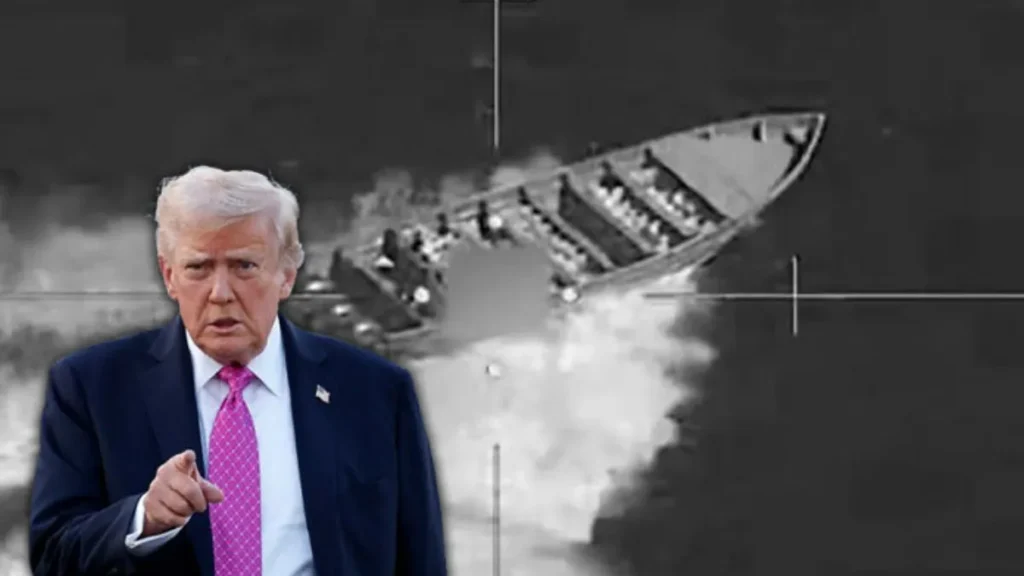
In one of Washington’s most aggressive maritime anti-drug operations in decades, A new attack was launched against a narcobot in the Eastern Pacific on Saturday, resulting in the deaths of three suspected drug traffickers. The strike, carried out by U.S. forces under the Southern Command, marks the latest escalation in America’s expanding efforts to shut down transnational narcotics routes feeding drug markets across North America.
According to official sources, the targeted vessel was a small, fast-moving boat believed to be part of a well-established drug-trafficking corridor often used by criminal networks operating between South and Central America. Intelligence assessments later confirmed that the vessel was transporting illegal narcotics destined for further distribution.
The incident has rapidly become a central point of debate in global security circles, human rights communities, and foreign policy institutions as the U.S. steps up its military presence across the Western Hemisphere.
🇺🇸⚡U.S. CARRIES OUT A NEW ATTACK AGAINST A 'NARCOBOAT' IN THE PACIFIC. pic.twitter.com/dBpc8aNw0J
— OSINT Expert (@OsintExperts) November 16, 2025
Joint Task Force Executes Deadly Strike in High-Risk Drug Corridor
U.S. Southern Command reported that the latest operation was conducted by Joint Task Force–Southern Spear, a specialized unit designed to intercept drug-trafficking vessels in some of the world’s most dangerous maritime zones. Officials stated that surveillance aircraft first identified the small boat moving rapidly along a known narcotics smuggling path in the Eastern Pacific.
Once intelligence assets verified the risk and confirmed the suspected illicit cargo onboard, the task force moved in.
A concise statement released through SOUTHCOM’s official channels explained:
- The narcobot-style vessel was operating in a high-alert zone
- Intelligence teams confirmed active drug-trafficking operations
- Interception protocols were activated due to the vessel’s refusal to comply
- Armed engagement was authorized after all standard warnings were ignored
The engagement ended within minutes, leaving all three individuals on the vessel fatally wounded.
Officials in Washington have described the operation as a necessary enforcement measure intended to deter drug smuggling networks that have long exploited remote oceanic routes to bypass regional law enforcement.
A Surge in Maritime Strikes: 21 Attacks in Two Months
The deadly encounter is not an isolated event. Data released by the Pentagon shows that since early September, U.S. forces have taken action against 21 suspected narcotics-trafficking boats, many of them categorized as “narcobots” due to their speed, low radar visibility, and autonomous or semi-autonomous operations.
The cumulative impact of these strikes has been significant:
- 83 suspected traffickers killed across the operations
- Several tons of cocaine and synthetic drugs seized or destroyed
- Multiple smuggling routes disrupted
- Expanded military surveillance operations across the Caribbean and Eastern Pacific
The dramatic spike in activity is part of a broader campaign known as Operation Southern Spear, which aims to dismantle maritime drug networks before narcotics can enter U.S. borders.
The Trump administration—under whose authority the current operation continues—has strongly defended the actions. Officials insist that aggressive interdiction is essential to stopping the flow of lethal synthetic drugs like fentanyl, which continue to cause mass casualties in American communities.
Human Rights Groups Question Legality of Strikes
Despite the administration’s firm stance, human rights organizations and several international partners have expressed serious concerns. Critics argue that the legal foundation for engaging and killing suspected traffickers at sea is unclear, particularly in international waters.
Key concerns raised include:
1. Proportional Use of Force
Human rights groups question whether lethal force is justified, especially when suspects may not have engaged in direct armed confrontation.
2. Sovereignty Issues
Some Latin American governments worry that U.S. operations near their waters could undermine national sovereignty or provoke diplomatic tensions.
3. Lack of Independent Oversight
Analysts note that details of these maritime engagements are often classified, making civilian review difficult.
4. Escalation Risks
Security experts warn that such attacks could trigger retaliatory violence from powerful transnational drug cartels.
Nonetheless, Washington has shown no signs of slowing down. Instead, the U.S. military presence in the region is only expanding.
USS Gerald R. Ford Joins Operation Southern Spear
In a powerful signal of strategic intent, the United States has deployed its most advanced aircraft carrier, the USS Gerald R. Ford, to the Caribbean. Its arrival marks one of the largest American military footprints in the region in several decades.
The carrier strike group includes:
- Advanced fighter jets and surveillance aircraft
- Guided-missile destroyers
- Support vessels and logistics units
- Integrated intelligence and electronic warfare platforms
Pentagon officials stated that the deployment is not merely symbolic. Rather, it provides:
- Enhanced aerial surveillance capabilities
- Faster interdiction response times
- Greater deterrence against organized criminal networks
- Broad support for regional allies combating maritime crime
Several analysts see the deployment as a clear message that the U.S. intends to dominate the maritime domain and dismantle major narcotics distribution routes.
How Narcobots Have Changed the Drug-Trafficking Game
In the last decade, drug cartels have increasingly turned to small, fast, stealthy vessels—often called “narcobots”—to evade law enforcement. These boats are designed for:
- Low radar detection
- High-speed ocean travel
- Minimal crew or fully autonomous navigation
- Rapid cargo transfers
- Short-distance refueling
Their use has forced the U.S. and allied forces to adopt more aggressive tactics, advanced drones, and radar-tracking technology to counter smuggling operations.
The latest strike, in which A new attack was launched against a narcobot, underscores how central these vessels have become to organized drug networks.
Geopolitical Stakes: Increasing Tension in the Western Hemisphere
The U.S. military escalation comes at a delicate time. Regional governments already face pressure from rising cartel violence, political instability, and economic challenges. The presence of a major U.S. carrier group could:
- Strengthen anti-narcotics cooperation with allies
- Create diplomatic friction with countries wary of U.S. intervention
- Trigger pushback from cartel-aligned militias
- Increase the militarization of maritime zones
Some experts also warn that rival global powers may interpret the deployment as a strategic maneuver aimed at preserving American influence in the hemisphere.
Also read: What Marjorie taylor greene trump Political Shift Reveals About Trump and the Future of MAGA
Why the U.S. Is Taking a Harder Line on Maritime Drug Routes
Several factors have contributed to Washington’s intensified crackdown:
1. Surge in Synthetic Drug Trafficking
Synthetic opioids, particularly fentanyl, have become primary drivers of U.S. overdose deaths.
2. Increasing Use of Semi-Autonomous Vessels
Narcobots make it easier for traffickers to evade law enforcement without risking cartel personnel.
3. Decline in Traditional Land-Based Smuggling Routes
Enhanced border security has pushed traffickers toward maritime alternatives.
4. Political Pressure
With drug-related deaths rising in multiple U.S. states, federal leadership faces mounting demands for stronger enforcement.
The result is an increasingly militarized anti-drug campaign—one that has dramatically reshaped the security landscape of the Eastern Pacific.
What Comes Next?
While the U.S. continues to defend its actions as necessary for national security, international scrutiny is likely to intensify. Several major questions remain:
- Will increased military force effectively curb drug trafficking?
- Could further strikes against narcobots escalate tensions with regional governments?
- What protocols ensure accountability for lethal maritime engagements?
- How will cartels adapt to the growing U.S. military presence?
For now, Operation Southern Spear shows no signs of slowing down. If anything, the deployment of the USS Gerald R. Ford suggests that Washington is preparing for a long-term maritime campaign.
As the U.S. commits more naval firepower to the region, the global community will closely watch the impact—both on drug trafficking networks and on international maritime law.